
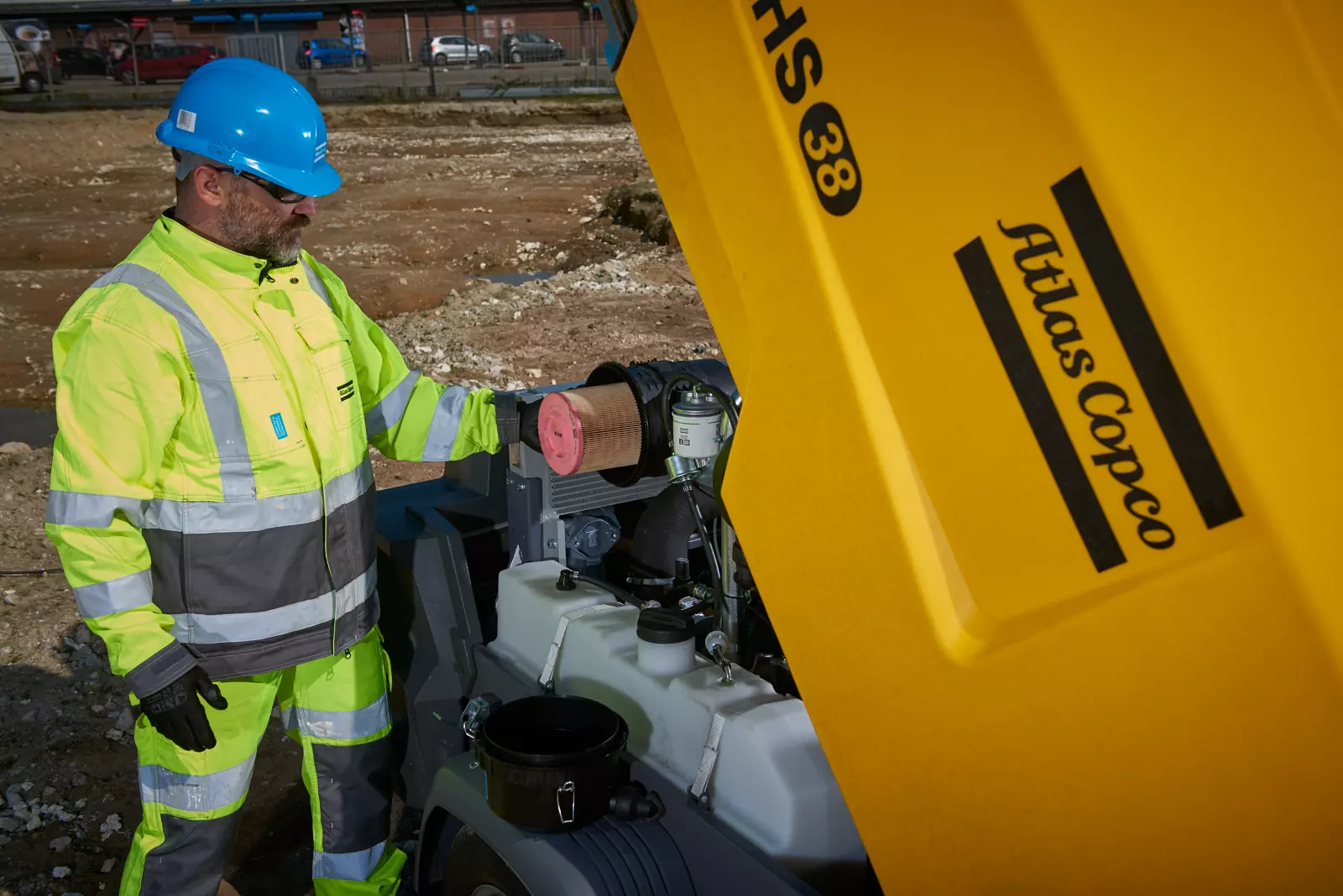
Industrial air compressors are central to many businesses across Scotland, but summer can be tough.
As temperatures rise, compressors are pushed harder. And that’s when reliability can suffer.
The good news? Even a little prep makes a difference. A couple of quick checks here, some routine upkeep there – often that’s enough.
Come summer, those small steps keep things ticking over. And by doing them now, you cut the odds of a breakdown when you need your equipment working at full efficiency.
In this article, we’ll look at a few straightforward ways to prepare your compressed air system for summer. So it can keep doing its job without the costly interruptions.
Summer Challenges for Compressed Air Systems
Heat and humidity work together to create a different set of operating conditions for your compressor.
- Heat: Hot air is less dense, so to hit the same set pressure ,the compressor runs longer and works harder. More run time, more kWh, more heat in the package. If that heat isn’t pulled out (cooler, airflow, basic housekeeping), the unit runs hot and trips.
- Humidity: Warm air carries more water. After compression, that vapour becomes liquid – a lot of it. A 55 kW machine in muggy weather can throw off ~280 litres of condensate in 24 hours. Miss the drains and it backs up, corrodes lines, and starts damaging the downstream kit.
Heat and humidity can also form a vicious cycle.
As a compressor overheats, the oil can thin out. This reduces lubrication, resulting in increased friction and additional heat. Moisture leads to corrosion, and leaks soon follow. Once that happens, the compressor runs harder to keep up – and the risk of overheating climbs.

Key Maintenance Areas for Summer
A systematic approach to maintenance can prevent these issues.
Cooling System and Compressor Room Maintenance
The cooling system mitigates high temperatures. Maintaining proper functioning will help prevent compressor overheating.
- Clean the Coolers: Dust and debris on the fins of the oil cooler and aftercooler will serve as an insulator. This prevents them from dissipating heat efficiently. Clean them with low-pressure compressed air regularly.
- Ventilate Properly: Poor ventilation is a cause of compressor overheating. It occurs when the compressor ingests its own hot exhaust air. Ensure that there is at least a meter of clear space around the unit and that the ventilation fans for the compressor room are in working order. Ducting the hot air outside is the most effective solution.
Lubrication System Checks
Compressor oil is used for cooling, sealing, and protecting internal parts. It will begin to break down at high temperatures.
- Monitor Oil Level Each Day: Check the sight glass daily. Low oil sends temperatures up – quickly.
- Use an Approved Lubricant: Go with a high-quality synthetic. It holds up under heat and doesn’t shear down as fast.
- Check for PSSR Compliance: Stick to manufacturer-approved oils so you stay within the Pressure Systems Safety Regulations (PSSR 2000) and avoid compliance grief.
- Monitor the Thermal Valve: It should route oil through the cooler. If it sticks or fails, the oil bypasses the cooler, temperatures spike, and trips aren’t far behind.
Condensate Control in Summer Conditions
Your system’s condensate management tools work harder in the summer.
- Test All Drains Daily: A single blocked drain can cause water to back up in the system. Use the manual test button on all automatic drains to verify they are functioning correctly.
- Service Your Air Dryer: Air dryers are under more strain in the summer. For Refrigerant Dryers, keep their condenser coils clean.
- Check Oil/Water Separators: These units process more condensate in the summer. Inspect them to ensure they function correctly, and that discharged water meets local environmental regulations.
Filtration System Maintenance
Clean filters aren’t optional – they’re what keep the system efficient, and the internals protected.
- Inspect the Intake Filter Weekly: A clogged intake makes the compressor work harder, and that shows up as higher energy use. Check it once a week and swap it if it’s dirty.
- Replace Filters Regularly: Don’t stretch them past their life. Stick to the manufacturer’s timetable for the air/oil separator and oil filter so the internals stay protected and the air stays clean.

Air Compressor Summer Maintenance Checklist
Use this checklist as a guide for your routine maintenance.
| Frequency | Component/System | Action Required |
| Pre-Summer | Oil & Oil Filter | Replace with high-temp synthetic oil. |
| Pre-Summer | Refrigerant/Desiccant Dryers | Service before peak humidity. |
| Pre-Summer | Ventilation | Confirm room fans and ducting are operational. |
| Daily | Oil Level | Check the sight glass and top up if needed. |
| Daily | Condensate Drains | Test automatic drains. |
| Daily | Operating Temperature | Note the temperature displayed on the controller. |
| Weekly | Coolers / Radiators | Visually inspect for debris. |
| Weekly | Air Intake Filter | Check for dirt. |
| Weekly | Air & Oil Leaks | Listen for hissing sounds and inspect hoses. |
| Monthly | Clean Coolers | Blow out cooler fins with low-pressure air. |
| Monthly | Belts & Couplings | Check tension and look for wear. |
Professional Servicing for Summer Reliability
While in-house checks are essential, professional servicing can help prepare your system for the summer. As an authorised Atlas Copco Premier Distributor, Design Air (Scotland) Ltd provides expert air compressor maintenance.
Our engineers can perform a summer service to identify and address potential issues. We can help you optimise air compressor efficiency, perform ultrasonic leak detection, and provide advice on air treatment.
Tools like Remote Monitoring (SMARTLINK) enable us to monitor your system’s health and alert you before potential problems arise. Services can also help organisations meet compliance standards, such as ISO 8573-1 air purity, enabling operational efficiency and contributing to ESOS audits, Net Zero targets, and more.
Headquartered in Airdrie, Design Air (Scotland) Ltd covers Glasgow, Edinburgh, Dundee, Fife, Stirling, Perth, and beyond across Scotland.
Breakdowns aren’t the end of the road. We’ve got 24/7 repair cover in place – and hire units ready if you need to keep production moving.
Proactive summer maintenance ensures reliability and efficiency – contact Design Air to schedule a seasonal service or discuss our Customised Compressor Service Plans.