
Compressed air filtration
Atlas Copco Filters
As an authorised UK distributor for Atlas Copco, Design Air (Scotland) Ltd supplies a comprehensive range of genuine Atlas Copco air filters to protect your entire compressed air system. While a dryer removes water vapour, a high-quality filter is essential to remove solid particulates and oil aerosols drawn in from the ambient air and the compression process itself.
From general-purpose air to technically oil-free air for critical processes, we have the application knowledge to match the right filtration to your environment.
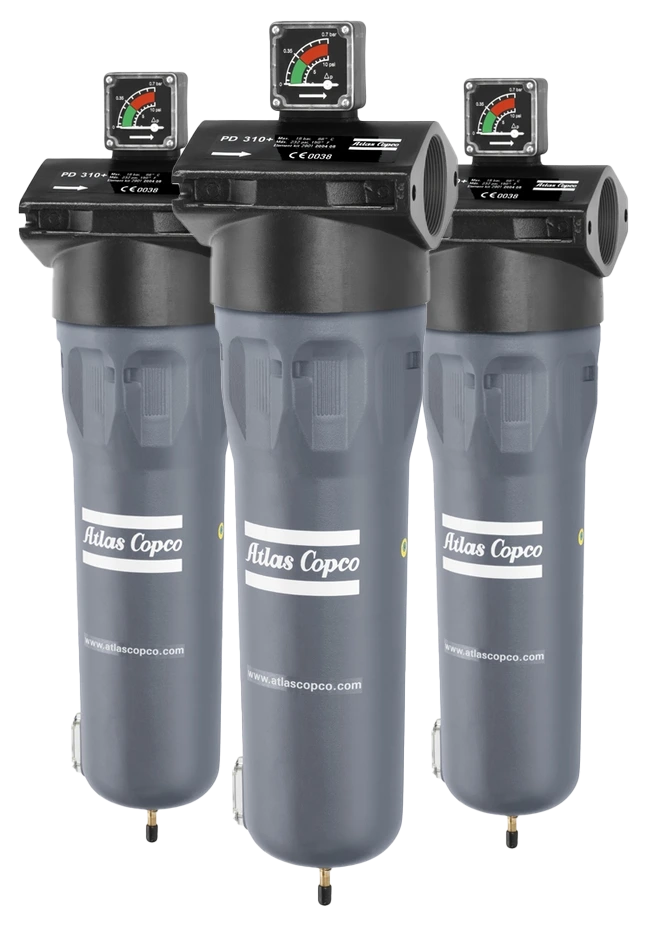
The unseen threat
Understanding Contamination in Your System
In any compressed air system, contaminants are drawn from the atmosphere and the system itself. The compression process concentrates them, creating a real threat to your equipment and products. There are three primary contaminants.
Solid Particulates (Dirt)
Dust, wet dust, rust and foreign particles that cause abrasive wear and clog sensitive pneumatic components.
Water
Moisture (vapour, liquid and aerosols) condenses as air cools, leading to corrosion and promoting microbial growth.
Oil
Oil (liquid, droplets, aerosols and vapour) from oil-lubricated compressors or the ambient air. A critical contaminant for food, pharma and painting.
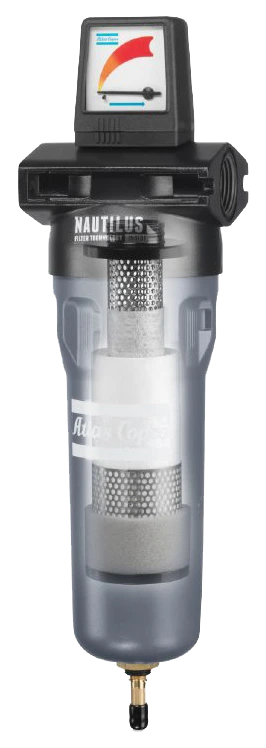
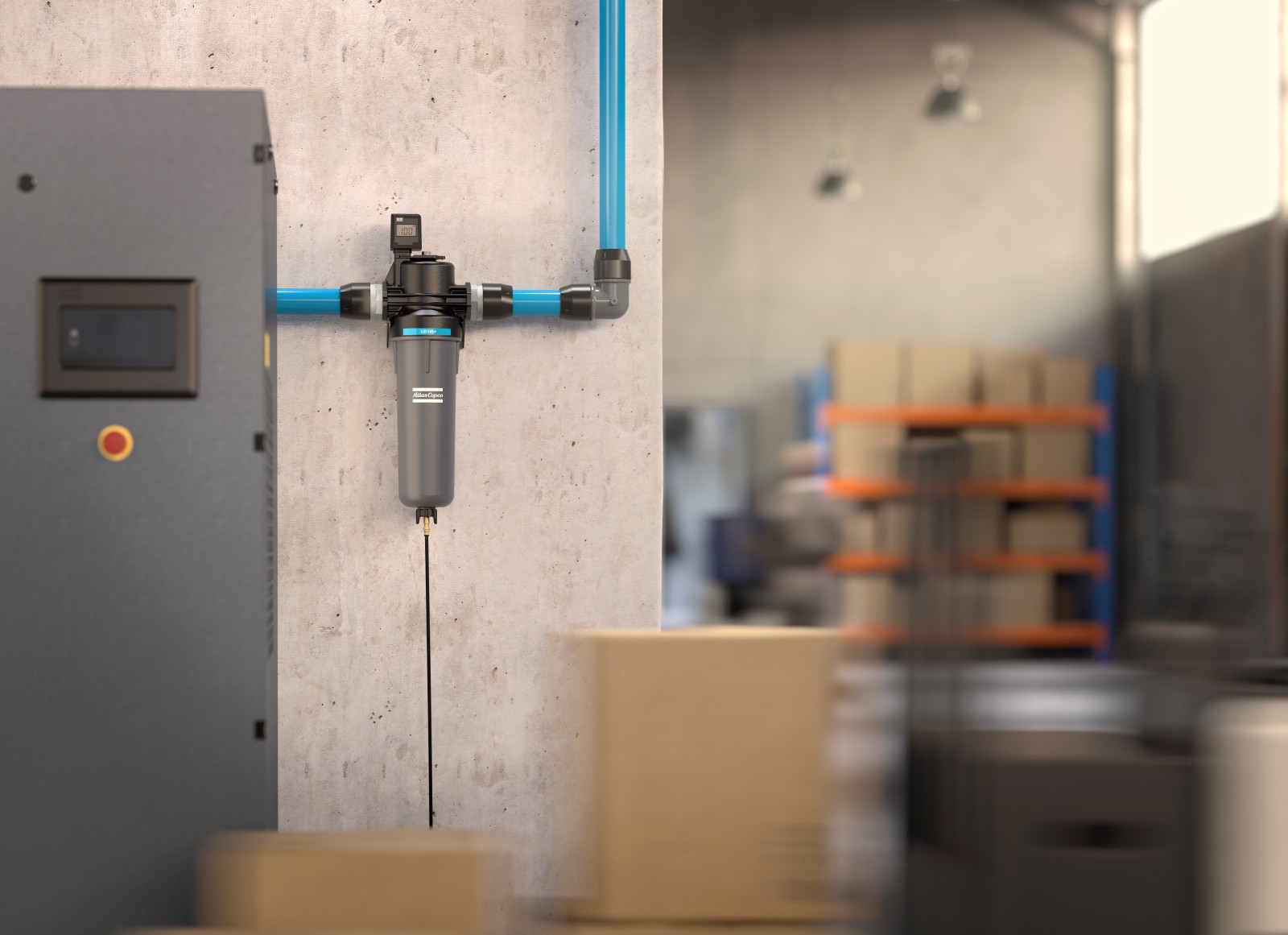
The Atlas Copco UD+ combination filter
Two Filters’ Performance, One Element
Traditionally, removing solid particulate and oil aerosols required a coarse and a fine filter installed in series — two filters, each adding a pressure drop, each needing an annual element change.
The UD+ filter combines both filtration steps into one. Instead of a wet pressure drop of 0.53 bar(g) across two filters, the UD+ yields just 0.25 bar(g). You also replace only one element at service, not two.
0.25 bar(g)
wet pressure drop, vs 0.53 across two filters
0.28 bar(g)
lower running pressure with the UD+
~£352/yr
typical energy saving (6,000hrs, 30kW)
1 element
to service instead of two
Benefits
Lower Energy, Lower Total Cost of Ownership
The UD+ filter lets your compressor run at a pressure 0.28 bar(g) lower than the traditional two-filter setup, directly reducing energy use. On a site running 6,000 hours a year at an average 30kW input and £0.10/kWh, that saves around £352 a year in electricity — before you account for halving your annual filter media costs.

Internal filtration
Protecting the Compressor
Genuine Atlas Copco parts protect your investment and prevent premature wear. Internal filtration includes:
- Intake air filter: the first line of defence, protecting the compressor element from abrasive inlet dust and maintaining efficiency.
- Oil filter: protects the element, bearings and rotors from impurities circulating in the oil, preventing performance loss.
- Oil separator: removes the vast majority of oil from the compressed air before it leaves the compressor, protecting downstream equipment.
The range
Downstream Line Filtration (Protecting the Application)
Installed in your pipework to purify air to a specific quality standard. Our range covers every requirement.
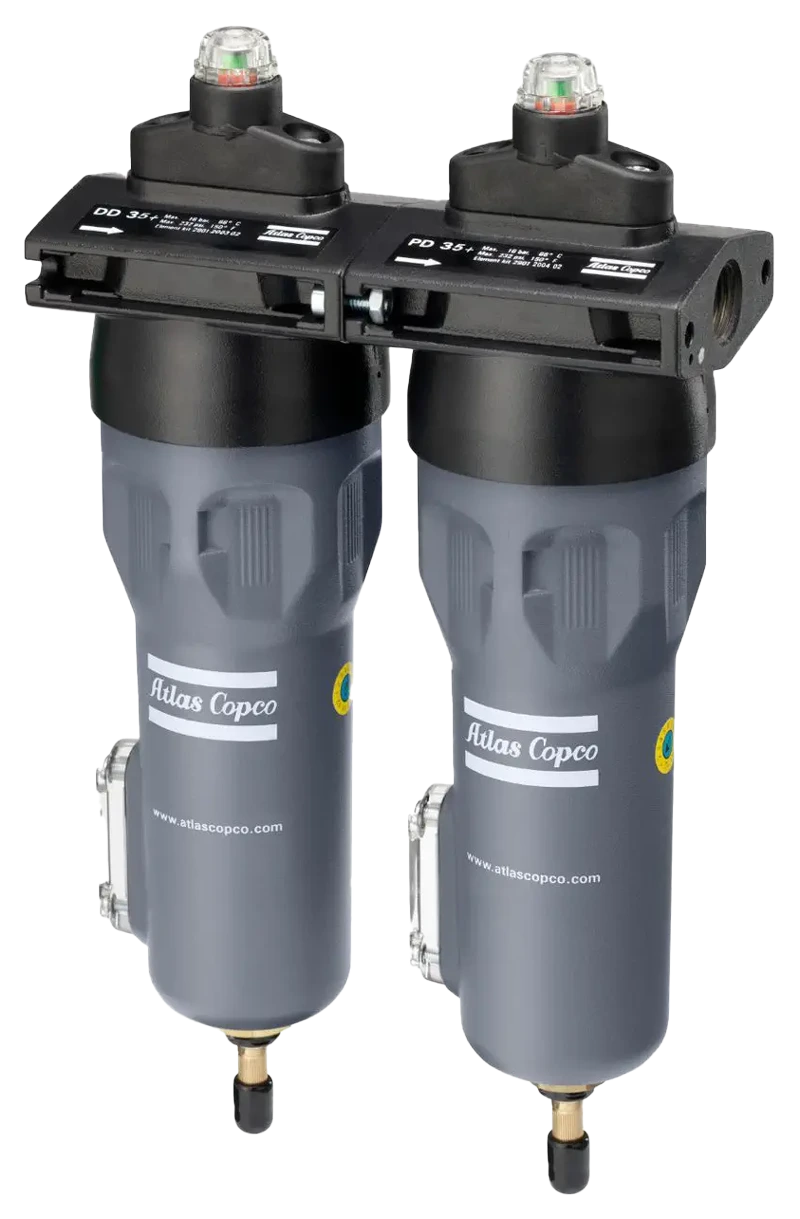
UD+ Combination Filter
- 21 – 16,952 cfm
- 16 bar(g)
Coarse and fine filtration in one element, removing oil aerosols and wet dust with a low pressure drop.
Key details
- Flow range: 21 – 16,952 cfm
- Max pressure: 16 bar(g)
- Removes: oil aerosols & wet dust
- ISO 8573-1:2010: Class 1 particulate, Class 2 oil
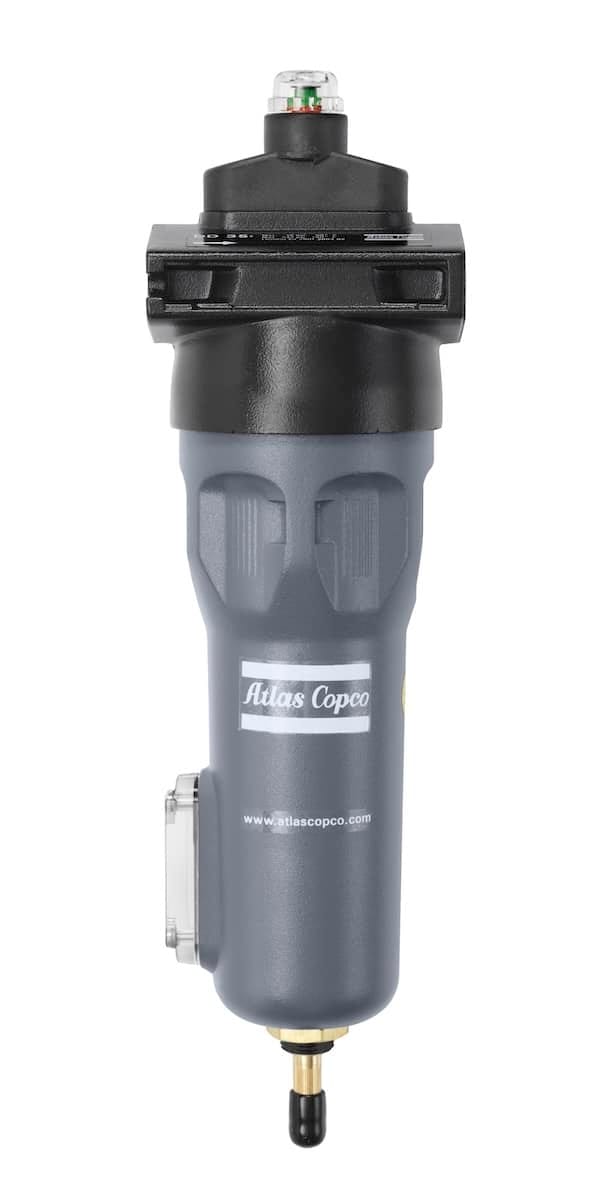
DD+ / PD+ Oil & Dust Filters
- 21 – 16,952 cfm
- 16 bar(g)
Coalescing filters for oil aerosols and wet dust — DD+ for general purpose, PD+ for high efficiency.
Key details
- Flow range: 21 – 16,952 cfm
- Max pressure: 16 bar(g)
- Removes: oil aerosols & wet dust
- ISO 8573-1:2010: Class 1 particulate, Class 2 oil
DDp+ / PDp+ Dry Dust Filters
- Dry dust
- Pleated media
Point-of-use protection for sensitive equipment, using pleated media for high dirt-holding capacity and long service life.
Key details
- Removes: dry dust / solid particles
- Technology: pleated media, long service life
- Application: point-of-use protection
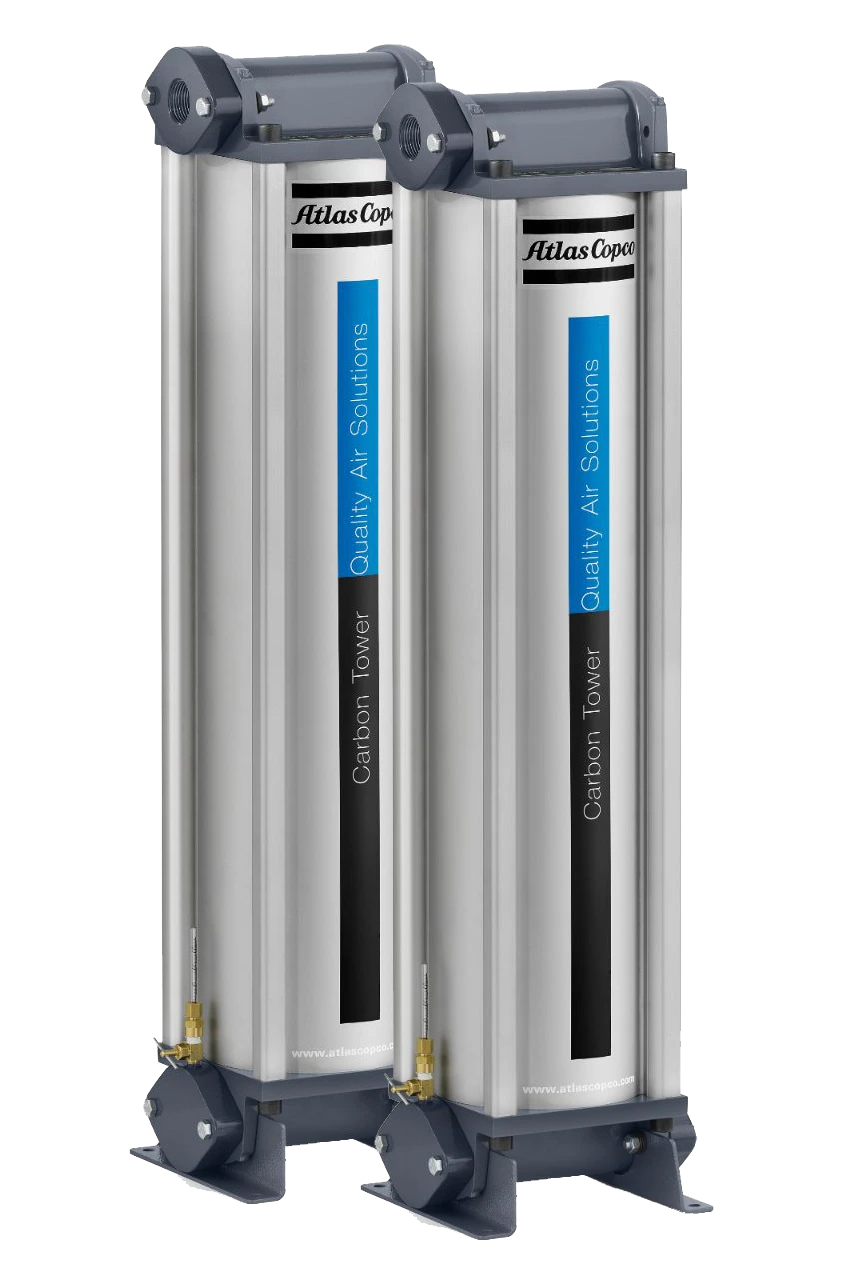
QD+ / QDT+ Oil Vapour Filters
- 42 – 3,814 cfm
- 13 bar(g)
Activated carbon filters and towers for the final removal of oil vapour and odours in critical applications.
Key details
- Flow range: 42 – 3,814 cfm
- Max pressure: 13 bar(g)
- Removes: oil aerosols, vapour & odours
- ISO 8573-1:2010: Class 1 for oil
Standards
Decoding Air Purity: ISO 8573-1:2010
To specify and verify filtration performance, the industry relies on ISO 8573-1:2010 — a universal language for defining the air quality a given application needs. It uses a three-number notation [P:W:O]:
- [P] — purity class for solid Particles
- [W] — purity class for Water (defined by pressure dew point)
- [O] — purity class for total Oil
A lower number means higher purity. Class 1 for oil (≤ 0.01 mg/m³) is critical for food and pharma, while general-purpose air might be Class 4. Our team can determine the exact class you need.

Genuine parts
Why OEM Atlas Copco Filters Matter
Non-genuine “aftermarket” filters are a false economy. Genuine Atlas Copco parts are engineered to the same standards as the original components, ensuring a perfect fit and guaranteed performance. Aftermarket parts often use lower-quality media and seals, which can lead to:
- Higher pressure drop: inferior media clogs faster, forcing your compressor to work harder and use more energy.
- Contamination bypass: poor seals can harden or crack, letting contaminated air leak past the element.
- System failure: weak internal cores can collapse under pressure, damaging your compressor element.
A genuine filter is an insurance policy against downtime, product spoilage and equipment failure.
By industry
Tailored Air Quality for Critical UK Industries
We provide expert filtration for all sectors, including those with the most stringent regulations.
Food & Beverage
To meet British Retail Consortium (BRC) and HACCP standards, we design systems to ISO 8573-1 [2:2:1] for direct contact, using oil-free compressors and multi-stage filters (DD+, PD+, QDT+) to prevent microbial growth and oil contamination.
Pharmaceutical & Medical
For Good Manufacturing Practice (GMP) and MHRA oversight, Class 0 air is often the standard. This requires a 100% oil-free compressor, desiccant dryers and sterile filters.
Automotive Finishing
To prevent “fish-eyes” and adhesion problems, a flawless finish needs high-purity air (Oil Class 1). We provide high-efficiency coalescing and silicone-free (SFA) filters.
General Manufacturing
To protect pneumatic tools and actuators, a cost-effective combination of a general-purpose coalescing filter (DD+) and a refrigerant dryer guards against water and particulate.
Servicing
Filter Maintenance and Servicing
Filters are consumables that need a regular replacement schedule. The main indicator for replacement is a rising pressure drop, which signals a clogged element. Sticking to the manufacturer’s service intervals (typically annual) is essential.
Our services team provides full maintenance and replacement using only genuine Atlas Copco parts, ensuring correct installation and preventing costly downtime. We can also audit your air quality to verify it meets the required ISO purity class.
Specify the right filter
Need help choosing your filtration?
Tell us your application and the air purity you need to achieve, and we will specify the correct Atlas Copco filter, housing and elements for your system.
FAQs
Air Compressor Filter FAQs
How does an air compressor filter work?
How do you clean an air compressor filter?
How many filters are in an air compressor?
What is the difference between Atlas Copco ZR and ZT?
Who owns Atlas Copco?
What products does Atlas Copco make?
Talk to Design Air
Get the right filtration for your system
From general-purpose air to technically oil-free air for critical processes, we will specify and supply the correct Atlas Copco filter for your need. Ask us for the Atlas Copco filter catalogue and specifications for the UD+, DD and PD ranges.