
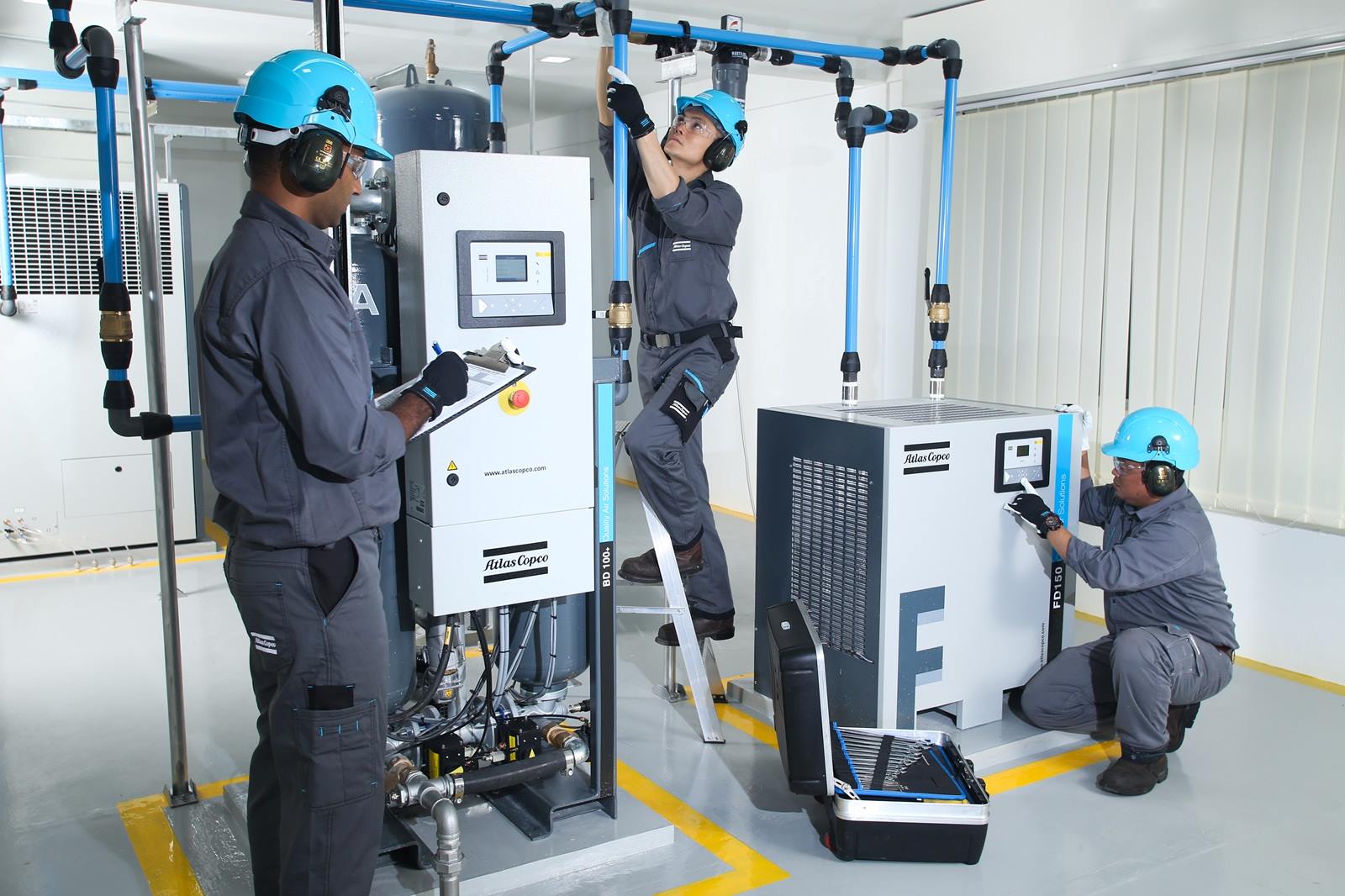
Air compressors are a common sight in businesses and workshops. Their versatility and cost-efficiency make them an invaluable asset in manufacturing, processing, and logistics, among many other sectors. They are used so often that estimates suggest they account for at least 10% and sometimes as much as 30% of industrial energy use.
Maximising the efficiency of your air compressor is vital not only to maintain your productivity but also to ensure you aren’t spending more than you have to on energy. Like any equipment and plant, taking a proactive approach can keep your air compressor working at optimal levels.
Get the right size of air compressor
A well-matched compressor is the cornerstone of good air compressor design and long-term efficiency. If your unit is too small, it will constantly run at full load to meet compressed air demand, increasing wear and tear, reducing lifespan, and inflating your energy bills. Go too large and you’ll waste energy through short cycling and idle running.
To improve air compressor energy efficiency, consider how your usage varies throughout the day. If air consumption fluctuates, a VSD compressor can adapt in real time, helping you maintain performance while cutting unnecessary energy use.
An air compressor’s efficiency is not just about the machine itself. It is about matching the size of the compressor to your process air needs, now and in future. Design Air can assess your full compressor system, ensuring you get an energy efficient solution that reduces operating costs and supports sustained productivity.

Optimise your compressed air system pressure
The higher the pressure, the higher your costs. As a rule of thumb, a 2 psi increase in pressure — an amount that may be meaningless when powering tools at 100 psi — raises your energy costs by 1%.
Setting and maintaining your pressure at the lowest effective level, the point where there’s sufficient to meet your peak demand, helps to save energy and contain your costs.
Balancing your pressure, using storage and regulators, will keep your system at optimum levels and able to respond to demand peaks without losing pressure.
Monitor for leakage
Air under pressure will constantly try to escape and leaks can cause up to 30% energy loss in a compressed air system. But spotting an air leak can be difficult.
Loss of pressure to the end user tends to be one of the last symptoms. Establishing other monitoring, like monitoring energy bills to see if the compressor is working harder to compensate, is a much more effective method of spotting leaks early.
Best practice is to have a regular ultrasonic leak detection survey carried out. These can detect leaks beyond the range of human hearing, even in hidden pipework. They typically find leaks so effectively that they more than pay for themselves.
Use variable speed drives
If you have processes where the demand for compressed air varies, using a variable speed drive compressor will reduce energy consumption. These respond to demand, increasing production when required and dropping it when it only has to maintain pressure.
Variable speed drives are especially effective where working patterns mean it’s difficult to predict demand accurately, for example, where multiple stages of your processes all use compressed air.
The latest rotary screw variable speed drives are incredibly efficient and responsive. They are also quiet and available as oil-free compressors if air quality is a priority.
Improve the air intake conditions
The condition of the air that the compressor uses will affect its performance. Striving for the best quality air intake will help you get the best performance from your compressor.
Good quality air will reduce the load on your compressor, so aim to have the intakes in places that have cool, clean air. A 4ºC drop in air temperature improves energy efficiency by about 1%.
You should also pre-filter the air that’s coming in. Even if air quality is not important in your processes, pre-filtered air removes the worst pollutants and contaminants that can limit your compressor performance.
Filter air in your compressed air system
Filtration is a critical part of any air compressor system. Without it, contaminants such as dust, oil vapour and moisture can travel through the compressed air network, reducing the efficiency of a compressor and damaging tools or end products.
A multi-stage approach using prefilters, coalescing filters and point of use filters helps ensure your air supply meets operational demands. If you require oil free air or operate in a sensitive environment, effective filtration is even more important.
Blocked filters cause pressure drop, forcing even an energy efficient compressor to work harder and use more power. Keeping filters clean helps avoid this hidden source of energy waste and supports lower energy consumption across the system.
Design Air can assess your setup and recommend the right filtration strategy to protect your equipment, improve performance and reduce costs over time.
Use heat energy recovery
The laws of physics mean that when air is compressed, much of the energy is converted to heat. For most users, this is a harmless but useless by-product of their air compressor.
However, by using heat recovery, most of that otherwise wasted energy — as much as 90% — can be redirected. Whether it’s supplementing your existing heating, warming water for staff use, or even being redirected to operational processes.
If you have a larger compressor, especially one in constant use, heat recovery can give you big energy savings. It will also help to improve your working environment.

Maintain an effective piping system
The air compressor is at the heart of your system, but you don’t get the full benefit if the rest of the system is not energy efficient.
Issues like low receiver capacity or poorly designed piping can limit efficiency. Often, these problems creep in, as business needs change and systems are adapted.
It’s worth getting expert advice after major changes. Even simple things like additional bends in pipework can cause pressure drops and increase energy consumption.
Monitor and maintain your system
Keeping a close eye on your system can identify system efficiency issues early, avoiding more severe issues later.
Ensure those using the compressor or compressed air are always aware and report any changes they note. But also consider more active monitoring, such as IoT tools that can offer remote access and early warning of issues like pressure drops and temperature drops.
And, importantly, back all this up with regular servicing and maintenance. Regular replacements of consumables, like filters, accompanied by audits of your system can help avoid issues.
Consult the experts
Design Air knows compressed air; collectively, our engineers have over two centuries of experience and an alphabet’s worth of qualifications. We offer a customer-centric approach, aiming to build long-lasting and trusting relationships with our customers.
For honest advice on how to get the most from your air compressor, contact Direct Air today. We can help you optimise your system, boost productivity, and save money.
FAQ
How do I know if I need a new compressor or just a service?
If your existing compressor is becoming unreliable, experiencing frequent downtime or struggling to meet the supply of compressed air, it may be time to consider an upgrade. An air audit can help determine whether your current unit is simply inefficient or whether a new energy-efficient compressor would better meet your compressor needs while helping to reduce your carbon footprint.
What role does the compressor control system play in energy efficiency?
The compressor control system is key to managing air flow, operating pressure and overall system performance. Modern control systems can coordinate multiple compressor setups, minimise mechanical losses and ensure your equipment runs at peak efficiency. Smart controls also support strategies like reducing the pressure or switching to loaded running to significantly reduce energy consumption.
Can a compressed air installation really help lower energy costs?
Absolutely. A well-designed compressed air installation, using components like a centrifugal compressor or oil-free air systems where needed, can offer an energy-efficient solution tailored to your operations. When combined with regular maintenance and optimising energy efficiency through proper compressor speed and control, businesses often achieve substantial energy savings and improved reliability.