
Industries · Manufacturing
Air Compressors for the Manufacturing Industry
Compressed air keeps the manufacturing industry moving when pneumatic tools, actuators, control valves, handling systems and automated machinery need a dependable supply. The right air compressor for a production facility must deliver the required pressure and flow without wasting energy or putting product quality at risk.
Design Air, Atlas Copco Premier Distributor in Scotland, designs, installs and maintains industrial compressed air systems from its base in Airdrie. Our approach starts with the process: what uses air, when demand changes, what purity the product requires and what happens if the supply stops.
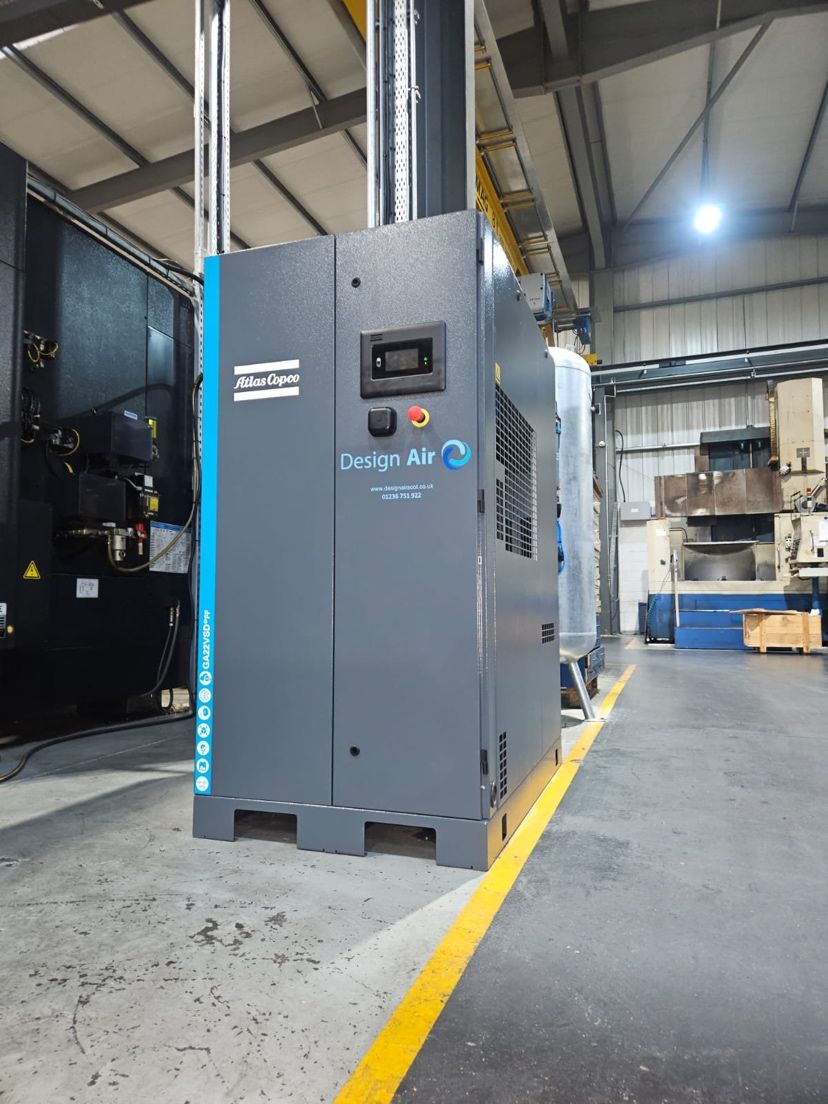
Where Manufacturing Plants Use Compressed Air
Manufacturing compressed air provides controlled power for tools, machinery and production processes where electrical or hydraulic drive is unsuitable.
On a general engineering site, compressed air may operate impact tools, clamps, cylinders, pick-and-place equipment and CNC tool changes. Fabrication plants use it for plasma cutting, surface preparation, spray finishing and powder coating. Automated lines rely on stable pressure for actuators and control valves to repeat the same movement at the same speed.
When Compressed Air Becomes Part of the Process
The air can become part of the process. It may clean a component, move powder, aerate a liquid or contact packaging. That changes the specification because air used by a pneumatic tool can tolerate a different purity class from air that touches food, medicine or an electronic assembly.
This is why equipment selection cannot start with compressor motor size alone. The process sets the pressure, flow, purity, redundancy and control requirements. The compressor room must then meet those requirements at every point of use.
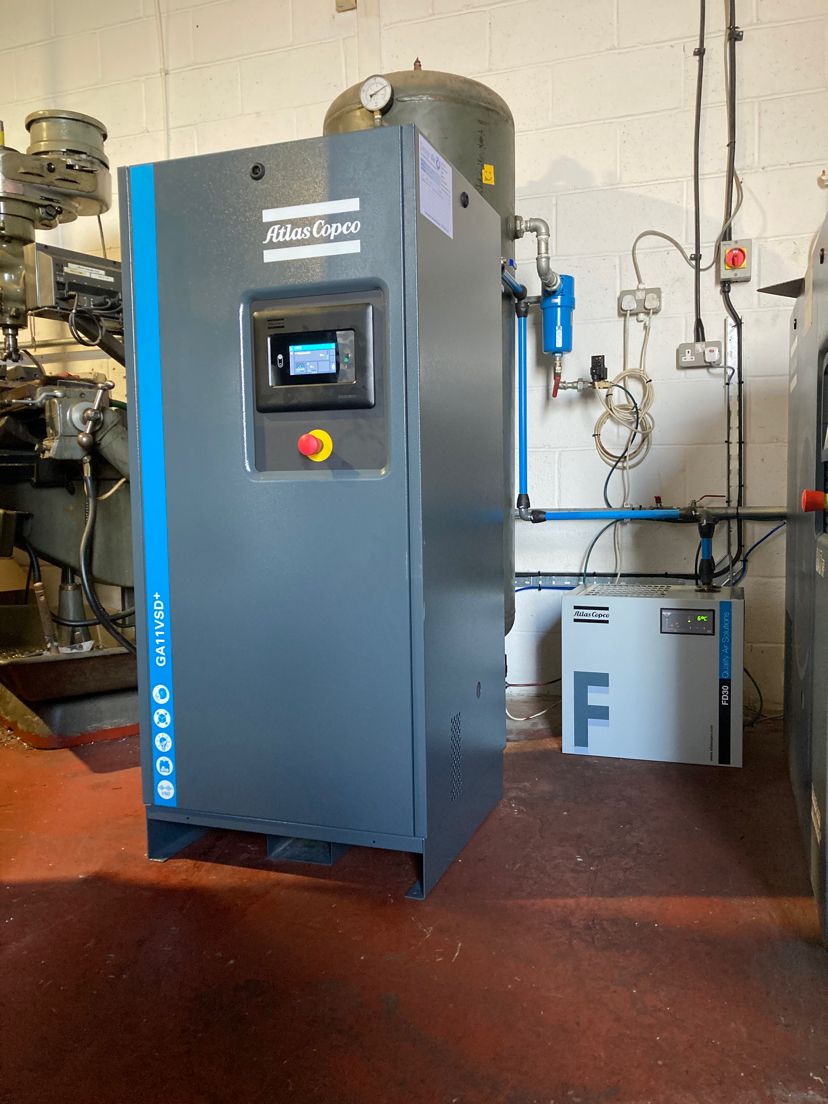
How to Specify an Industrial Air Compressor
A reliable specification starts with measured demand rather than an estimate based on connected equipment. Adding every tool’s nameplate consumption produces an oversized system because most tools do not run together. Sizing only for average demand creates the opposite problem when several processes start at once.
Design Air measures flow, power and pressure over a representative production period. The resulting demand profile shows the baseload, normal variation, short peaks and periods when the factory is idle. It reveals whether low pressure comes from inadequate compressor capacity or excessive pressure loss in the distribution network.
Five Inputs for an Accurate Specification
The specification should record five decisions:
Required pressure
Set this at the lowest pressure that keeps the most demanding process stable, allowing only for measured distribution loss.
Free Air Delivery
Rate useful output at the required operating pressure, not motor power or theoretical displacement.
Demand pattern
Separate the continuous baseload from shift changes, cleaning cycles and short production peaks.
Air quality
Define particle, water and oil limits at the point where the process uses the air.
Continuity
Decide whether the site needs standby capacity, sequenced compressors or stored air to protect production during maintenance and faults.
That evidence produces an air system matched to the factory’s real operation. It gives procurement teams a defensible basis for comparing capital cost, energy use and maintenance support.
Site survey
Measure the demand before you size the compressor
Design Air can log flow, power and pressure across a representative production period at your facility, then build the specification around what the data shows.
Rotary Screw, Fixed-Speed or Variable-Speed Drive?
Rotary screw compressors suit manufacturing because they can supply continuous industrial air efficiently across long operating hours. The correct control method depends on how demand behaves.
Fixed-Speed Compressors for a Stable Baseload
A fixed-speed compressor works best when demand remains close to its rated output for most of the shift. The motor runs at one speed, while load and unload controls regulate pressure. An unloaded machine still consumes power without producing useful air, so repeated short load cycles indicate that the compressor is too large for the baseload or is being controlled inefficiently.
Variable-Speed Drive Compressors for Changing Demand
A variable-speed drive compressor changes motor speed to follow the air demand. This reduces unloaded running when production varies by machine, product or shift. The saving must be calculated from a measured demand profile because a VSD is not automatically the most efficient choice for a constant full-load application.
Many sites use a fixed-speed machine for the baseload and a VSD compressor as the trim machine. A central controller sequences both units so the VSD follows variation rather than allowing several compressors to unload at the same time.
Air Receivers for Short Demand Peaks
Short, intense events should not automatically determine compressor size. A correctly sized air receiver stores compressed air and releases it during a brief peak. This can allow a smaller compressor to run near its efficient operating point while the receiver protects the minimum process pressure.
Receiver sizing must use the peak flow, event duration, starting pressure and lowest acceptable pressure. Guessing by tank volume alone can leave an automated line short of air at the exact point demand rises.
Air Quality Must Match the Manufacturing Process
ISO 8573-1 (iso.org) classifies compressed air according to particles, water and oil. The correct class applies at the point of use, so the whole route matters: compressor, receiver, dryer, filters, pipework and drains.
An oil-injected rotary screw compressor can be appropriate for general tooling when downstream treatment meets the process requirement. Coalescing and particulate filters remove contaminants to specified limits, while a refrigerant or desiccant dryer controls moisture. The treatment train should be selected from the required result rather than added as an afterthought.
Oil-free compression is the safer engineering route where introducing compressor oil creates an unacceptable product risk. Oil-free rotary screw compressors do not inject oil into the compression chamber. That does not remove the need to control particles, water and contamination already present in intake air or downstream pipework.
Food and Beverage Production
Scottish food manufacturers often use compressed air for conveying, filling, packaging and direct product contact. Oil-free generation is typically specified where compressed air contacts the product or its packaging and compressor oil would create an unacceptable contamination risk.
Direct-contact and indirect-contact applications may require different purity classes. Each critical point should be assessed, treated and tested rather than applying one assumption across the factory. Oil-free generation, suitable drying and verified point-of-use testing protect the product and give the quality team evidence for its audit trail.
Medical, Electronics and Precision Manufacturing
Medical production can require closely controlled particles, moisture and oil where air contacts a device, clean area or production process. Facilities evaluating these applications can review Design Air’s guidance on air compressors for the medical industry.
In electronics manufacturing, oil aerosol, water and particles can affect sensitive components, surface preparation and pneumatic control equipment. Dry, clean air protects both the product and the repeatability of the process.
Automated assembly and finishing lines have a different priority mix. The automotive manufacturing specification must balance stable pressure, high duty cycles, finishing quality and the changing demand created by robots and tools cycling at different times.
Designing a Complete Compressed Air Installation
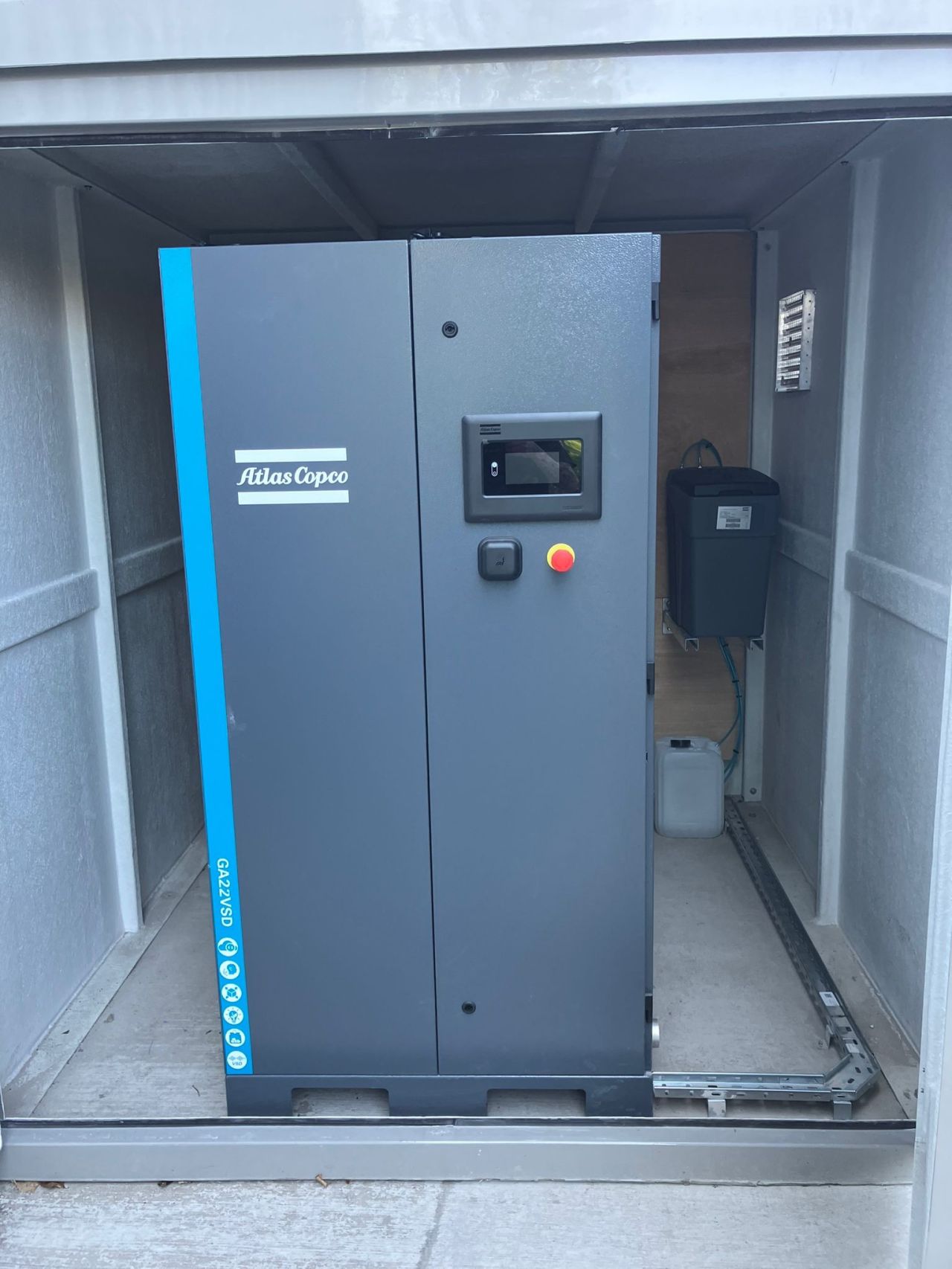
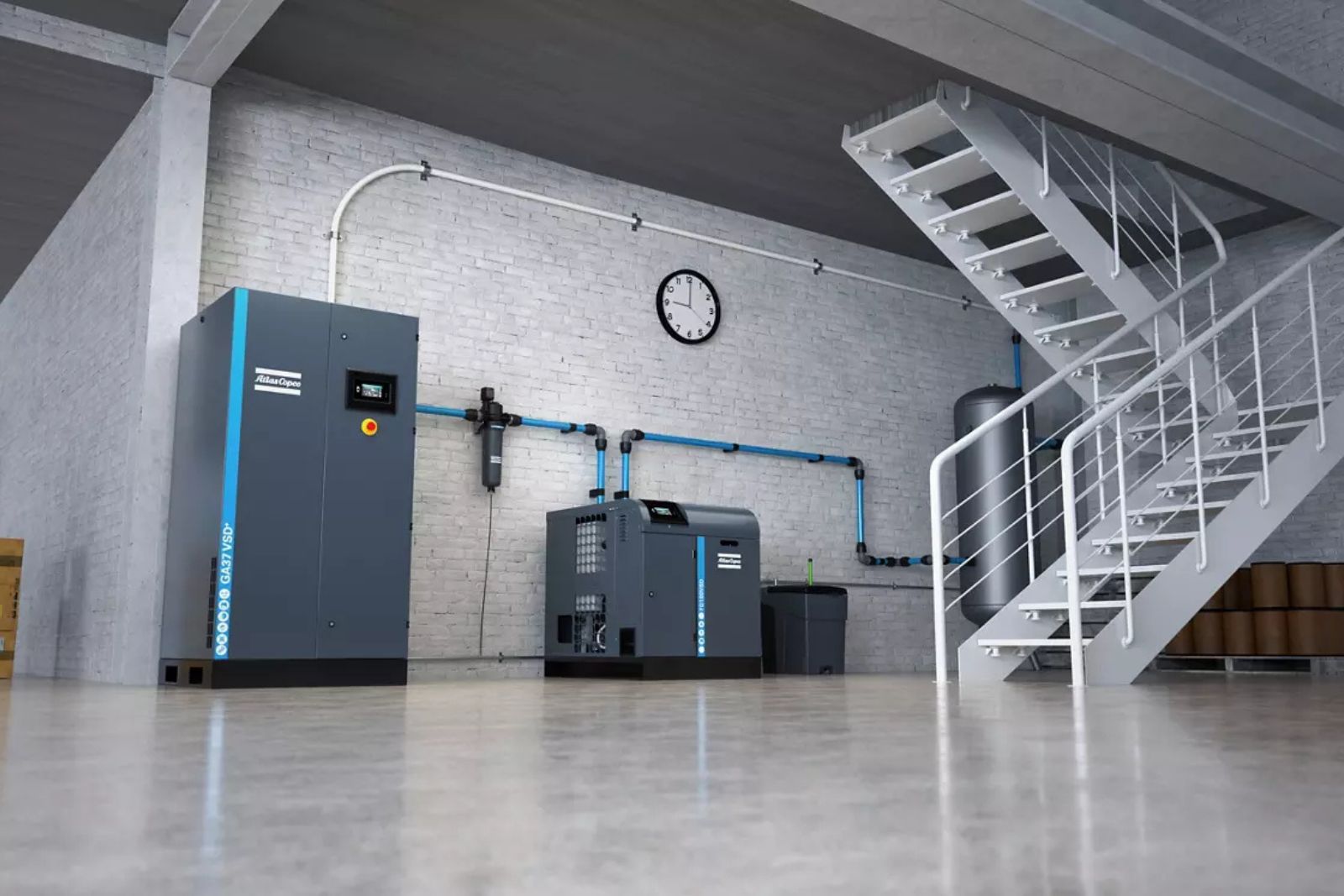
A new production facility in Scotland needs more than a compressor delivered to the plant room. A complete compressed air system must carry the required flow to every process at the correct pressure and purity, with space for maintenance and future capacity.
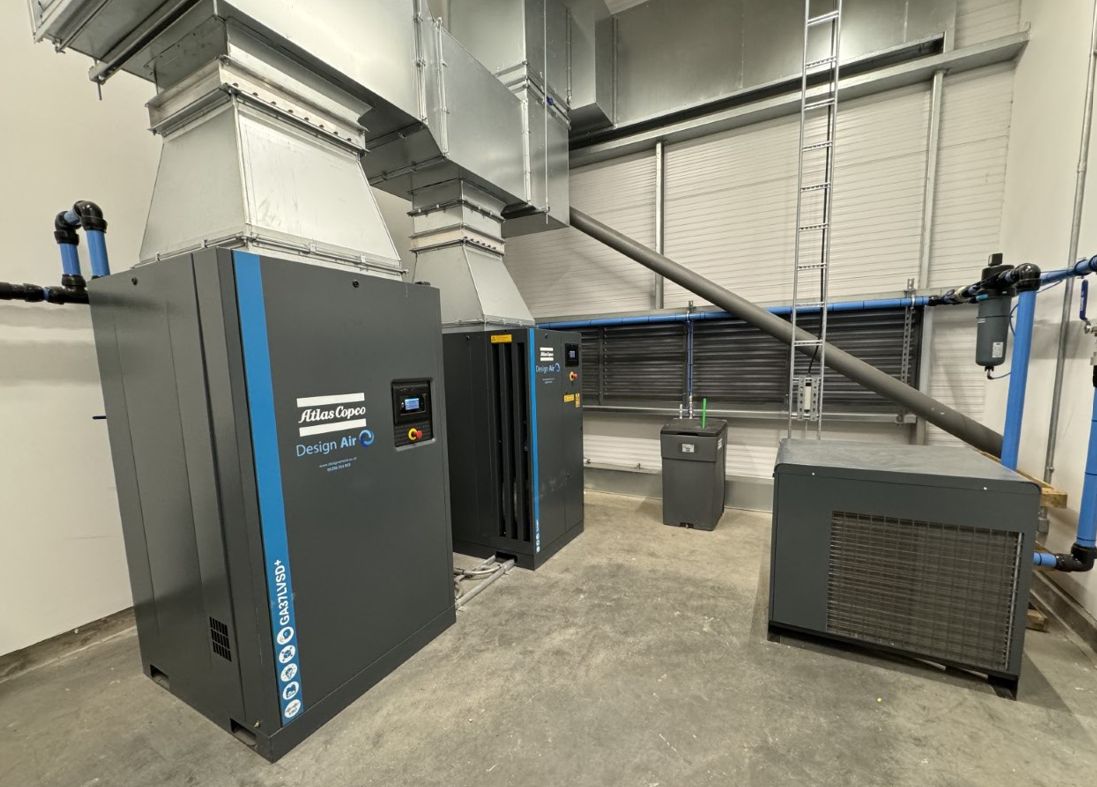
Design Air develops the installation around the measured or modelled process demand. The design covers compressors, dryers, filtration, receivers, condensate treatment, controls and distribution pipework. It should define ventilation, electrical supply, drainage, access and the safe isolation points needed for maintenance.
Distribution Pipework and Pressure Drop
Undersized pipework forces the compressor to generate a higher pressure to compensate for loss between the plant room and the point of use. Every extra bar of compressor discharge pressure increases energy consumption by approximately 7%, so a poor pipework decision remains on the electricity bill for the life of the system.
A ring main can feed a production area from two directions and reduce local pressure loss. Branch sizes, isolation valves, drop legs and future connection points should follow the flow required by each area. Aluminium AIRnet pipework provides a smooth, corrosion-resistant bore and can be modified when the factory layout changes.
Dryers, Filters and Condensate Management
A refrigerant dryer is often suitable for indoor general manufacturing where a pressure dew point around +3°C keeps water from condensing in the distribution system. Unheated pipework or a process requiring much drier air may need a desiccant dryer. The correct choice depends on the coldest temperature and the process specification, not the weather at the compressor intake.
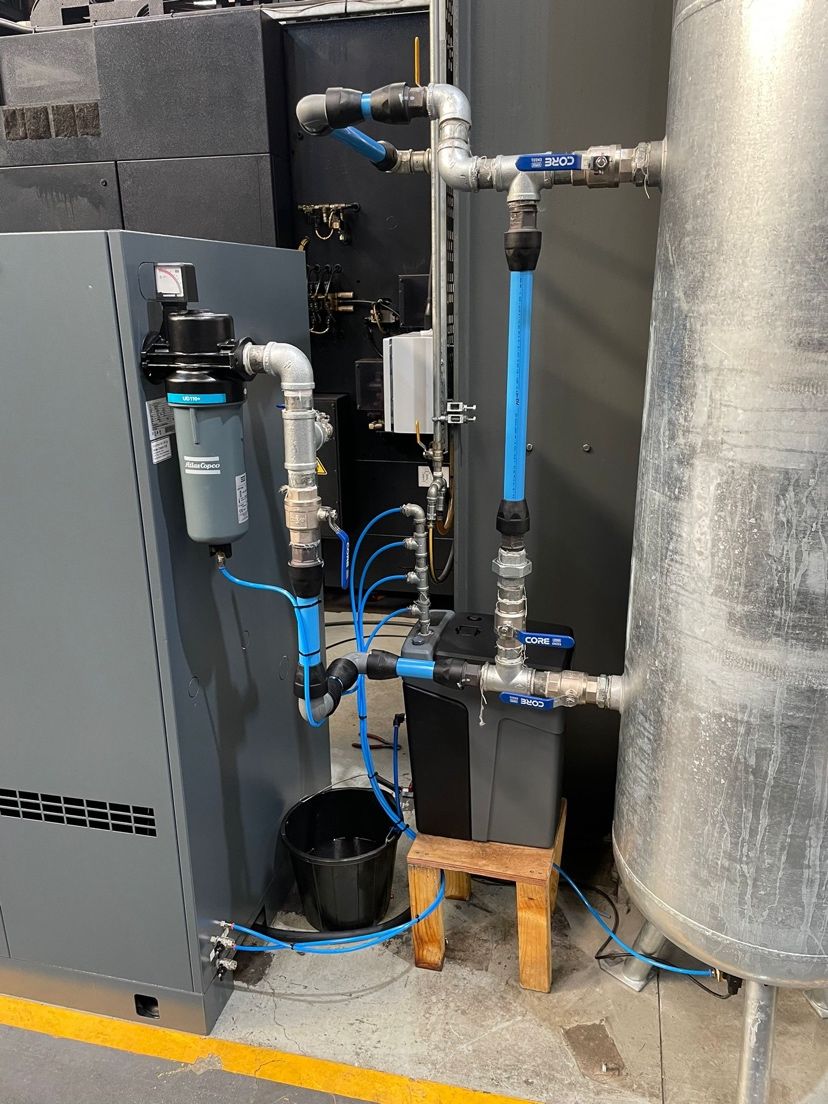
Filters create pressure loss as they load with contamination. Differential pressure monitoring and planned element replacement keep air quality within specification without making the compressor work against avoidable resistance. Condensate drains and oil-water separation must then dispose of collected liquid through an appropriate route.
Energy
Reducing Compressed Air Energy Costs
Electricity normally dominates the lifetime cost of an industrial air compressor. Design Air’s service-agreement model uses a measured energy package to identify where the system consumes power without supporting production.
Leaks, Pressure and Control Losses
The review covers three connected causes:
- Leaks: Ultrasonic detection locates loss at fittings, hoses, couplings, valves and production equipment while the factory is operating.
- Excess pressure: A measured pressure profile shows whether the setpoint can be reduced without affecting the most demanding process.
- Control losses: Load, unload and idle data reveal whether compressors are fighting each other or running outside their efficient range.
Reducing pressure by 0.5 bar can cut compressor energy use by about 3.5% when the system and process allow it. The decision must follow a pressure study because lowering the setpoint before fixing pipework restriction can create stoppages at the end of the line.
Recovering Compressor Heat
Heat recovery can improve the wider site energy balance. Most electrical energy supplied to a compressor becomes heat. Depending on the machine and operating conditions, that heat can warm factory space or water used elsewhere on site. The useful saving depends on matching the available heat to a demand that occurs at the same time.
Energy
Find out where your compressed air energy goes
An ultrasonic leak survey, a measured pressure profile and load and unload data show which losses are worth fixing first.
Protecting Production Through Maintenance and Monitoring
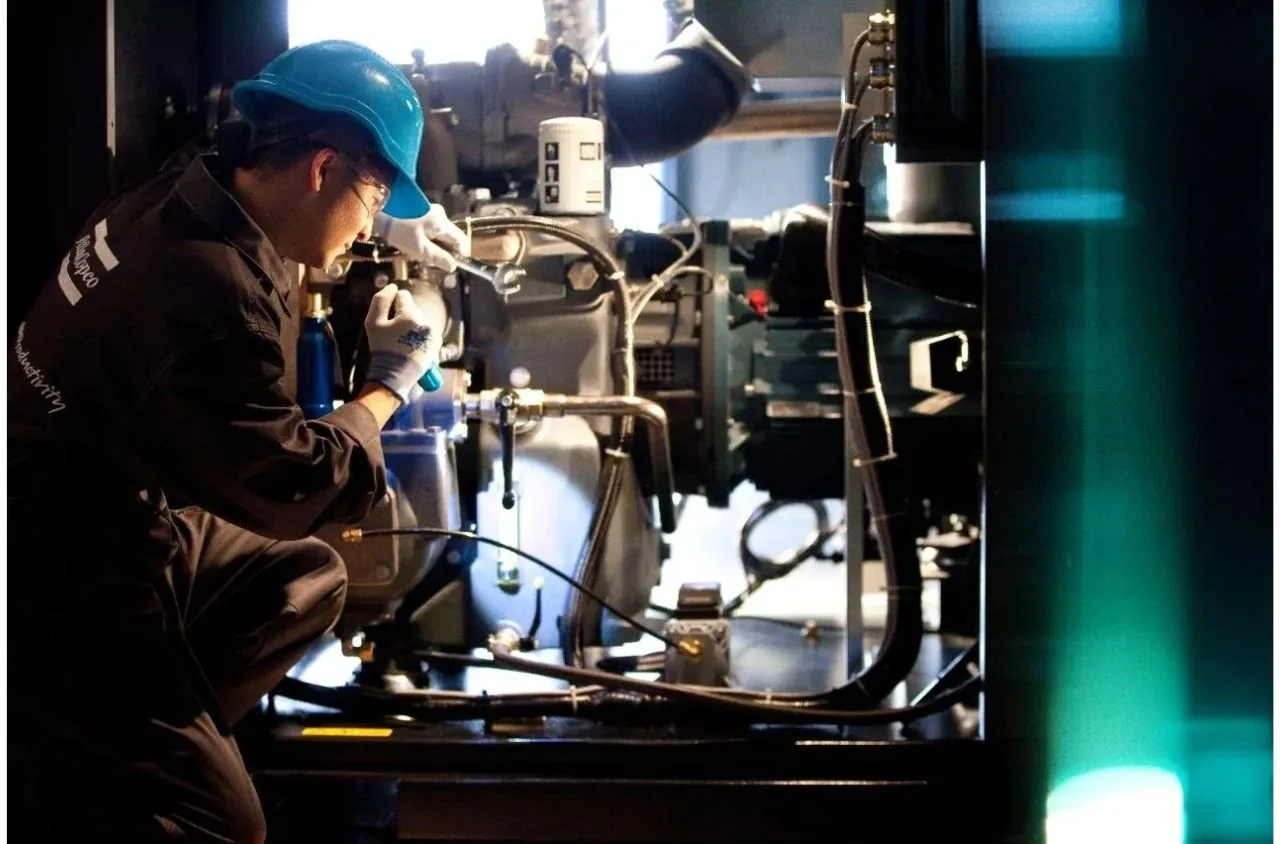
Compressor maintenance should be planned around operating hours, condition and the consequence of failure. Filters, oil, separators, belts, drains, dryers and cooling systems deteriorate in different ways. A single annual visit cannot compensate for a system that runs continuously or operates in a dusty, hot plant room.
Design Air’s factory-trained service engineers maintain compressed air, nitrogen and vacuum equipment across Scotland. Design Air offers planned preventive maintenance through its Service package. Customers can combine the Service, Energy and Compliance packages.
Condition Data Between Service Visits
SMARTLINK remote monitoring adds operating evidence between visits. Load hours, pressure trends, temperatures and service alarms help the engineering team distinguish a developing compressor problem from a change in factory demand. Monitoring supports maintenance decisions, but it does not replace inspection or a site-specific redundancy plan.
Design Air’s Service package includes 24/7 breakdown cover. A four-hour response commitment applies within 50 miles of Airdrie. Sites outside that area are assessed and priced according to location, access and the work required.
Compliance
PSSR 2000 and Written Schemes of Examination
The Pressure Systems Safety Regulations 2000 address the risk created by stored energy in pressure equipment. HSE guidance on PSSR (hse.gov.uk) states that compressed air above 0.5 bar gauge is a relevant fluid and that qualifying pressure equipment needs a Written Scheme of Examination before use.
The Written Scheme identifies the parts that require examination, the nature of each examination and the interval between them. The competent person must have sufficient knowledge, experience and independence to define or certify the scheme and carry out the examinations. The dutyholder remains responsible for making sure the scheme is in place and current.
Design Air’s compliance package covers Written Scheme of Examination support and statutory examinations for manufacturing compressed air systems. Any system modification, receiver replacement or change in operating conditions should trigger a review of whether the existing scheme remains suitable.
FAQs
Frequently Asked Questions
What Are Air Compressors Used for in Manufacturing?
Which Compressor Is Best for Industrial Use?
How Are Industrial Air Compressors Rated?
Specify the System Around Your Manufacturing Process
A compressor quote should show how the proposed system meets the production demand, air-quality target, energy case and continuity plan. The equipment comparison is incomplete when any of those inputs are missing.
Design Air can survey a Scottish manufacturing facility, measure its air demand and prepare a system specification covering compressors, treatment, pipework, controls, maintenance and PSSR support. Contact our Airdrie engineering team to arrange the site assessment and quotation inputs.