
Industries · Electronics
Air Compressors for the Electronics Industry
Air compressors for the electronics industry are part of the production process, not background plant. They can operate pneumatic controls, move components, provide blow-off air and support test, packaging or clean-area work. If oil, water or particles reach a sensitive point of use, the result can be process variation, rejected assemblies, corrosion or unplanned downtime.
Design Air, Atlas Copco Premier Distributor in Scotland, designs, installs and maintains industrial compressed air systems across Scotland. Air compressors must be matched to the process risk, then assessed from the compressor room to the point of use. That means considering compression, drying, filtration, distribution, testing and the operating conditions that apply to your facility.
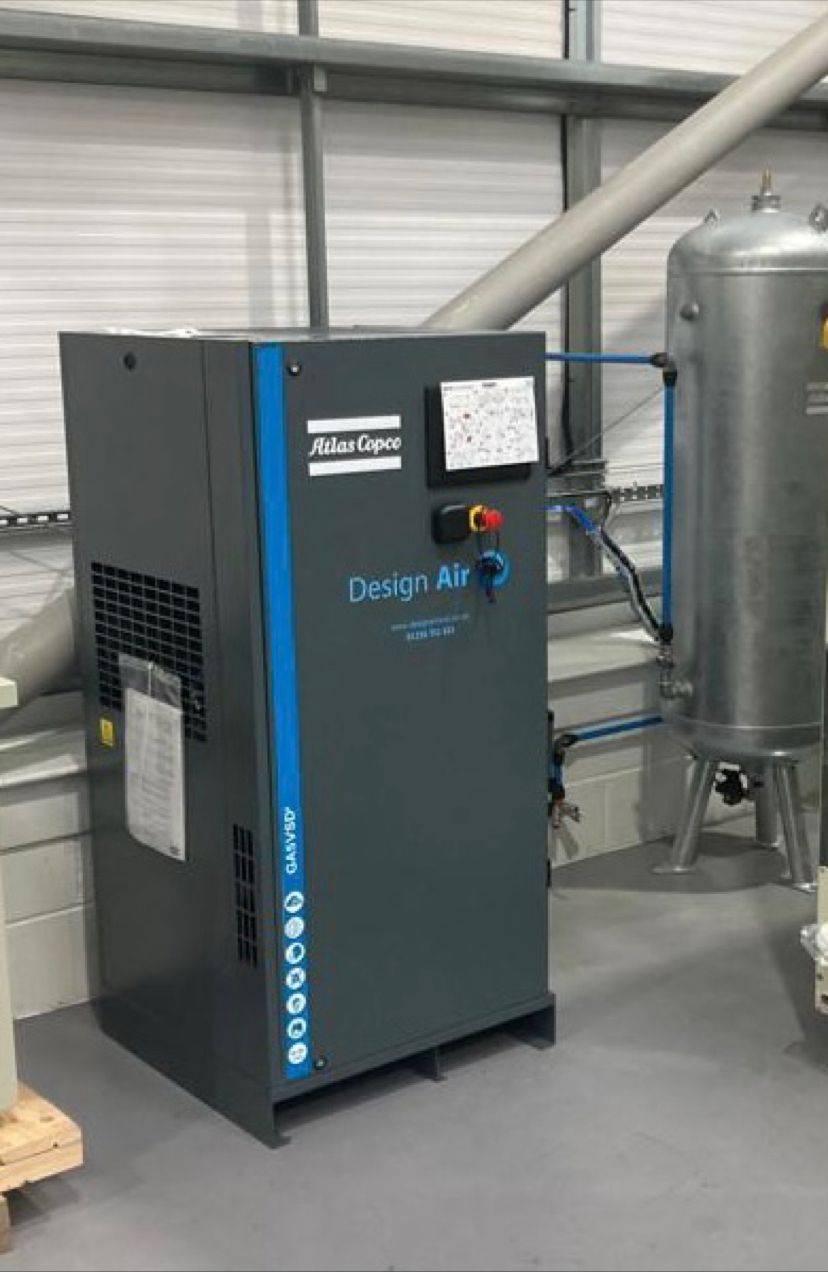
Why Compressed Air Matters in Electronics Manufacturing
In electronics manufacturing, compressed air can be a utility, a control medium or a direct process input. Those roles are not interchangeable. A supply that is suitable for a workshop tool may be unsuitable for a line where air contacts a board, a wafer, a clean enclosure or a precision actuator.
Applications
Pneumatic Control, Handling and Cleaning
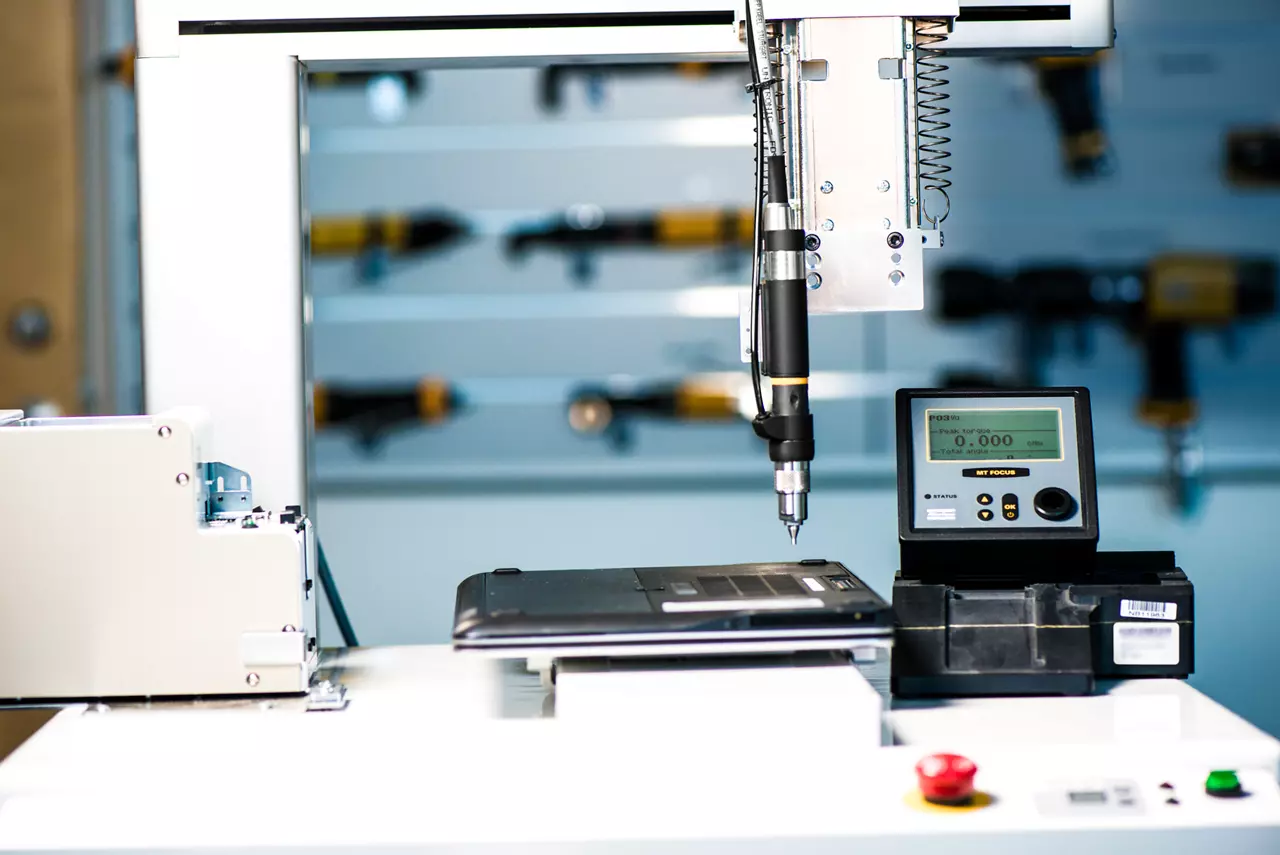
Compressed air is used across production because it delivers force quickly without putting an electric motor at every moving point. Atlas Copco’s semiconductor guidance lists handling, assembly, testing, packaging, pneumatic tools and instrumentation among the applications that use compressed air. The required air quality depends on where that air goes and what happens if a contaminant reaches the process.
- Pneumatic controls and actuators: pressure stability affects repeatable movement, clamping and timing.
- Component handling and packaging: the air supply must not introduce contamination into an area where sensitive components are exposed.
- PCB board cleaning and blow-off: the process specification must define the permitted particle, water and oil levels before air is directed at a product.
- Test and clean-area support: point-of-use requirements can be tighter than the compressor room’s general plant-air requirement.
The mechanism matters. Oil can arrive as liquid, aerosol or vapour. Water vapour can condense when air cools in a receiver or distribution line. Particles can enter through the intake or come from pipework, filters and worn components. Each contaminant has a different route into the system, so one generic filter specification is not a quality plan.
Air quality
Set the Air Quality Requirement Before Choosing Equipment
ISO 8573-1 gives production, quality and engineering teams a common way to specify compressed-air contamination by particles, water and oil. Where air compressors serve different functions, it is a specification tool rather than a generic badge. The correct classes and test points should be agreed from the process risk and documented at the points where air enters the operation.
It does not mean that every sensitive application needs the same level of air treatment, or that a single compressor makes the whole distribution system contamination-free. The selected specification has to cover the complete route to the point of use.
- Particles: specify the size and concentration that the process can tolerate.
- Water: specify pressure dew point at the relevant system pressure and at the point where the air will be used.
- Oil: consider liquid oil, aerosols and vapour, then select compression and treatment that controls the stated risk.
Create a Process-Specific Contamination Specification
Start with an air-use map. Record every outlet that serves general plant equipment, a control circuit, a cleaning operation, a test station or a controlled enclosure. For each point, capture the required pressure, flow, duty pattern, air-contact risk and consequence of failure. That prevents a sensitive use point from being diluted into a vague, whole-site air-quality statement.
What the Specification Should Record
The specification should state the required particle, water and oil limits, the location where they apply, the test method, the acceptance criteria and the responsibility for reviewing results. It should distinguish process air from general service air where the risks differ. Procurement can then compare proposals against the same engineering requirement instead of comparing compressor models in isolation.
That document should travel with the project. It gives operations a basis for routine checks, tells maintenance teams which filters and drains protect each process and gives quality teams a reference when a result needs investigation. A technically correct compressor quotation is not enough if the acceptance requirement is still unclear.
Site survey
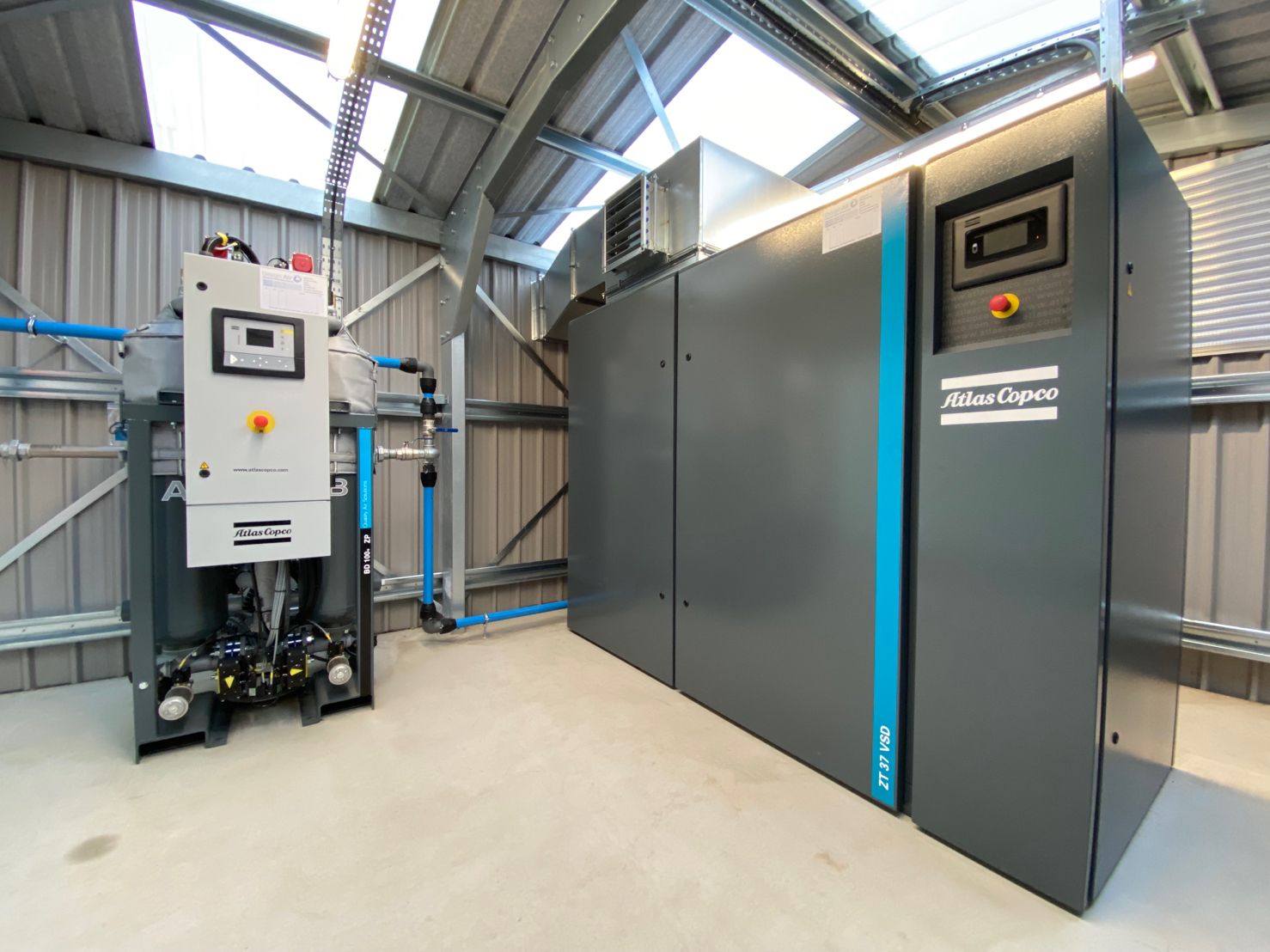
Map every point of use before you specify equipment
Design Air can record every outlet that serves general plant equipment, a control circuit, a cleaning operation, a test station or a controlled enclosure, then capture the required pressure, flow, duty pattern and air-contact risk at each one.
Oil-Free Compressed Air for Electronics
An oil-injected air compressor adds a potential source of lubricant to the compression path. Filtration can reduce downstream contamination, but a sensitive application should not rely on a single treatment stage to correct a poor source choice. Oil-free compression removes that source from the compression chamber, then the rest of the system protects the condition that the process requires.
Atlas Copco describes oil-free compression, drying and filtration as parts of the clean-air chain for semiconductor and other high-purity work. Design Air supplies and supports Atlas Copco’s oil-free compressor range for industrial sites that need a specification-led approach to compressed air.
Intake-air conditions, aftercooling, condensate removal, dryer performance, filtration, pipework material and point-of-use protection all influence the delivered air. The system should be assessed as a chain, with a stated air-quality target at each critical use point rather than an assumption based on the nameplate of one machine.

Keep the Distribution System Clean
Compressor-room conditions matter before the air reaches a dryer or filter. The intake should be positioned away from contaminants, the room needs suitable ventilation and maintenance work should not create an avoidable contamination route. These checks are ordinary engineering controls, but they are easy to overlook when the project is treated as a compressor purchase rather than an air-system design.
A clean source can lose quality in a poor distribution system. Corrosion products, accumulated condensate, pressure drop and leaks all affect what reaches the line. Pipework layout, drains and filter locations need to reflect the air demand, maintenance access and future production changes at your facility.

Control Moisture with Air Dryers and Dew Point
Compression heats intake air. When that air cools in an aftercooler, receiver or distribution pipe, water vapour can reach saturation and form condensate. Pressure dew point is the temperature at which that condensation occurs at the system pressure. It is the useful measure because it connects a dryer’s performance to the temperatures the air will encounter downstream.
Choose the Dryer from the Coldest Downstream Condition
Refrigerant dryers suit many general industrial duties, but they do not provide the low pressure dew points needed for every sensitive application. Desiccant dryers remove water vapour by adsorption and are selected where a much lower dew point is required. In Scotland, the coldest unheated section of pipework matters more than the average compressor-room temperature.
Drying does not remove every risk on its own. The design needs effective condensate drainage before the dryer, filters appropriate to the stated particle and oil requirement, and maintenance access that prevents a degraded element becoming a pressure-drop or contamination problem. The point-of-use filter should protect a defined process, not compensate for neglect upstream.
Design the Complete Compressed-Air System
Air compressors should be sized around measured demand and delivered-air condition, not only compressor capacity. A production line can have a steady base load, short peaks from actuators and changing shift patterns. Those conditions determine receiver volume, control strategy, standby provision and the capacity available after air treatment.
Match Compressor Control to the Demand Profile
A fixed-speed compressor can suit a stable demand. A variable speed drive compressor changes motor speed in response to system pressure and can suit a variable profile, provided the system is assessed as a whole. The decision should follow logged flow, pressure and operating hours. A VSD does not correct leaks, poor pipework or an unrealistic pressure setpoint.
Pressure loss is not only an energy issue. If an actuator, test station or cleaning process receives unstable pressure, it can affect repeatability. Distribution design should separate high-demand events from sensitive users where necessary, avoid unnecessary restrictions and record pressure at the locations that matter to production.
Size the Air Receiver to the Demand Data
An air receiver can buffer short demand events and give control systems time to respond, but it does not cure an undersized compressor or a restricted line. Receiver sizing, pressure band and downstream isolation should be reviewed with the actual demand data. That keeps a peak event from becoming a pressure problem across the production area.
Where Air Compressors for Electronics Support Production
The sector contains very different processes, from PCB assembly to semiconductor support and final-product testing. Air compressors are critical where the supply powers a machine, moves a component or enters a controlled process. The specification should follow the application instead of assuming that every air line in a building needs identical treatment.
Assembly, Handling and PCB Board Cleaning
Assembly lines can use pneumatic controls for handling, sorting and packaging. Where compressed air is used for PCB board cleaning or blow-off, the process specification needs to account for the board, coating, soldering and inspection requirements. The same is true for any point where air can contact an exposed component or a clean work zone.
Semiconductor and Controlled-Enclosure Work
Semiconductor and cleanroom processes can have tighter controls because small particles, moisture and oil can compromise a sensitive environment. The process owner should define the air-quality requirement with its quality and cleanroom controls, then verify it at the point of use. Equipment selection follows that requirement, not the other way round.


Nitrogen Generation for Process Support
Some manufacturing processes use nitrogen to create an inert atmosphere, including soldering applications where oxygen control affects the process. An on-site nitrogen generator uses compressed air as its feed gas, so the compressor, dryer and filtration package must be considered with the nitrogen purity and flow requirement. Design Air also supplies nitrogen generators for industrial applications, allowing the two systems to be assessed together where the process calls for it.
Energy
Measure Efficiency and Uptime Rather Than Assuming Them
High-purity compressed air does not require wasteful operation. The useful question is whether the system delivers the specified pressure, flow and condition with the lowest avoidable energy use. That requires measurement. A compressor that runs for long periods unloaded, at excessive pressure or against leaks is spending electricity without improving the process.
Use Demand Data Before Specifying a Retrofit
A measured energy audit can establish the actual demand profile, pressure stability and leak loading before a replacement or upgrade is selected. Design Air’s Energy package includes measured energy auditing, ultrasonic leak detection and pressure optimisation. The findings can show whether the priority is control, treatment, distribution repair or compressor capacity.
Energy
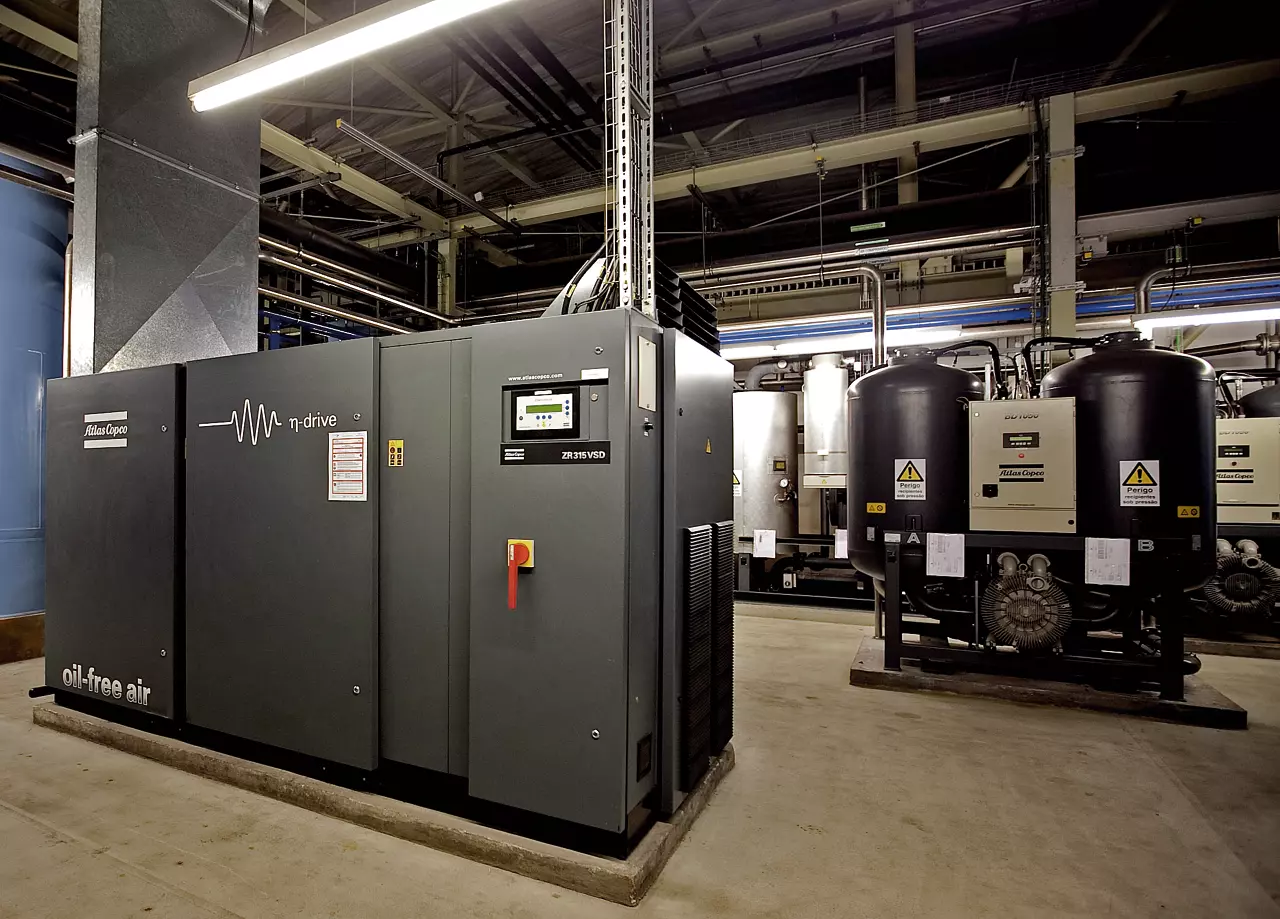
Measure the demand before specifying a retrofit
Design Air’s Energy package includes measured energy auditing, ultrasonic leak detection and pressure optimisation, so the actual demand profile, pressure stability and leak loading are known before a replacement or upgrade is selected.
Verify System Performance Over Time
Commissioning should establish a documented baseline of the agreed operating and air-quality conditions. Those records make later investigation faster because the team can compare a process issue with the system’s original operating condition.
Treat a material process or system change as a reason to review the specification. A new production cell, altered pipe route, additional demand or relocation of a sensitive process can change the air requirement. The right response is to re-check the use point, not to assume that an earlier test still represents the modified system.
System condition can change after commissioning because filters load, drains fail, pipework is altered or a process moves to a different part of the site. Set testing points and acceptance criteria with the process owner, retain the results and review them after material changes. That turns a technical requirement into a controlled operating condition.
Compliance
PSSR and Documented Pressure-System Safety
Compressed air is a relevant fluid under the Pressure Systems Safety Regulations 2000 when it is above 0.5 bar above atmospheric pressure. HSE PSSR guidance says qualifying pressure equipment needs a suitable Written Scheme of Examination before use and must be examined in line with that scheme. The scope, safe operating limits and examination arrangements should be confirmed for the specific pressure system by the dutyholder and a competent person.
For a facility, that work sits alongside the production specification. Air compressors, air receivers, protective devices and associated pipework have to be safe, documented and maintained while the air-quality system continues to serve the process. Design Air’s Compliance package covers Written Schemes of Examination and statutory examinations under PSSR 2000.
FAQs
Frequently Asked Questions
Does Every Electronics Application Need the Same Air Quality?
What is pressure dew point?
Which type of air compressor suits a sensitive manufacturing process?
Does PSSR apply to a controlled manufacturing facility’s compressed-air system?
Whether you are planning a new production cell or reviewing an established line, start with the process requirement and verify the delivered condition at the point of use. That is the practical route to protecting sensitive work without specifying more equipment than the process needs.
If your facility needs a review of its air-quality requirement, compressor duty or pressure-system documentation, contact Design Air for a site survey, system assessment or service agreement quotation in Scotland.