
Industries · Transport
Air Compressors for the Transport Industry
A depot compressor rarely fails at a convenient time. In a Glasgow distribution centre or an Aberdeen service yard, the first sign is usually operational: a tool slows, a paint process has to be repeated, or a maintenance task cannot proceed. Air compressors for the transport industry need to be specified from the work being done at each bay, not from a nominal motor size or the nameplate on the machine being replaced. For workshop air, the required industrial air compressors are the ones that can supply the measured duty reliably at the points where people and equipment use the air.
Transport is not one compressed-air application. A road-haulage workshop, a bus depot, a rail maintenance facility and a body-repair operation can all use compressed air, yet their duty cycles, air-quality risks and safety responsibilities differ. Design Air, Atlas Copco Premier Distributor in Scotland, supplies, designs, installs and maintains industrial compressed air systems across Scotland. A useful specification starts with measured demand, pressure at the point of use, required air quality and operating hours.
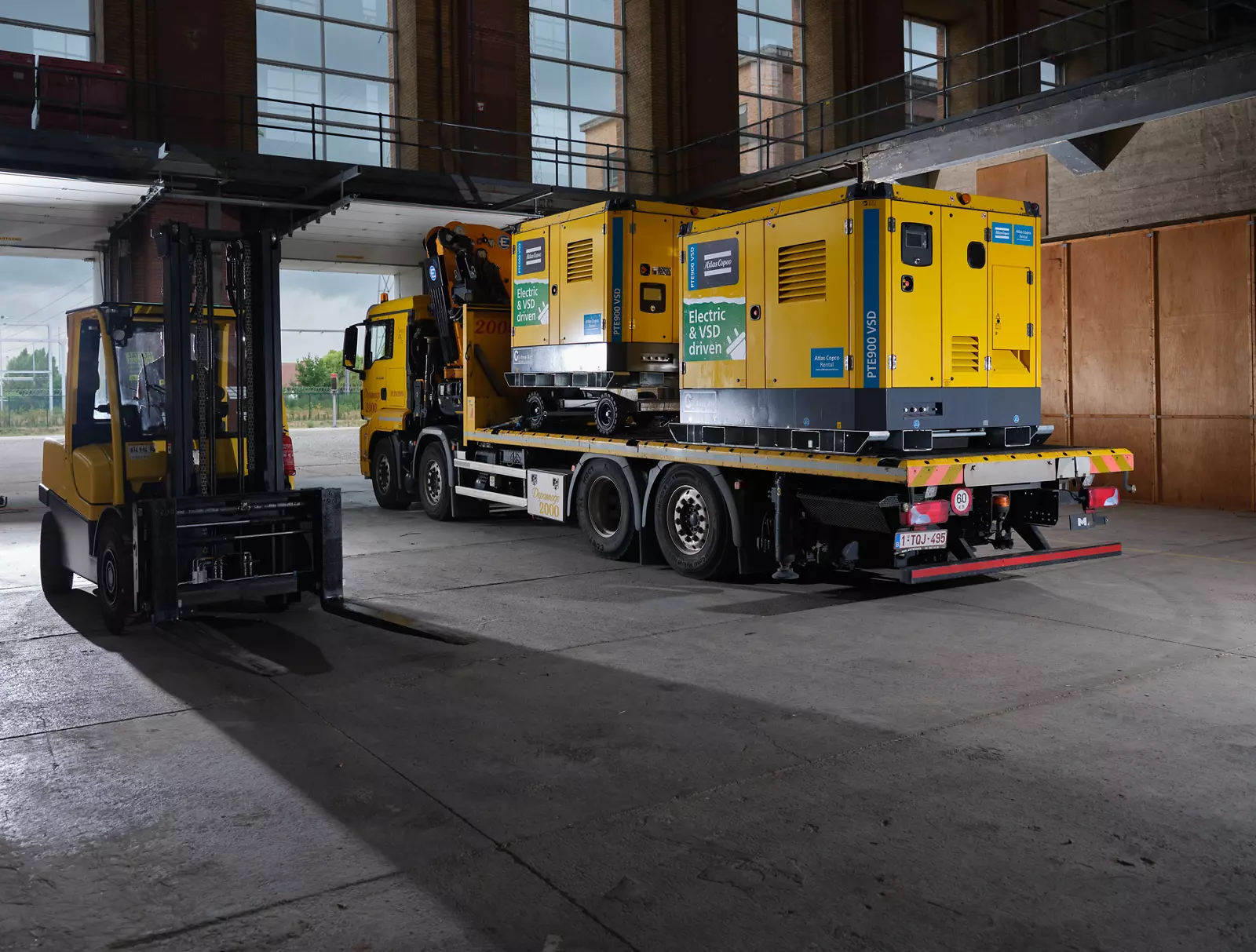
Compressed Air Applications in Transport Depots
The first engineering distinction is between a stationary depot air system and equipment fitted to a vehicle. A workshop compressor can supply tools, tyre inflation, cleaning, test work and specified maintenance tasks. It does not replace the pneumatic system installed on a truck, bus or train. Separating those boundaries avoids an air system that is oversized in the wrong place, or a safety-critical use that has not been properly specified.
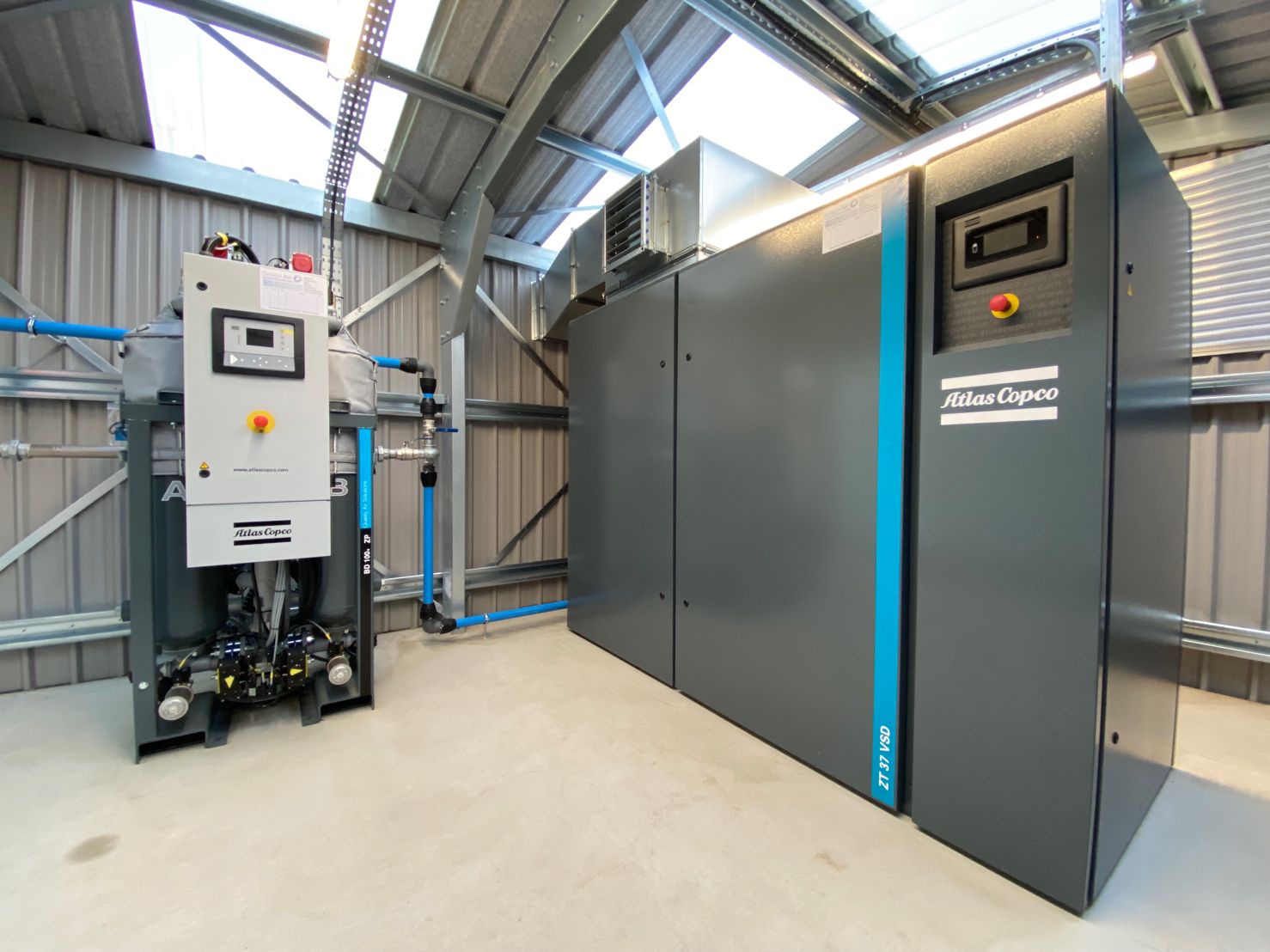
Depot types
Road Haulage and Logistics Depots
HGV and logistics depots commonly have short, high-demand events across several bays. An impact wrench, tyre equipment and a blow-off point may be used at the same time, then demand falls away while vehicles are moved or inspected. The design question is not only how much air one tool needs. It is the combined free-air demand, the minimum pressure each tool needs, the duration of the peak and the pressure loss through the pipework to the furthest bay. A receiver can buffer a short peak, but it cannot correct a compressor that is too small for the normal load.
Bus and Coach Maintenance Depots
At a bus or coach depot, the stationary air system may support workshop tools and defined servicing activities. The vehicle braking, suspension and door systems remain subject to the vehicle manufacturer’s and operator’s maintenance requirements. That distinction matters when a site is being modernised. Transport Scotland’s zero-emission bus programme is supporting new vehicles and associated depot infrastructure across Scotland, so facilities teams should recheck their workshop demand profile rather than assume that an existing compressor arrangement still matches the work.
Rail Maintenance Facilities
Rail work needs an equally clear boundary. General workshop equipment, short-duration test tasks and any air used for a defined yard process should be identified separately. For rolling-stock equipment, the vehicle specification, required approvals, interfaces and air-treatment requirements need to be confirmed with the relevant engineering authority. The air treatment train should then be designed around the required point of use, including the duty cycle, pressure dew point, filtration and any resilience requirement. A generic depot compressor description is not a substitute for that specification.
Vehicle Body and Repair Shops
Body and paint work is quality-sensitive even when the air demand is intermittent. Liquid water, oil aerosols and solid particles can travel from the compressor room into a spray line and show up as defects in the finish. The practical route is to start with the coating manufacturer’s requirements, then specify the dryer, filters, drains and pipework so that the air quality is maintained from compressor discharge to the spray booth. The same approach is relevant where a transport depot carries out specialist vehicle refurbishment rather than routine mechanical work.
Selecting an Air Compressor for a Transport Depot
An air compressor should be selected for delivered free air at the operating pressure, rather than installed motor power alone. A site survey should record the simultaneous users, the minimum pressure at the critical point of use, the duration and frequency of peak demand, the pipework route and any planned changes to the depot. This is particularly important where an existing machine has been made to work by raising the pressure setting. Higher discharge pressure does not remove friction losses in undersized pipework or restrictions in hoses, filters and fittings.
The table below is a starting framework, not a catalogue selector. It helps a facilities engineer separate the application questions that affect the compressor, air receiver, dryer, filtration and distribution system. The final design should be based on measured data from the site. Across the transportation industry, the same method prevents a catalogue comparison from disguising a distribution or control problem. It also makes future capacity an explicit design decision rather than an emergency modification.
Pipework, Distribution and Point-of-Use Performance
A compressor can only deliver the pressure that survives the distribution system. Every metre of pipe, fitting, flexible hose, filter and quick coupling adds resistance. The pressure loss becomes heat, so increasing the compressor setpoint is usually the most expensive way to compensate for a restricted network. A site layout should separate the compressor-room riser, distribution pipes, service drops and final connections, then check the highest-demand and most remote points individually.
For a depot with several workshop bays, a ring main can provide more than one flow path to a use point and can make maintenance easier to plan. A radial arrangement can be appropriate where the demand is concentrated in one direction or where the building layout dictates it. The choice needs a scaled route, the required flow at each branch, realistic allowance for fittings and a defined pressure-drop limit. Future bays, additional test equipment or a new paint area should be included before pipe diameter is fixed.
Pipe material is part of the specification. In coastal or corrosive environments, the internal condition of the distribution network affects both pressure loss and particulate risk. Condensate should be managed through correctly located drains, and dead legs should be avoided where they can retain water. Design Air can include pipework installation within a compressed-air system assessment, so the compressor, treatment equipment and distribution network are considered together rather than as separate purchases.

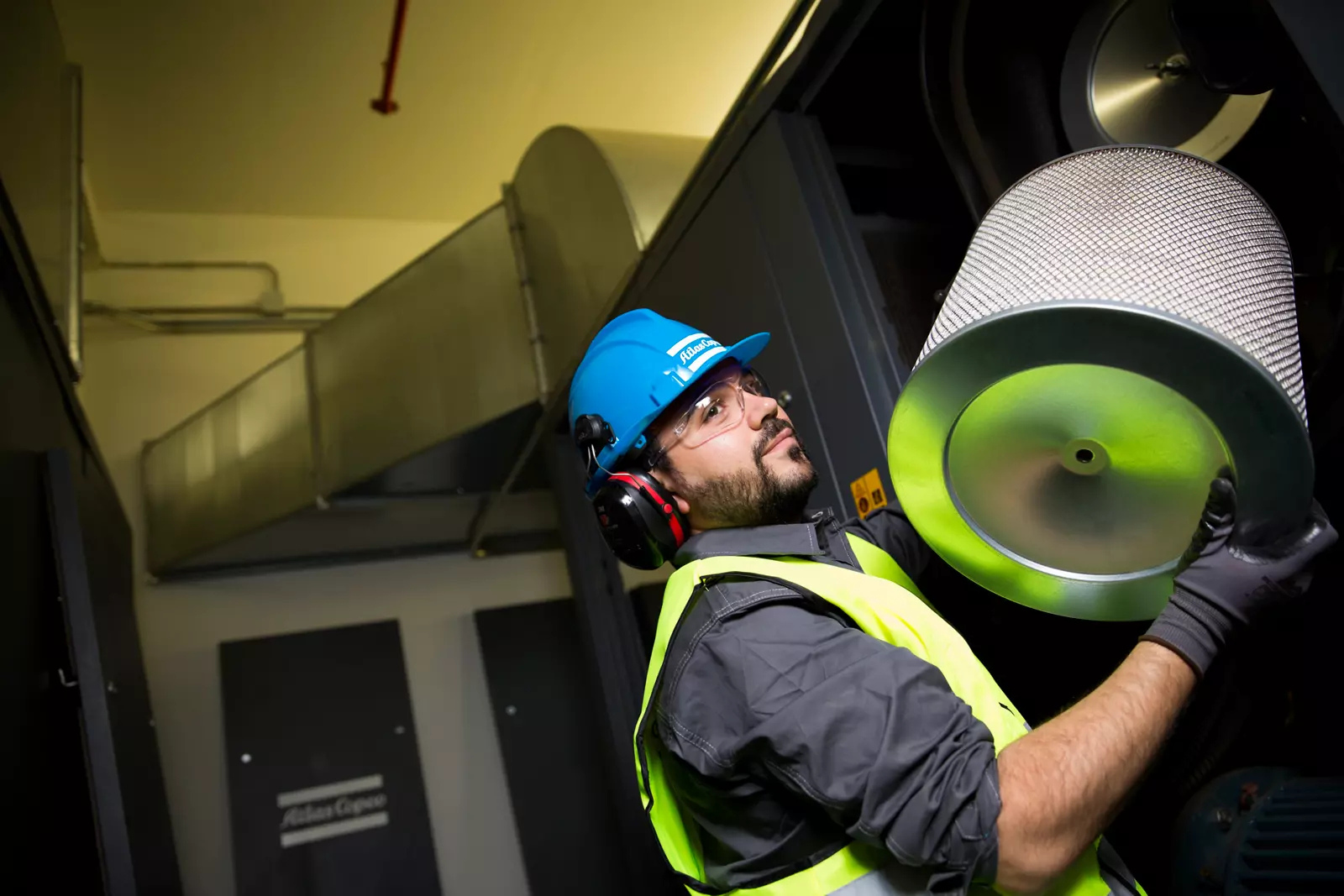
Site survey
Specify the depot from what each bay actually does
Design Air can record the simultaneous users, the minimum pressure at the critical point of use, the duration and frequency of peak demand, the pipework route and any planned changes to the depot before a compressor is selected.
Air Quality, Moisture and Cold Weather Pipework
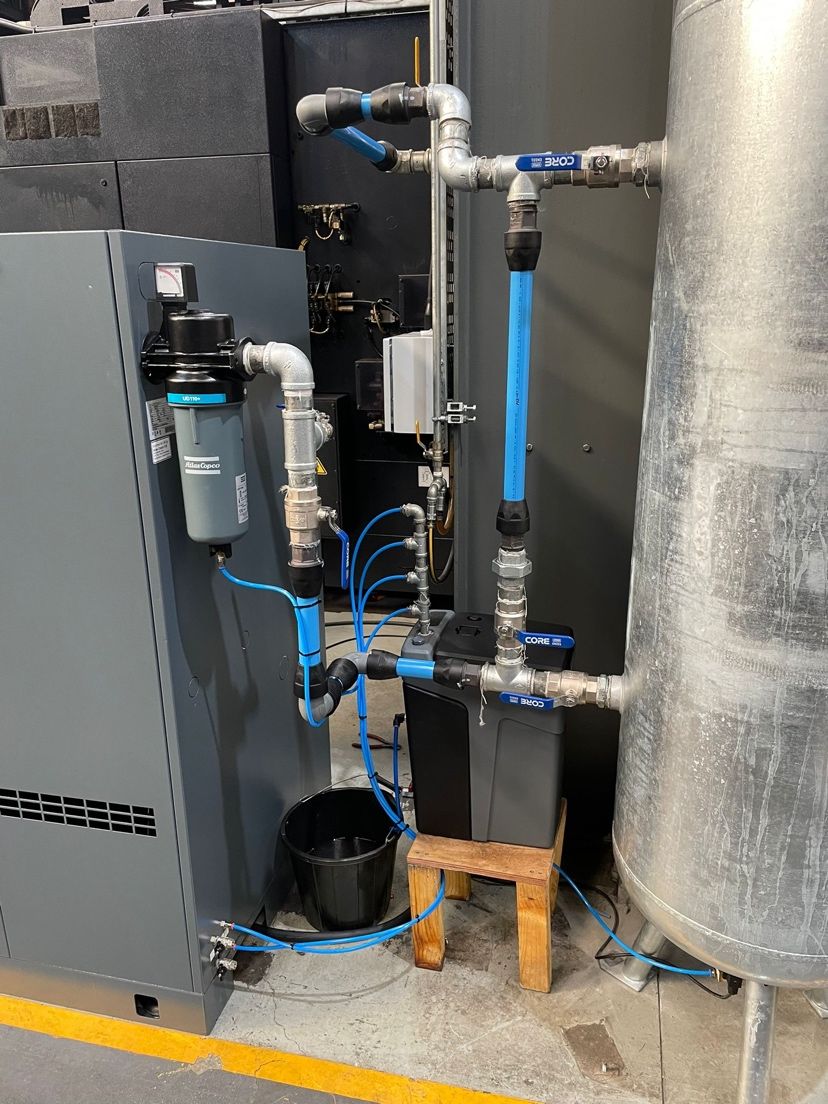
Compressing air concentrates the water vapour already present in the intake air. When that air cools in a receiver or distribution pipe, water can condense unless it is removed and the pressure dew point is suitable for the application. A dryer selection therefore begins with the coldest point the compressed air will encounter, not only the temperature in the compressor room. A refrigerant dryer designed to deliver a pressure dew point of about +3°C is not frost protection for pipework exposed to lower temperatures.
For paint processes, water is only one part of the air-quality question. Oil aerosols, vapour and particulates must be considered alongside the required pressure dew point, then controlled with the appropriate treatment train and maintained filters. The same principle applies to sensitive pneumatic equipment. Each air-quality target should be set by the process, equipment or material requirement rather than by an assumed compressor type. For related coating and assembly applications, see Design Air’s work with the automotive sector. This is an end-to-end control issue. A correctly selected filter cannot make up for a saturated line downstream of the dryer, and a well-maintained dryer cannot protect a branch that is exposed to a colder environment without the necessary dew-point margin.
Energy
Energy Use, Pressure and Varying Demand
Energy waste often starts with a system that is held at a higher pressure than the work requires. The extra pressure does not improve a tool that is already being restricted by a congested filter, a long hose or a narrow section of pipe. It increases the energy needed to make the air and can create artificial demand at points of use. Pressure logging at the receiver and at the furthest working point shows whether the issue is generation, distribution or the way equipment is being operated.
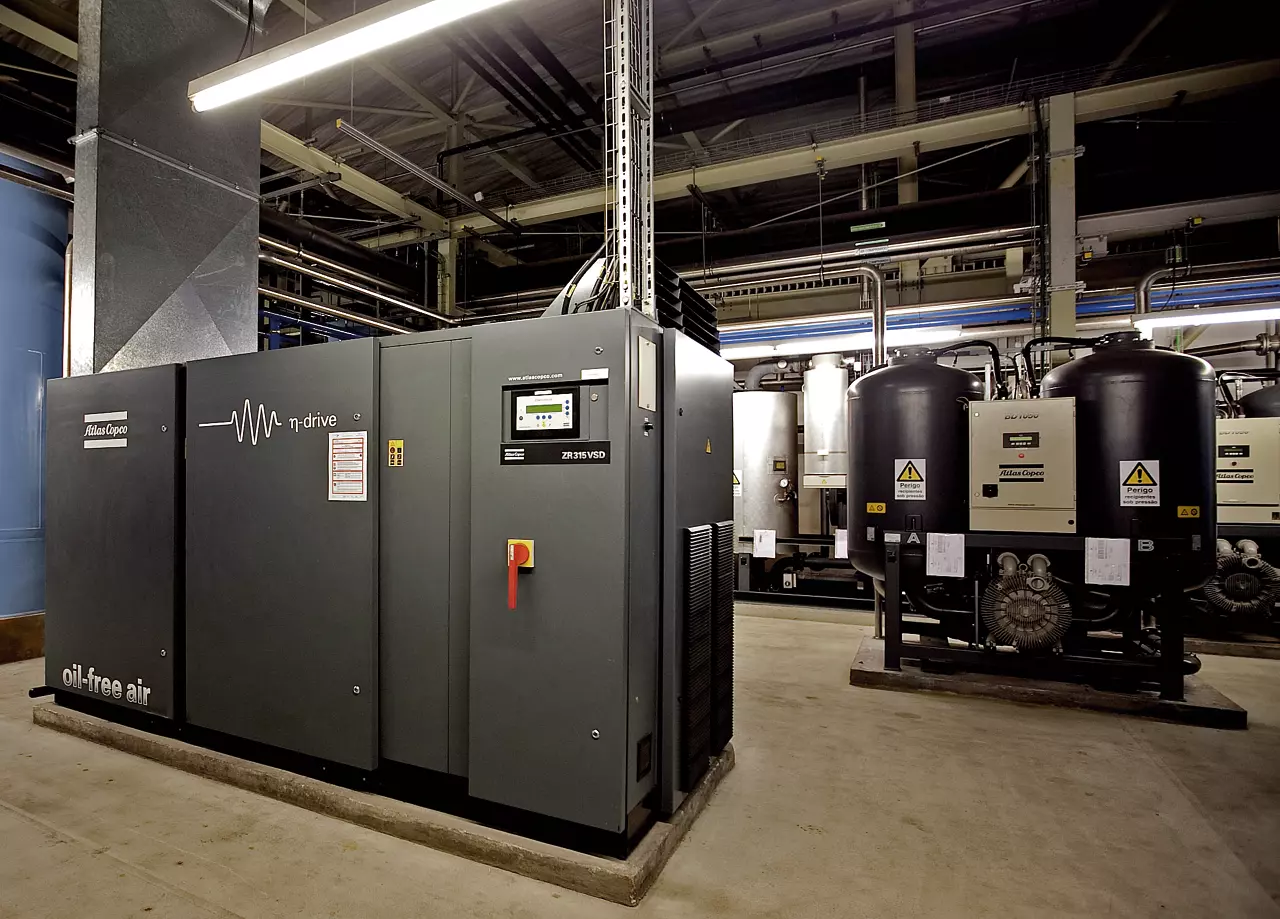
A variable speed drive compressor adjusts motor speed to follow changes in demand. That can be a sound choice where a depot spends long periods below maximum load, such as between service bays, during shift changes or overnight. It is not automatically the right machine for every site. A stable, continuous demand may justify a different arrangement. The decision should follow a load profile, with an energy audit checking run hours, load and unload behaviour, leaks, pressure setpoints and the true flow requirement.
Receivers also need to be considered as part of efficiency. They store compressed air, damp short peaks and allow some cooling and condensate separation. They do not create capacity. A receiver placed near a short, intermittent high-demand user can reduce a local pressure dip, while the main compressor remains sized around the site’s normal demand. This is why a flow and pressure survey should precede a replacement decision.
Energy
Let the load profile decide, not the machine on the quote
Design Air can log pressure at the receiver and at the furthest working point, then run an energy audit covering run hours, load and unload behaviour, leaks, pressure setpoints and the true flow requirement.
Keeping Transport Depot Systems Available
Availability is partly a maintenance question and partly a system-design question. A depot can appear to have a compressor fault when the real issue is demand-side leakage, a newly added air user, a blocked filter or pressure loss in the distribution network. The Isolate and Verify test can help separate the two, provided it is safe to carry out under site procedures. Isolate the plant distribution network at the main service valve. If the compressor reaches its normal cut-out pressure promptly, investigate demand and distribution. If it does not, investigate the compressor supply side.
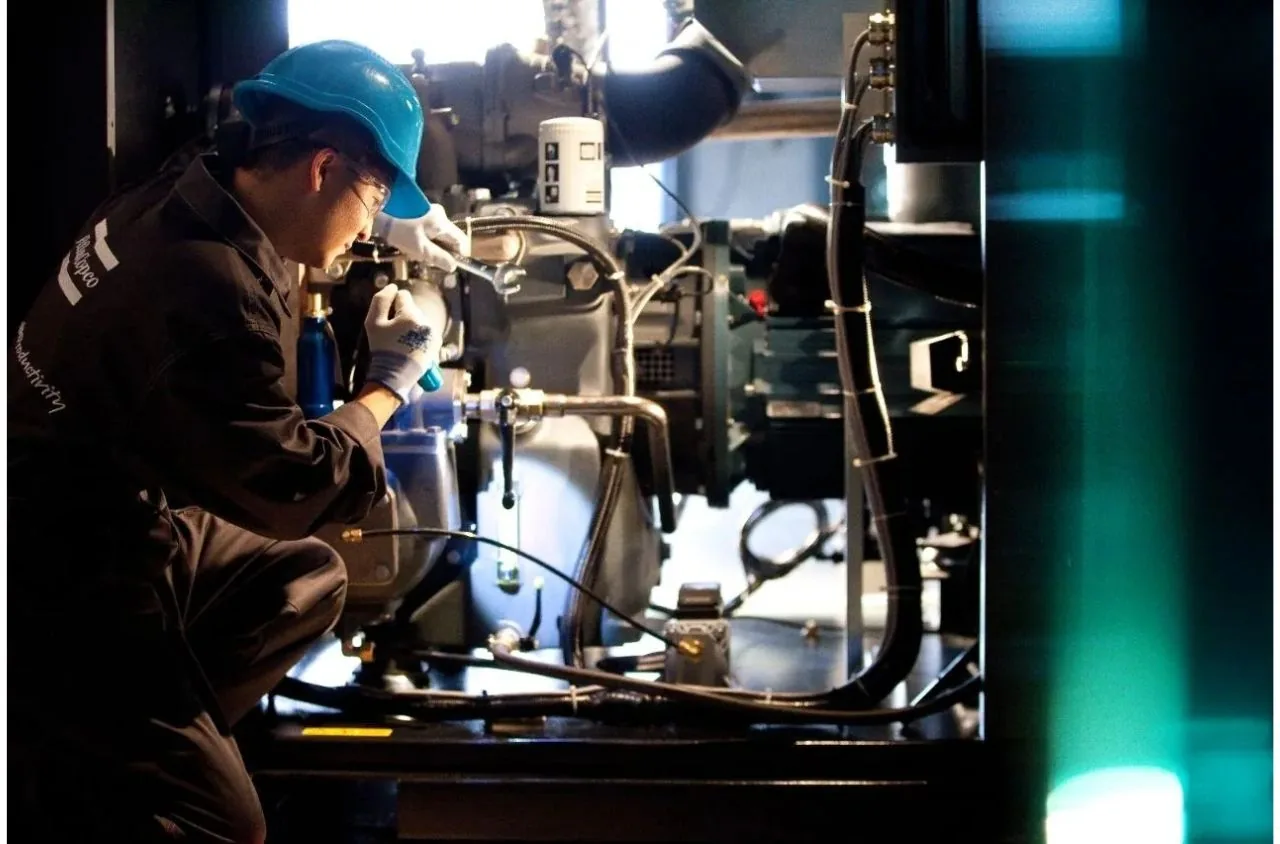
Planned preventive maintenance gives the engineering team a chance to inspect the compressor, treatment equipment, drains and controls before performance loss becomes a production problem. Design Air’s Service package includes planned preventive maintenance and 24/7 breakdown cover. The Energy package covers measured energy auditing, ultrasonic leak detection and pressure optimisation. Where a failure would stop depot work, the service plan should be matched to the duty cycle, critical spares, temporary-air requirement and the consequences of a missed maintenance window.
Compliance
PSSR 2000, Air Receivers and Condensate Management
Air receivers and associated protective devices are pressure-system equipment, not passive accessories. HSE guidance explains that compressed air above 0.5 bar gauge is a relevant fluid under the Pressure Systems Safety Regulations 2000. Before qualifying pressure equipment is used, a suitable Written Scheme of Examination must be in place and the equipment must be examined in accordance with that scheme. The dutyholder must know the safe operating limits and keep the system safe within them.
Design Air’s Compliance package covers Written Schemes of Examination and statutory examinations under PSSR 2000. It supports the technical work around the system, but responsibility for safe operation remains with the dutyholder. A change to the receiver, pressure setting, protective device, pipework or use case should trigger a review of whether the scheme still describes the system in service.
Condensate needs the same discipline. Water separated from compressed air can contain oil and other contaminants, so it should not be treated as ordinary clean water by default. The disposal route must reflect the treatment equipment, the site drainage arrangement and the applicable environmental requirements. Recording drain maintenance and checking for visible carryover are small tasks that prevent a moisture problem from becoming a corrosion, quality or environmental-management problem.
FAQs
Frequently Asked Questions
What are the types of air compressor used in industry?
What are the top five air compressors?
What is the best air compressor for a service truck?
What are the four types of compressors?
Arrange a Transport Depot System Assessment
Design Air can assess the compressor, air receiver, treatment equipment, distribution network and demand profile at industrial transport sites across Scotland. Contact our engineering team for a site survey, system assessment or service-agreement quotation. The useful starting point is a measured picture of pressure, flow, air quality and duty cycle, followed by a specification that fits the work carried out at your depot.