
Industries · Defence
Air Compressors for the Defence Industry
Air compressors for the defence industry are specified around one practical question: what happens if pressure, air quality or availability moves outside the limit required by the process? At a Scottish manufacturing or support site, the result can be interrupted assembly, compromised testing or delayed maintenance. Design Air, Atlas Copco Premier Distributor in Scotland, supplies, designs, installs and maintains industrial compressed air systems across Scotland. The first step is not selecting a compressor.

Why Compressed Air Matters in Defence Manufacturing and Support
Compressed air is stored energy. It can power pneumatic tools, operate actuators, support automation and provide the controlled supply required by test, cleaning and handling processes. The exact application differs between sites, but the engineering consequence is consistent: a restriction, pressure drop or contamination event travels downstream to the point of use.
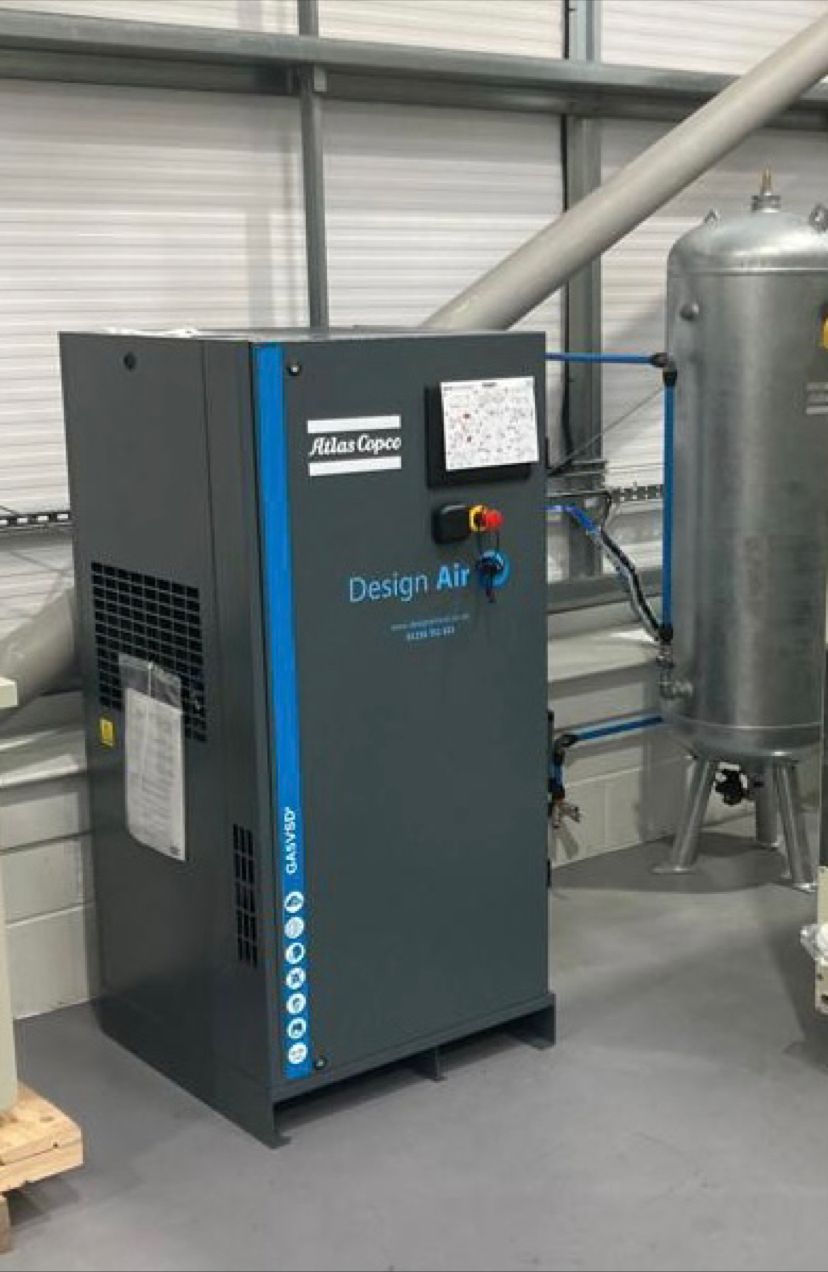
Start With the Point of Use
A useful specification starts at the machine or process, then works back through the distribution network to the compressor room. Record the required pressure at the point of use, the true flow rate, the peak demand profile and the permitted particle, water and oil content. “Capacity” alone is not enough. A compressor’s free air delivery at the working pressure determines whether it can support the duty.
For a site assessment, the questions are normally:
Demand profile
Average demand can hide short peaks when several tools or machines operate together. Metering across a representative shift shows whether the receiver and compressor control strategy can absorb those peaks.
Air quality
The required ISO 8573-1 class must reflect the process risk. Water, particles and oil create different failure modes, so air treatment should be specified for the contaminant that matters.
Operating conditions
Ambient temperature, dust, humidity, available electrical supply, pipework route and service access all affect the equipment choice and maintenance plan.
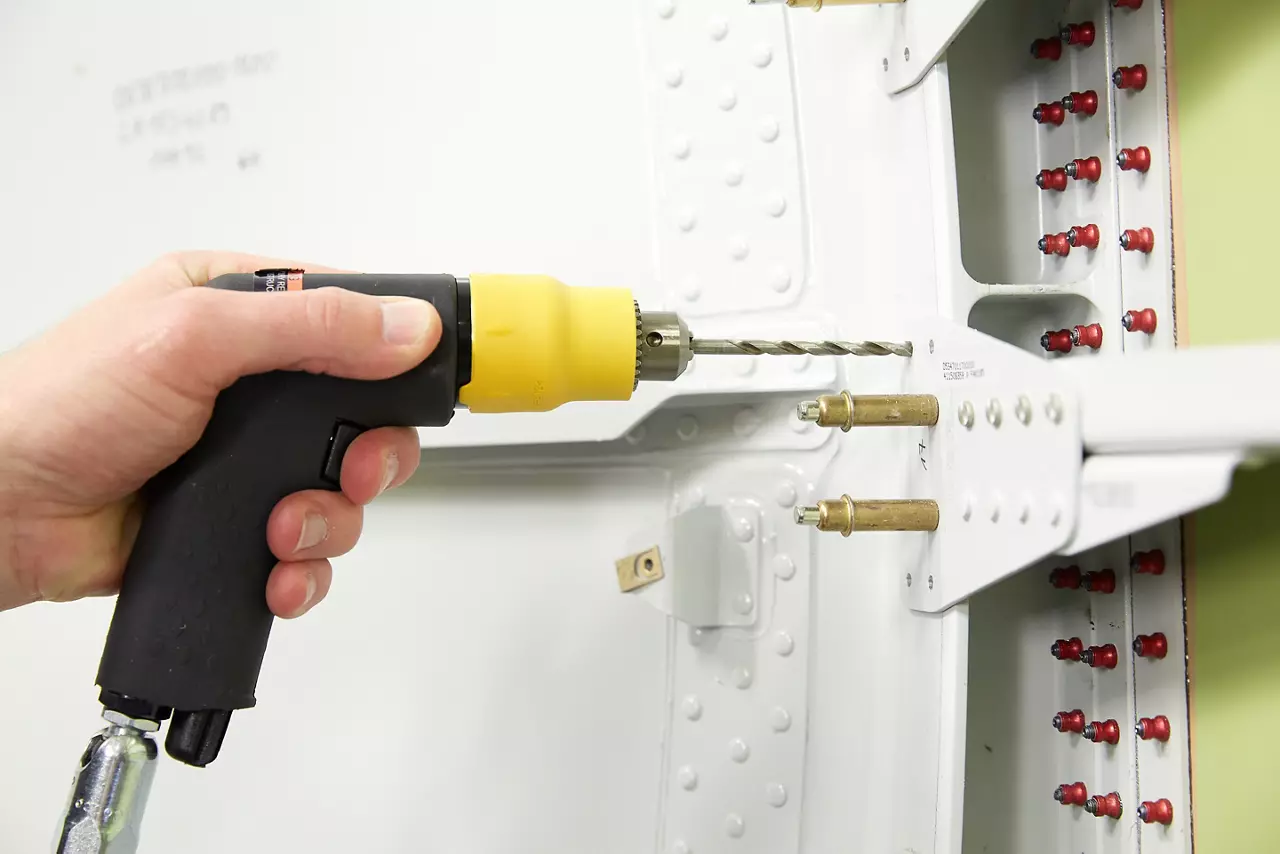
Compressed Air Solutions for Defence Sub-Sectors
The defence industry is not one operating environment. A production line, an inspection area and a maintenance workshop may all use compressed air, but they do not need the same pressure, purity or resilience. Procurement should tie the compressor system to the documented application instead of applying a single generic specification across the site.
Sub-sectors
Manufacturing and Assembly
Pneumatic tooling and automated assembly require stable pressure at the tool or actuator. If the distribution network is undersized, the compressor may appear to be at fault when the real restriction is pressure drop in the pipework. The same diagnostic applies in aerospace production and in other precision manufacturing: measure pressure at the point of use while demand is present, then compare it with the compressor-room reading.
Aerospace and Precision Work
Where compressed air reaches sensitive components, coatings or instrumentation, the air-quality specification needs more than a statement that the supply is “clean”. It should state the relevant ISO 8573-1 class and the evidence required to prove it. An oil-free compressor removes oil from the compression chamber, but dryers and filters still control water and particles in the wider system.
Maintenance and Estate Services
A workshop compressor serving tyre inflation, cleaning, tooling or test equipment has a different duty from a process compressor. The important variables are duty cycle, repair access, available space and the consequence of a stoppage. Separating these loads can prevent a non-critical workshop demand from pulling down pressure for a production process.
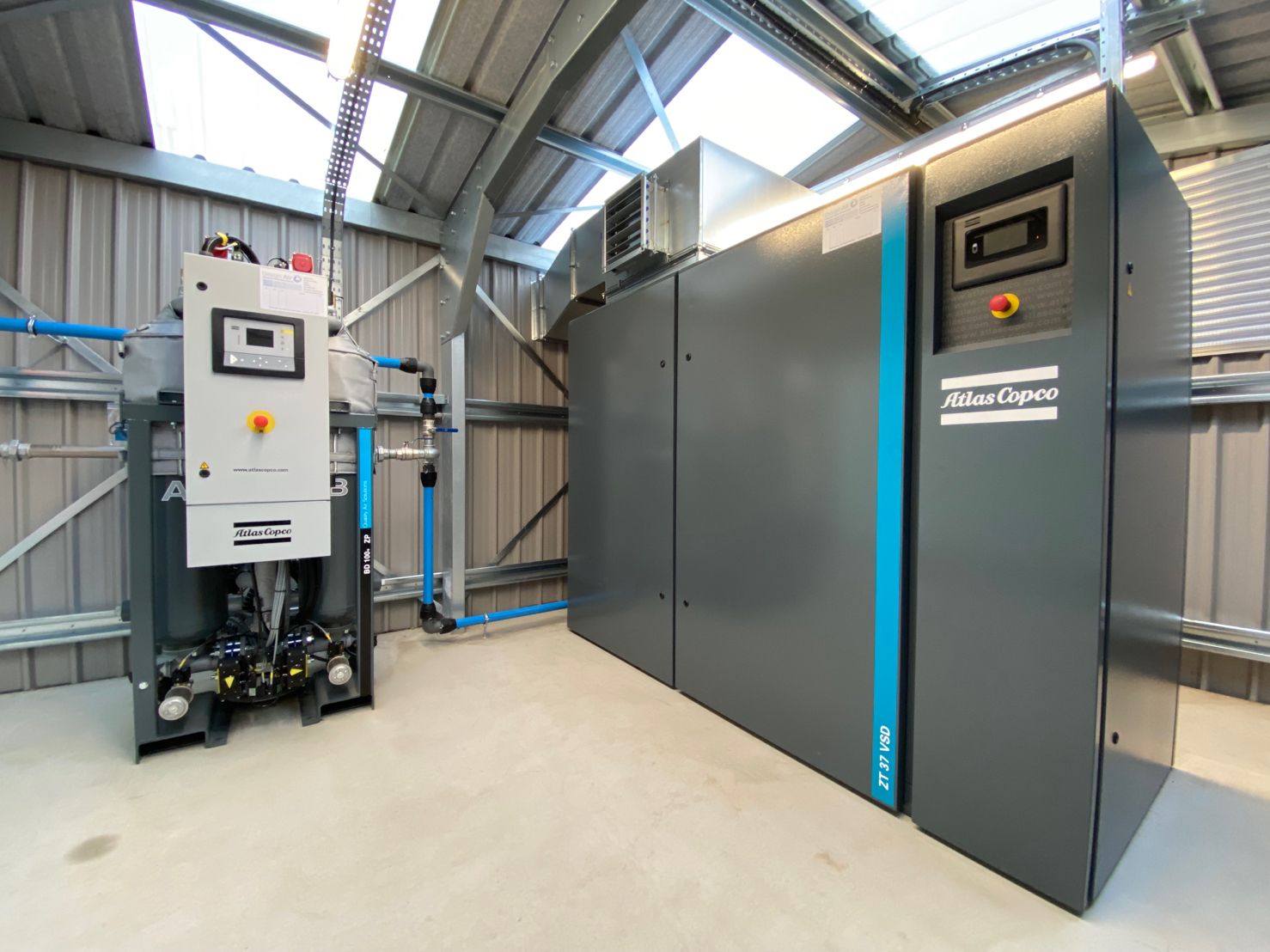
Site survey
Work back from the point of use, not the compressor room
Design Air can record the required pressure at the point of use, the true flow rate, the peak demand profile and the permitted particle, water and oil content, then meter across a representative shift.
Air Quality Has to Be Designed, Not Assumed
The air entering a compressor contains water vapour and airborne particles. Compression reduces its volume and raises its temperature. As the air cools in the receiver and distribution pipework, water can condense. That condensate can corrode pipework, overload filters and reach sensitive equipment unless the dryer, drains and filtration train match the application.
Oil-Free and Treated Air Are Different Decisions
Oil-free air and treated air are related, but they answer different questions. Oil-free compression controls oil introduced by the compressor. Treatment controls the particles, water and any remaining contaminants carried through the system. The required class should come from the process specification, not from a generic preference for one technology.

Reliability Comes From System Architecture
A dependable air system is more than a reliable compressor. It needs enough storage to control short demand peaks, pipework sized to limit pressure drop, a treatment train matched to the stated air quality and isolation points that allow maintenance without stopping every user. Where the consequence of a loss of supply is high, the resilience strategy should define the acceptable recovery time, the standby arrangement and how that arrangement is tested.
Measure the Duty Before Buying
A load profile is more useful than a nominal rating. It shows whether demand is steady, changes by shift or contains short high-flow events. It can expose a compressor spending long periods unloaded, a receiver that is too small for the demand event or a system where pressure has been raised to compensate for a distribution restriction. The measurement gives procurement a design basis that can be checked after commissioning.
Compliance
PSSR and MoD Site Requirements
The Pressure Systems Safety Regulations 2000 (hse.gov.uk) apply to pressure systems used at work and cover compressed air above 0.5 bar above atmospheric pressure. Before qualifying pressure equipment is used, the Health and Safety Executive says a Written Scheme of Examination must be in place and an examination undertaken. The regulations also contain exceptions, including pressure systems forming part of a weapons system. That is why a defence-site assessment must establish the exact equipment, dutyholder and applicable requirement rather than relying on a blanket PSSR statement.
The Ministry of Defence’s JSP 375 framework (gov.uk) includes specific guidance on pressure systems and equipment within its health and safety arrangements. The project team should confirm the site rules, documentation, access arrangements and approval route before committing to a design or maintenance schedule. Design Air’s Compliance package covers Written Schemes of Examination and statutory examinations under PSSR 2000, supporting the site’s own dutyholder and competent-person arrangements.
Energy
Service and Energy Decisions Affect Availability
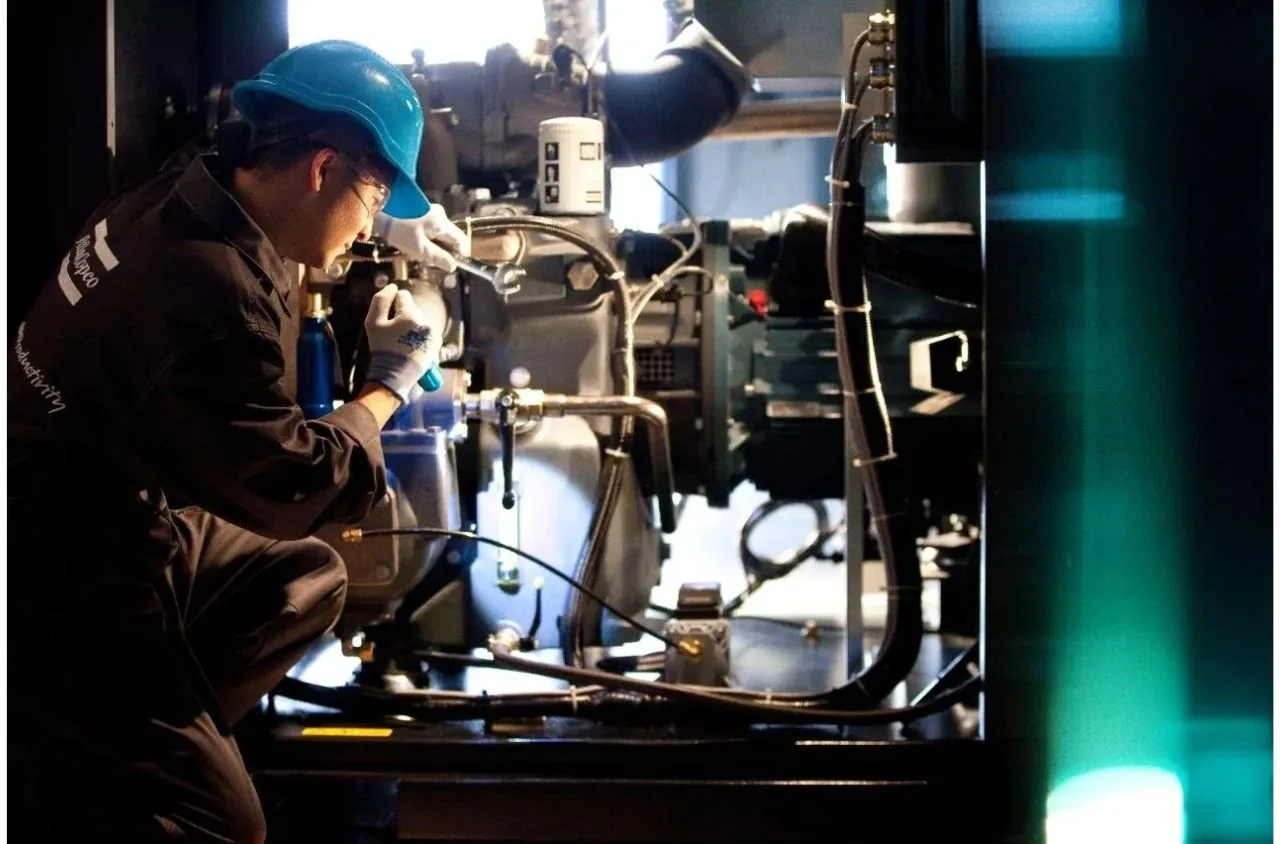
A service interval is not a calendar decoration. Oil condition, filter loading, separator performance, belt condition where fitted, condensate management and operating temperature each change how the compressor behaves under load.
Use Data to Locate the Fault
When pressure will not recover, separate the compressor room from the distribution network using the main service valve and observe the result. If the compressor reaches its cut-off pressure while isolated, the problem is usually on the demand side, such as leakage, a new load or a restriction. If it cannot recover while isolated, investigate the compressor, controls or air treatment equipment. This is the quickest way to decide where the next maintenance action belongs.
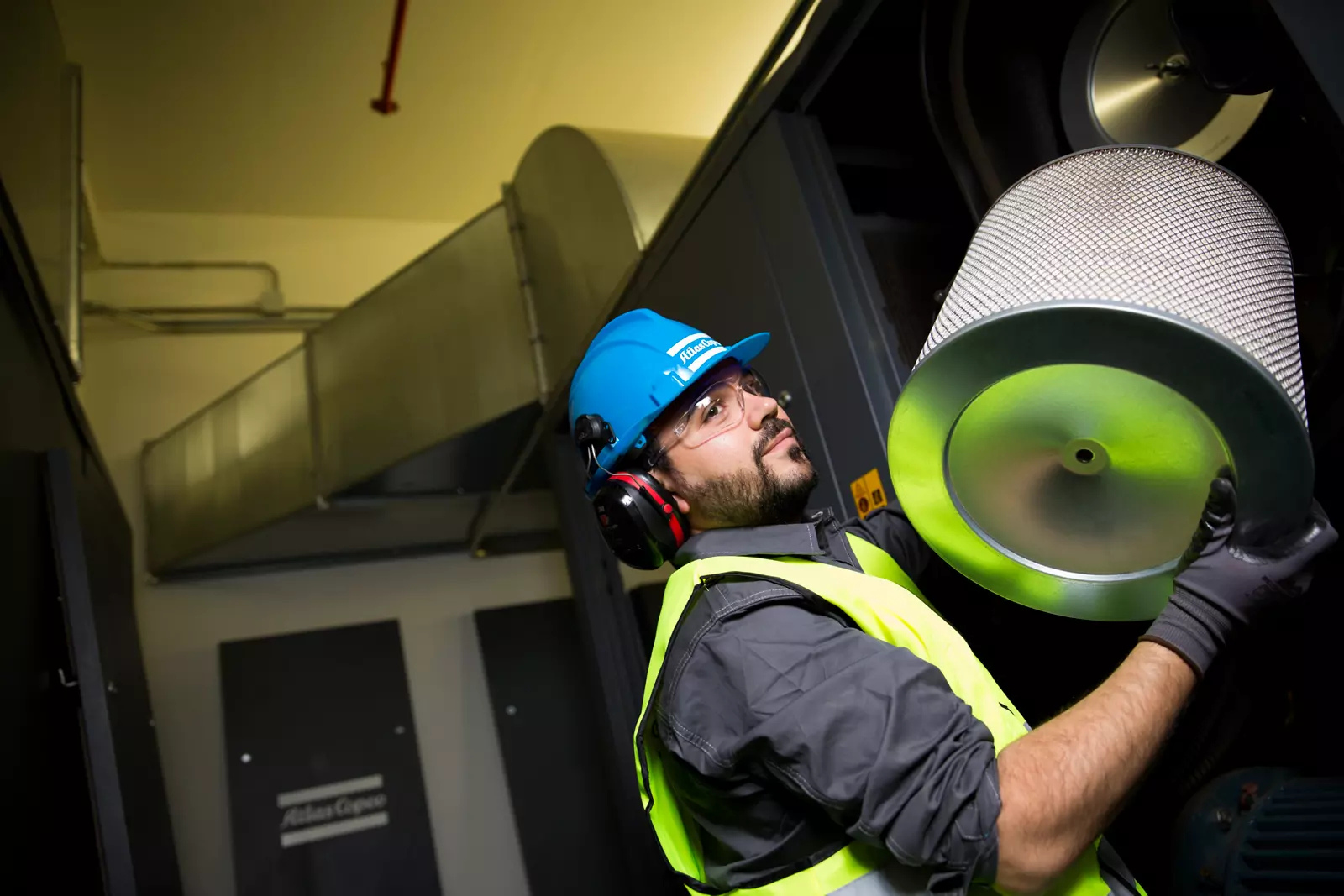
The Energy package includes measured energy auditing, ultrasonic leak detection and pressure optimisation. Its purpose is to identify the operating condition that is creating the cost or availability problem, not to make a generic efficiency claim.
Energy
Find the operating condition creating the cost, not a generic saving
Design Air’s Energy package includes measured energy auditing, ultrasonic leak detection and pressure optimisation, identifying the operating condition behind a cost or availability problem.
Questions to Resolve Before Procurement
A procurement brief should give the system designer enough information to size and verify the installation. At minimum, it should answer the following:
Required free air delivery
State the average and peak flow at the working pressure, with the units and the operating profile.
Air-quality requirement
State the ISO 8573-1 requirement for particles, water and oil, plus the testing or validation evidence the process requires.
Operating environment
Record the installation location, ambient conditions, noise restrictions, electrical supply, service access and any access-control requirements that the client has confirmed.
Continuity plan
Define the acceptable downtime, the standby approach and the test method for any backup arrangement.
FAQs
Frequently Asked Questions About Defence Air Compressors
What Are Air Compressors Used for in Industry?
Which Type of Air Compressor Is Suitable?
Do PSSR Rules Apply to Defence Air Systems?
Discuss Your System Requirements With Design Air
Design Air has been serving Scotland from Airdrie since 2003. If you are planning a compressed-air installation, reviewing a current system or need to clarify the PSSR position for an industrial site, contact our engineers for a site survey, system assessment or service agreement quotation.