
Industries · Aerospace
Air Compressors for the Aerospace Industry
At an aerospace site, compressed air is a controlled process input, not only a power source. Oil aerosol, condensed water or particles released from ageing pipework can affect coating, pneumatic assembly, leak-testing and instrumentation work. That is why air compressors for the aerospace industry need a documented point-of-use specification rather than a general assurance that the compressor is clean.
Design Air, Atlas Copco Premier Distributor in Scotland, supplies, designs, installs and maintains industrial compressed air systems across Scotland.
Why Air Compressors for the Aerospace Industry Need a Process Specification
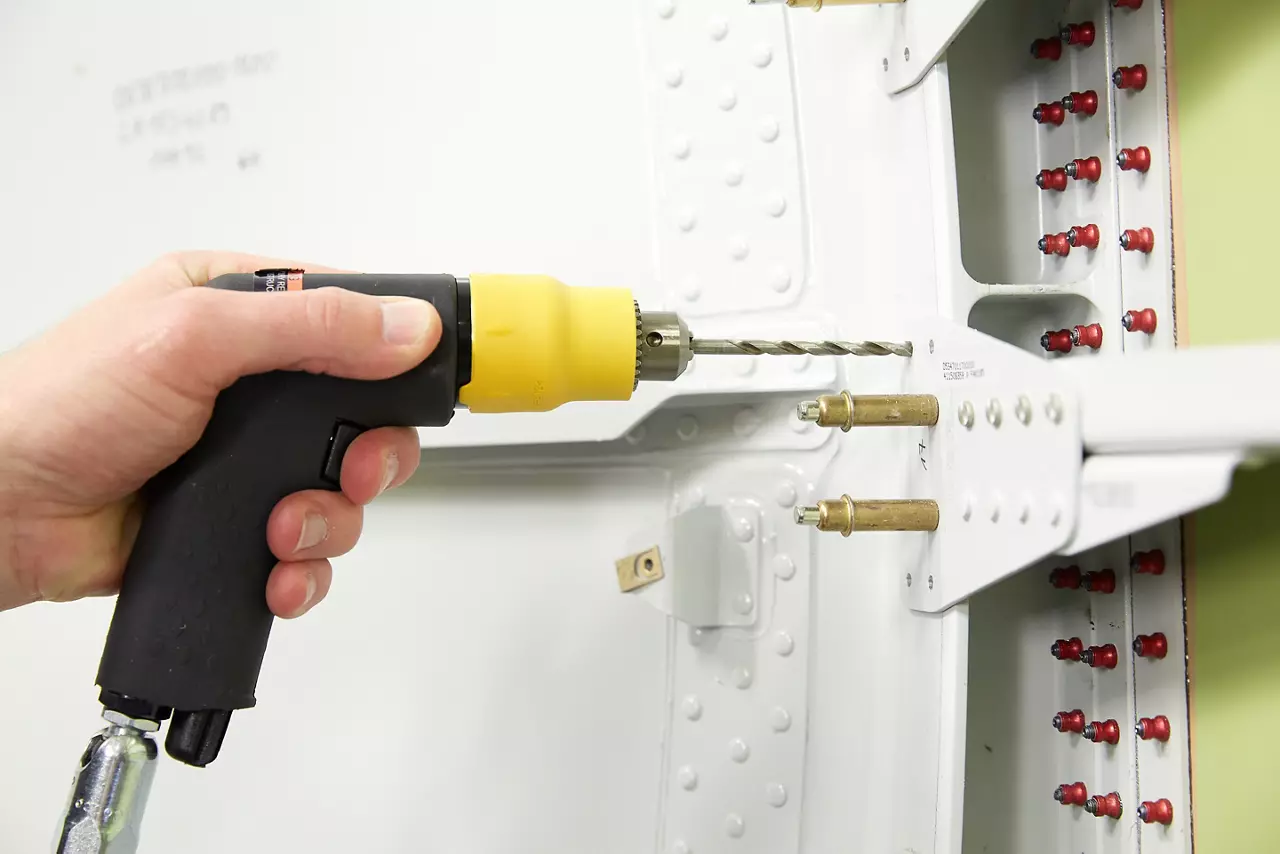
An aerospace manufacturer can use compressed air for pneumatic tools, production assembly, parts handling, air gauging, leak testing and surface preparation. Each duty exposes the process to a different failure mode. A small amount of water may be tolerable at one tool point but unacceptable where it can condense in a precision measurement line or disturb a coating process.
The system has to be considered from compressor intake to point of use. The compressor creates the flow and pressure. The dryer, filters, receiver, drains and pipework determine whether that air remains fit for its allocated task. A reliable system starts with that chain, not with a compressor model alone.


ISO 8573-1 and the Air Quality Specification
ISO 8573-1 provides the common language for specifying particle, water and oil limits in compressed air. The correct class code should be agreed against the process risk, customer requirements and any validation plan. It should not be copied from another factory area solely because both areas use a similar compressor.
Class 0 oil-free compression may be appropriate where the process cannot accept compressor-oil contamination. It does not, by itself, set the water or particle limits at the point of use. A usable specification sets all three limits, identifies the measurement point and records how the site will verify performance after commissioning and during service.
Compressor and Air Treatment Choices
Oil-Free Rotary Screw Compression
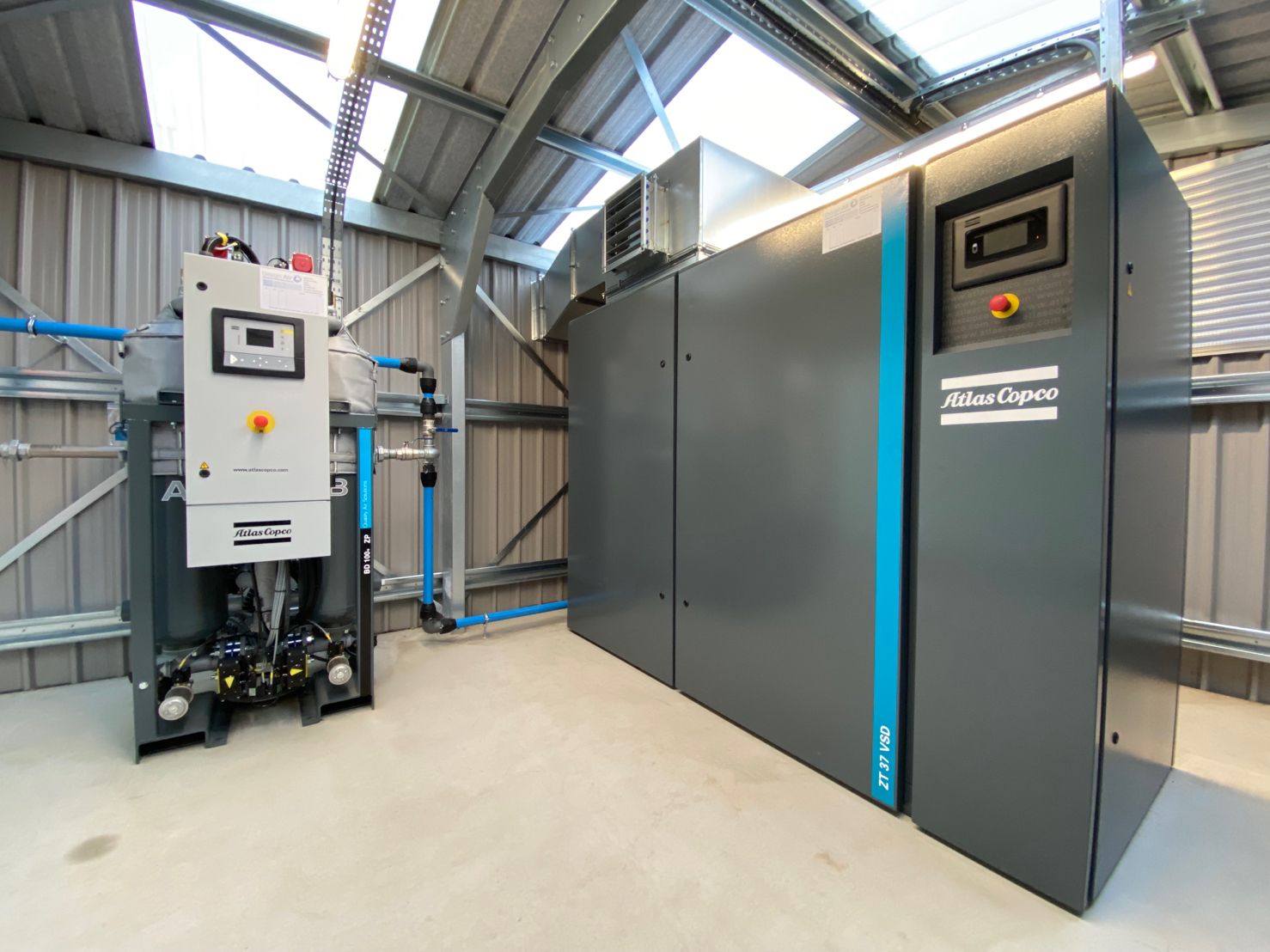
For continuous industrial demand, an oil-free rotary screw compressor can remove compressor oil from the compression process. Atlas Copco’s ZR and ZT oil-free rotary screw range is certified to ISO 8573-1 Class 0. The technical decision still starts with duty cycle, pressure band, required flow and the point-of-use specification. Class 0 equipment is a control measure, not a substitute for correctly selected dryers, filters and distribution pipework.
Design Air can assess the compressor duty against the production profile and specify the appropriate industrial compressor range. That keeps equipment selection connected to the risk the site is managing.
Dryness, Filters and Pipework
Air treatment needs to account for where the pipework runs, not only the temperature in the compressor room. Atlas Copco states that a refrigerant dryer normally delivers a pressure dew point around +3°C, while desiccant technology can achieve substantially lower dew points. If pipework can experience low Scottish winter temperatures, the selected pressure dew point needs enough margin to prevent condensation or freezing at the coldest part of the network.
Filters have a separate job. They remove the particle, liquid and aerosol load that remains after compression and drying. Pressure drop matters because every restriction reduces the pressure available at the process, which can tempt operators to raise the compressor setpoint. Our engineers can combine air treatment with system design and pipework installation so the specification is maintained beyond the compressor room.

Site survey
Establish the five inputs before any equipment is selected
Design Air can record the production tasks using compressed air, the required particle, water and oil limits at each point of use, the actual flow and demand variation across a shift, the conditions along the distribution route, and the responsibilities that keep the specification in service.
Energy
Reliability, Energy and PSSR
Reliability starts with measured demand. A receiver gives short-term storage and helps separate compressor control from sudden peaks in process use, but it cannot correct a system that is undersized or leaking. The useful diagnostic is the site flow profile by shift, pressure trend, running hours and unloaded time. Those measurements distinguish genuine production demand from artificial demand caused by excess pressure, restrictions or leakage.
Where demand varies, a variable speed drive adjusts motor speed in response to system pressure. The energy result depends on the operating profile, so it should be measured rather than assumed. Design Air’s Energy package includes measured energy auditing, ultrasonic leak detection and pressure optimisation. Remote monitoring can then show whether the improvement holds between service visits.

Energy
Separate genuine production demand from artificial demand
Design Air’s Energy package includes measured energy auditing, ultrasonic leak detection and pressure optimisation, using the site flow profile by shift, pressure trend, running hours and unloaded time.
Compliance
PSSR and Written Schemes of Examination
PSSR is a separate safety duty. HSE guidance covers pressure systems containing compressed air above 0.5 bar above atmospheric pressure and requires a Written Scheme of Examination before qualifying equipment is used. The scope, examination interval and preparation requirements must be set by a competent person. Design Air’s Compliance package covers Written Schemes of Examination and statutory examinations under PSSR 2000.
For aerospace suppliers working to AS9100D or a customer flow-down, the air system records should support the organisation’s own quality controls. AS9100D does not set a universal compressed-air purity class. It reinforces the need to manage the documented requirements that the aerospace customer and process impose.
Site assessment
Site Assessment for Scottish Aerospace Operations
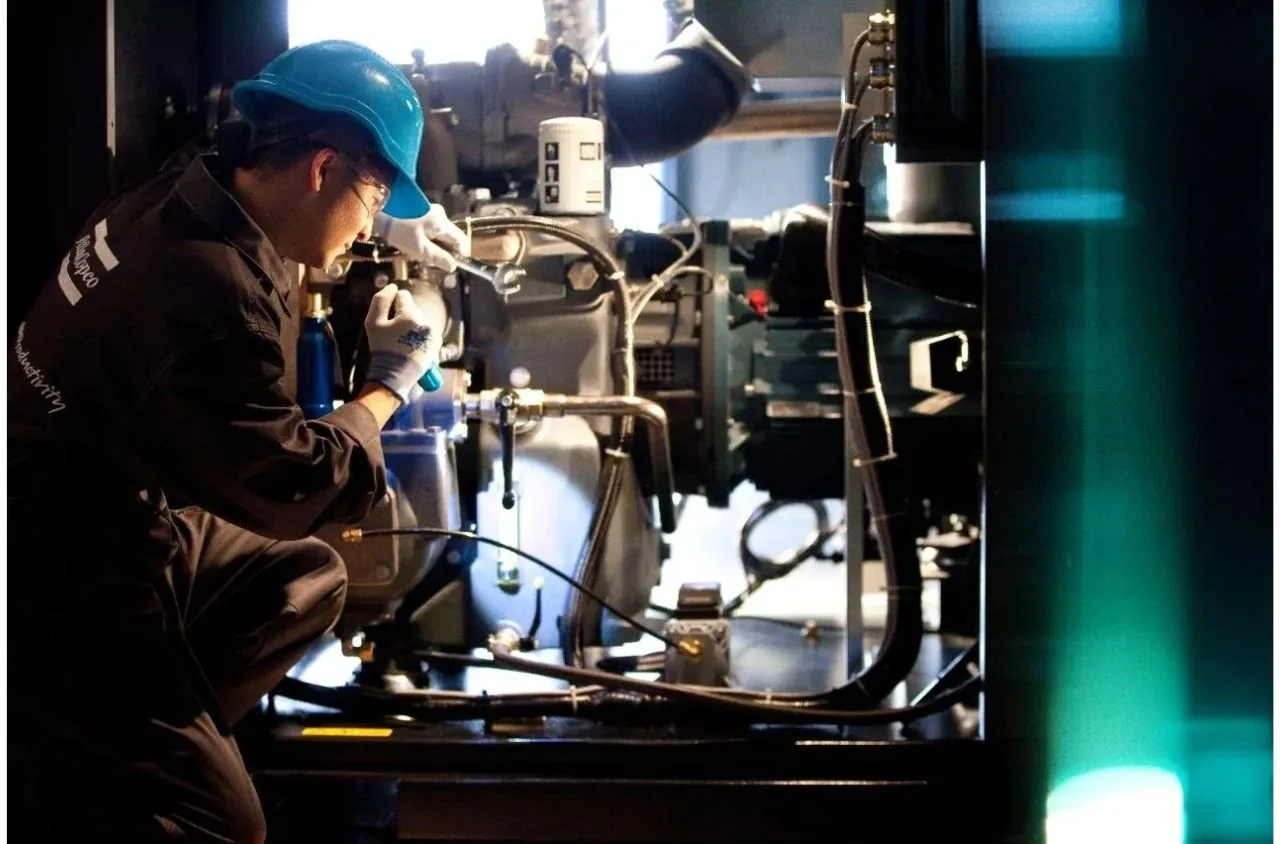
A useful assessment establishes five things before equipment is selected or altered:
- The production tasks using the compressed air, including any assembly, test, coating or instrument-air points.
- The required particle, water and oil limits at each point of use.
- The actual flow, pressure and demand variation across a working shift.
- The temperature, corrosion and access conditions along the distribution route.
- The maintenance, testing, monitoring and PSSR responsibilities that keep the specification in service.
Where a process uses nitrogen for purging or leak testing, its purity and pressure requirements should be treated as a separate specification. On-site nitrogen generation can be assessed alongside the compressed-air system where that is appropriate.
That sequence prevents a familiar mistake: buying capacity when the constraint is a distribution, air-treatment or control problem. It gives procurement, facilities and production teams one engineering basis for the investment.
FAQs
Frequently Asked Questions
Which Type of Compressor Is Used in Aircraft Manufacturing?
Does Every Aerospace Process Need Class 0 Air?
How Can Maintenance Reduce Aerospace MRO Disruption?
A Technical Next Step
If compressed air supports an aerospace process at your Scottish site, Design Air can carry out a system assessment covering demand, air quality, distribution and PSSR responsibilities. Contact our engineering team to discuss a site survey or service agreement.