



Air Compressors for the Electronics Industry
In electronics manufacturing, compressed air is more than a utility. It is a direct-contact, process-critical medium. The quality and reliability of your air supply have a direct impact on product yield, performance, and profitability. If you work in a semiconductor fab, PCB assembly operation, or cleanroom environment of any kind, a reliable supply of absolutely pure, dry air is not a luxury, it is a requirement.
This guide will help you understand the critical compressed air standards for the electronics industry and the systems required to meet them, enabling you to protect your sensitive components, maximise uptime, and minimise operating costs.
Compressed Air as a Risk Factor and Quality Driver
High-value manufacturing cannot afford ANY product failures due to airborne contamination. Inevitably, the poor compressed air system introduces these three contaminants, each of which directly results in catastrophic product failure in the electronics industry.
- Total Oil: Nano-metric aerosols or vapours of oil will damage the product. Oil is an insulator, trapping heat in the component to an unacceptable level; it also desolders the solder joints and loosens the connections. It also stops conformal coatings from adhering to the component, leaving the sensitive circuitry bare.
- Water (Moisture): Atmospheric air contains 3-5% water vapour. As it is compressed, the vapour is concentrated and condensed. The water on the board causes direct corrosion of the metal circuit traces, resulting in immediate shorts on the board and the electrochemical migration of metal ions from the circuitry, which form new and unintended conductive paths on the board, literally eating away at the board.
- Solid Particulates: Dust in the ambient atmosphere or rust and wear particles from the pipework may cause physical, abrasive damage to the sensitive wafer surface. Conductive particles can also cause immediate shorts between the traces, with resultant immediate product failure.
To prevent these risks, the air must be engineered for absolute purity. Standard filtration on a lubricated compressor isn’t enough; the risk of failure is too high.
The Uncompromising Standard for Purity: ISO 8573-1 Class 0
The global benchmark for compressed air quality is ISO 8573-1:2010. This standard classifies air purity based on the concentration of particles, water, and oil. For the demanding environments found in electronics manufacturing, the only acceptable specification is Class 0.
It’s critical to understand that Class 0 doesn’t mean zero contamination. It signifies that the air quality must be measurably better than Class 1, with the limits agreed upon by the user and supplier to meet the demands of a critical process.
This is the most severe class achievable, and it delivers independently validated confidence that the air stream is free of added oil aerosols and vapours. It is also a critical requirement of cleanroom integrity: according to ISO 14644, any contamination from compressed air will downgrade the classification and trigger production line shutdowns. Regular ISO 8573 air quality testing is required to demonstrate and document compliance as part of QA and audit obligations.

Atlas Copco Class 0 Solutions for Electronics
Achieving Class 0 air quality requires a system designed from the ground up for purity and reliability. Design Air (Scotland) Ltd provides and installs Atlas Copco oil-free air compressors, which are purpose-built for the most sensitive industries.
Class 0 Oil-Free Compressors & Air Treatment
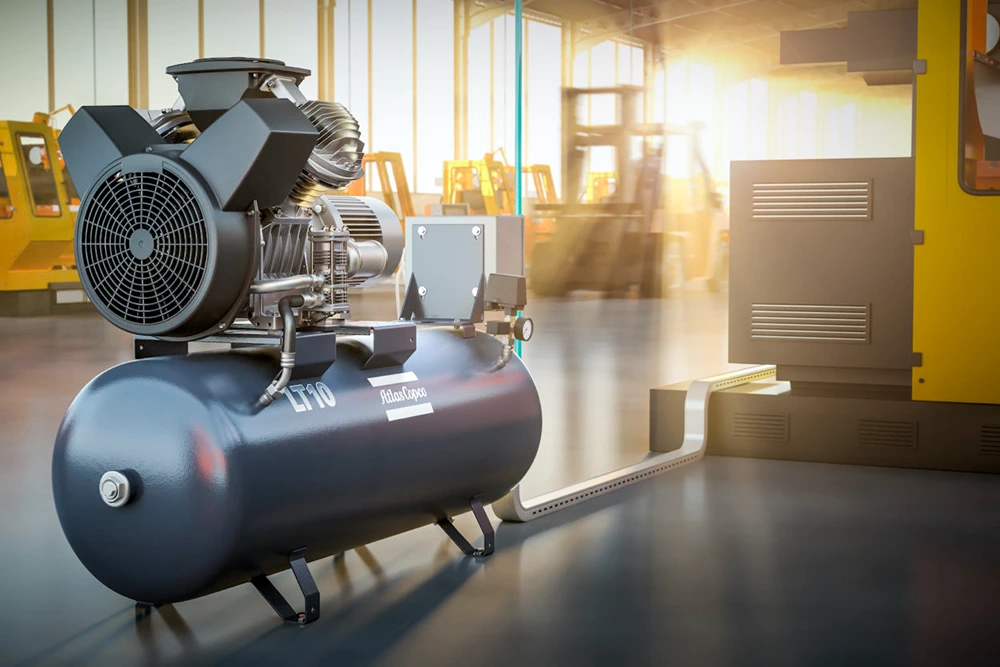
The foundation of a high-purity system is an oil-free compressor. The Atlas Copco ZR/ZT (rotary screw) and SF (scroll) Series are certified to ISO 8573-1 Class 0, thereby eliminating the risk of oil contamination. This is paired with essential air treatment systems:
- Air Dryers: Desiccant dryers are essential for achieving the ultra-low PDP (down to -70°C) required to prevent any moisture formation in SMT environments.
- Filtration: Multi-stage filters remove solid particulates and vapours to meet the stringent particle counts required by Class 0.
Solving Your Core Operational Challenges
Modern Atlas Copco systems are engineered to solve the most pressing issues facing electronics manufacturers:
- Challenge: High Energy Costs
Solution: Variable Speed Drive (VSD+) technology precisely matches the compressor’s motor speed to real-time air demand, reducing energy consumption by up to 35% compared to wasteful fixed-speed models. - Challenge: Production Downtime
Solution: Predictive maintenance enabled by remote monitoring systems like SMARTLINK provides real-time data to identify potential issues before they cause a breakdown, ensuring continuous operation. - Challenge: Wasted Energy
Solution: Integrated heat recovery systems can recapture up to 94% of the waste heat generated during compression. This “free” thermal energy can be utilised to produce hot water or support process heating, thereby further reducing operational costs.

Typical Applications in High-Tech Manufacturing
High-purity compressed air is essential across the production line:
- SMT Pick-and-Place Systems: Powers pneumatic actuators for rapid, precise movement and provides suction for handling fragile components.
- Cleaning & Drying: Used in air knives to provide a non-contact method for blowing contaminants and moisture from PCBs and wafers.
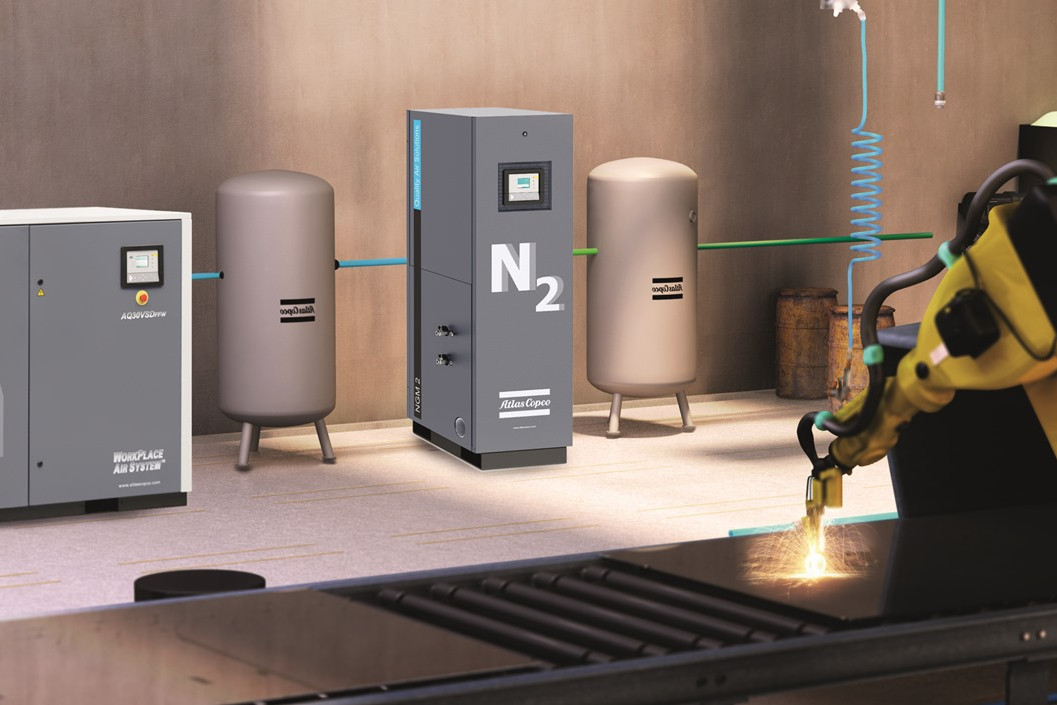
- Soldering: Assists in cooling during soldering and welding. It also serves as the feedstock for on-site nitrogen generators, which create the inert atmosphere required for high-quality, lead-free wave soldering and reflow ovens.
- Air Bearings: Create a frictionless, ultra-stable cushion for high-speed, high-precision equipment, such as wafer steppers and PCB drilling machines.
Supporting Scotland’s Silicon Glen: Local Expertise Where It Matters
Scotland’s Central Belt, from Glenrothes to East Kilbride, is home to some of the UK’s most advanced semiconductor, photonics, and electronics manufacturers. These facilities operate with zero tolerance for air purity failures or production downtime. Having a local, certified partner is a critical asset.
Based in Airdrie, Design Air (Scotland) Ltd is strategically positioned to provide rapid support across the region. As an Atlas Copco Premier Distributor, our engineers have the specialist expertise to design, install, and maintain high-purity compressed air systems that meet the exacting standards of the electronics industry.


Ensuring Compliance and Safety in the UK
Running a compressed air system carries legal responsibilities. All installations must be safe and comply with UK regulations, including the Pressure Systems Safety Regulations (PSSR) 2000 and PUWER 1998. We can offer comprehensive consultancy and certification services to ensure your system is safe, compliant, and fully documented with a Written Scheme of Examination.
Keep your products safe and your production flowing with a compliant, high-purity compressed air system. Expert installation, local servicing, and rapid support for all the major brands from the team at Design Air (Scotland) Ltd.
Get Expert Support from Design Air Scotland
Contact us today for:
- A free, no-obligation site audit
- Certified ISO8573 air quality assessments
- Energy audits and leak detection
- Bespoke compressor service plans tailored to electronics manufacturers
Frequently Asked Questions
Yes, you really do. Sub-micron oil aerosols from a lubricated compressor can cause solder defects, prevent conformal coatings from adhering properly, and result in latent, long-term product failures. Class 0 oil-free air is the only way to eliminate this critical risk.
To ensure that no moisture can condense in pneumatic lines or on sensitive surfaces, a pressure dew point (PDP) of -40°C is a common requirement. To meet the most stringent requirements of semiconductor and electronics applications, a PDP of -70°C is often specified, which necessitates high-performance desiccant air dryers.