
Industries · Chemical
Air Compressors for the Chemical Industry
Chemical production can be interrupted by a fault that begins in the air compressor room. Water in an instrument-air line can affect a control valve. Oil or particles at a process point can jeopardise a batch. A pressure drop can reduce the force available to pneumatic equipment. Air Compressors for the Chemical Industry should therefore be specified from the point of use backwards, rather than from compressor capacity alone.
Design Air, Atlas Copco Premier Distributor in Scotland, is based in Airdrie and supplies, designs, installs and maintains industrial compressed-air systems across Scotland. For chemical facilities, the useful starting point is a defined duty, a documented air-quality requirement and a system design that keeps that requirement intact to the point of use. A single air compressor selection cannot answer all of those questions.

What Compressed Air Does in a Chemical Plant
In chemical manufacturing, compressed-air quality must be specified at the point of use rather than assumed from the compressor.
Chemical processes need separate quality, flow and pressure requirements for compressed air. List each point of use, what the air contacts, the consequence of failure and the environmental conditions around the pipework. The air compressors on one site may serve several duties. This prevents two costly errors: applying an unnecessarily high specification to the whole network, or treating a general plant-air specification as suitable for a critical process.
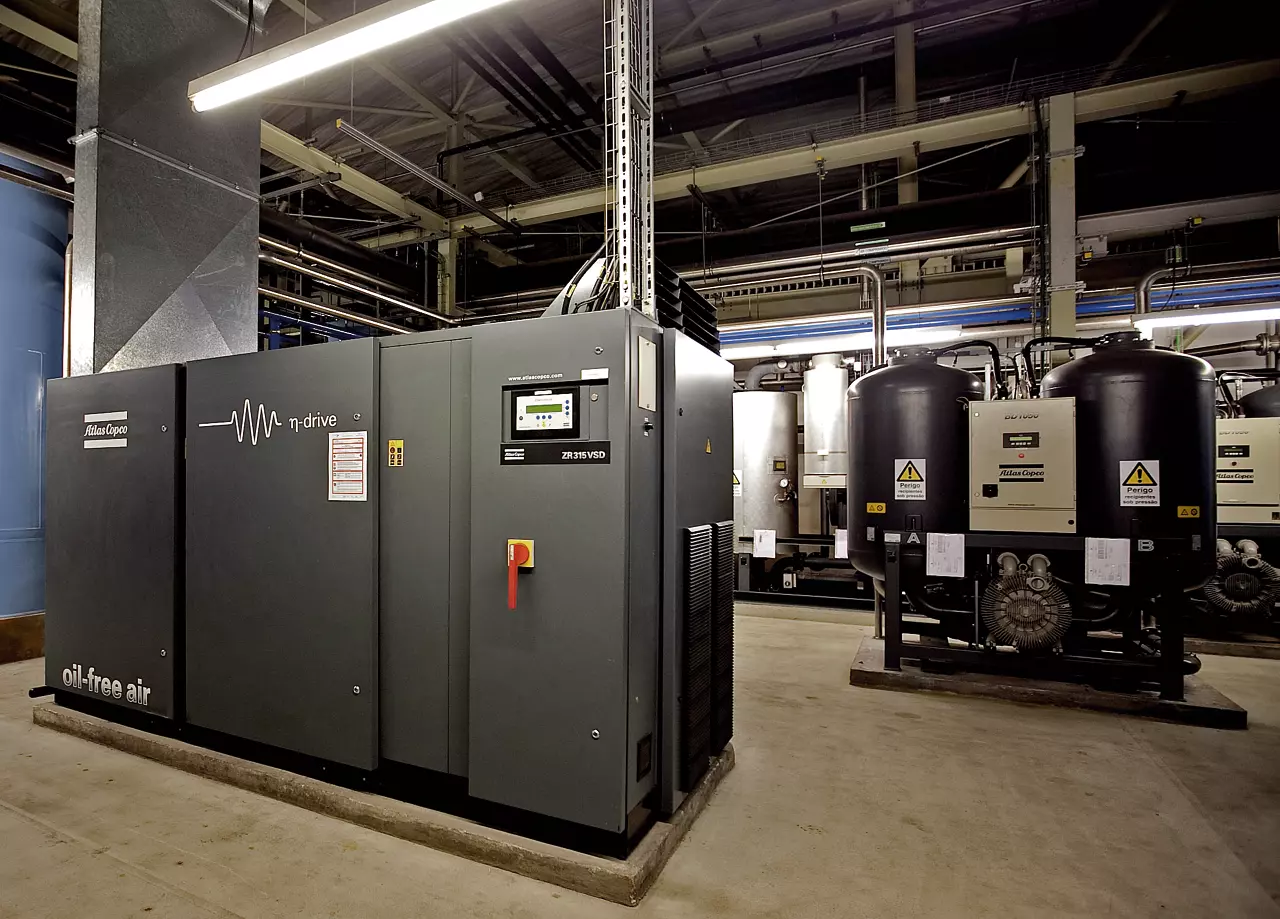
Process, instrument and utility air have different duties
Process air
Used in operations such as aeration, agitation, drying or coating where the air can affect the product or chemical reactions.
Instrument air
Supplies pneumatic valves, actuators and safety interlocks. Dryness and reliable pressure are central to control performance.
Utility and conveying air
Moves powders or granules, drives diaphragm pumps and supports general production equipment. The duty determines the flow profile and filtration requirement.
Nitrogen generation
Compressed air is the feed to on-site nitrogen generator systems used for inerting, blanketing or purging. The air treatment must protect the generator and the required nitrogen purity.
Specify Air Quality at the Point of Use
ISO 8573-1:2010 classifies compressed air contaminants in three groups: particles, water and oil. It provides a common way to record the quality required at a defined location, then measure whether the system meets it. The standard does not choose the correct class for a particular chemical process. That decision belongs in the process risk assessment and the site’s quality controls.
Turn the specification into a testable requirement
A useful specification records the required particle class, pressure dew point, residual oil limit, test point and sampling frequency. It should distinguish between points where air contacts a product, points supplying instruments, and points used for general utilities. An ISO 8573 air-quality test gives a defensible baseline after installation, modification or a contamination investigation.
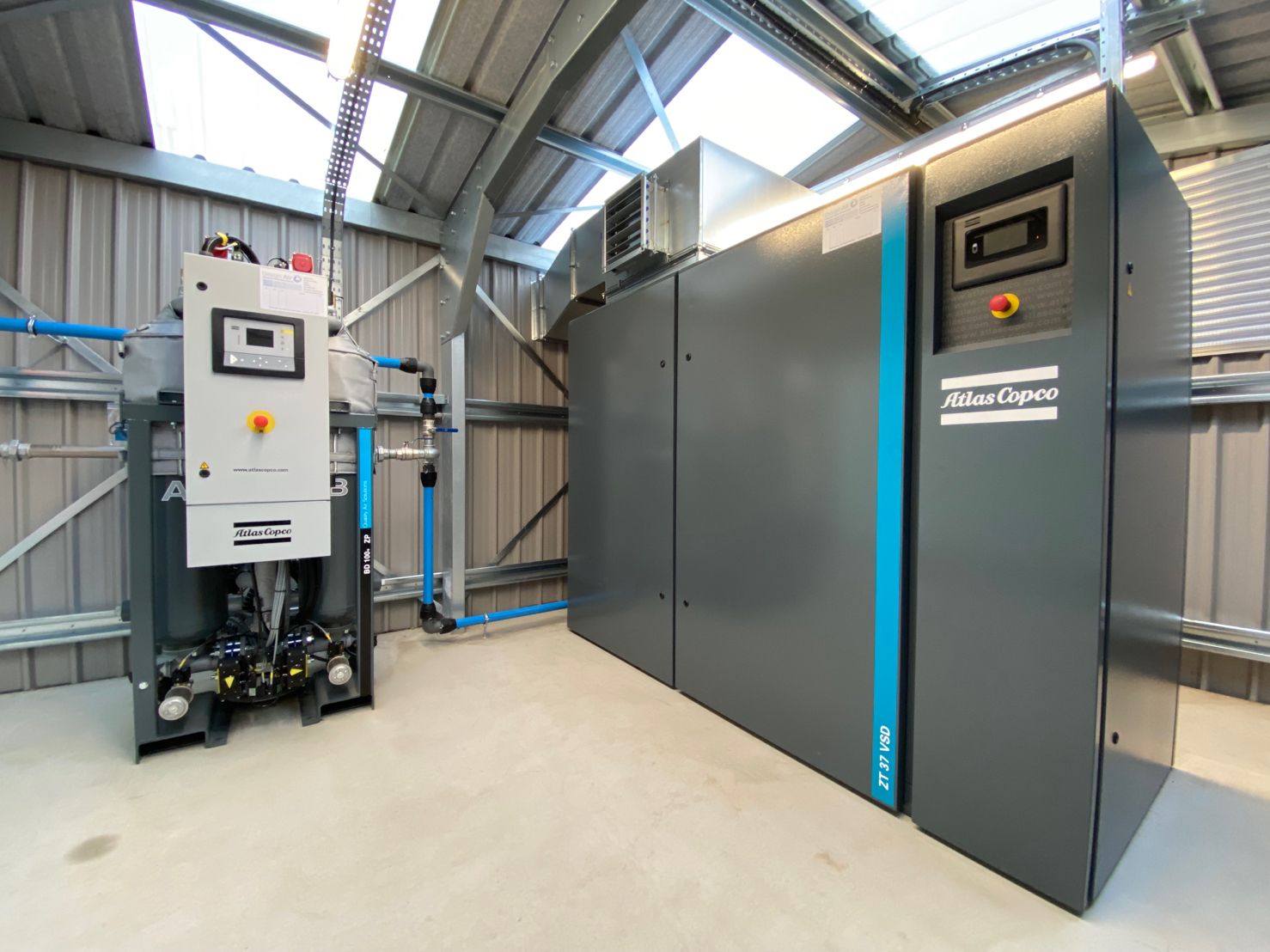
Air quality testing
Turn the air-quality requirement into a tested baseline
Design Air can record the required particle class, pressure dew point, residual oil limit, test point and sampling frequency, then run an ISO 8573 air-quality test to establish a defensible baseline after installation, modification or a contamination investigation.
When Oil-Free Compression Is the Right Risk Control
Class 0 is often used as shorthand in procurement documents, but it is not a universal chemical-industry requirement. Where air can contact a product or sensitive chemical processes, the contamination consequence may justify an oil-free compression path and a carefully selected treatment train. The requirement should be written for the actual point of use, then verified by testing.
An oil-injected compressor with correctly selected downstream treatment can be appropriate for non-contact instrument or utility air. The decision depends on the site’s hazard assessment, the consequence of filter failure, maintenance controls and the stated air-quality limit.


Manage Moisture Before It Reaches the Process
Compression concentrates the water vapour already present in ambient air. As the air cools after compression, water condenses and enters receivers, drains and distribution pipework. In Scotland, damp ambient conditions can create a substantial condensate load, which makes drainage, drying and maintenance part of process protection rather than an optional extra.
Choose the dew point against the coldest part of the system
A refrigerant dryer removes moisture by cooling compressed air so that condensate can be separated and drained. A desiccant dryer removes water vapour by adsorption and can achieve a lower pressure dew point. Select the dryer from the lowest temperature the pipework or point of use will experience, then allow margin so condensation cannot form downstream.
Match Air Compressor Type and Capacity to Actual Demand
Air compressor selection begins with measured air demand, operating pressure, duty cycle, peak events, future capacity and ambient conditions. Sizing from a single item of equipment or from nominal flow alone can leave a chemical plant short of air during a peak, or paying to compress air that leaks away between shifts.
Compressor selection
Select the compression principle for the duty
- Fixed-speed rotary screw air compressors suit a stable, continuous demand where load variation is limited.
- Variable-speed rotary screw air compressors suit a demand profile that changes over shifts or batches, provided measurement shows the saving is real.
- Reciprocating compressors can suit lower-duty or intermittent applications where their operating profile is appropriate.
- Centrifugal air compressors are considered for high, continuous flows where the process justifies their scale and control approach.
Measure demand before choosing a variable-speed drive
A variable-speed air compressor changes motor speed to follow demand instead of cycling between fixed load states. Its value comes from the measured relationship between flow, pressure and power over time. A demand profile from an energy audit can show whether pressure is being maintained for a genuine process requirement, a short peak or a leak.
Create a design basis before procurement
Before equipment is specified, record normal, minimum and maximum flow, pressure at each critical point, batch or shift profile, allowable pressure drop, ambient temperature, air-quality requirement and planned expansion. In an existing chemical plant, a survey should compare those requirements with the actual compressor run profile and distribution losses. That record gives procurement a basis for comparing equipment, treatment and maintenance proposals on the same operating duty.
ATEX, DSEAR and PSSR Have Separate Jobs
Chemical sites may face both explosive-atmosphere duties and pressure-system duties. They should be assessed separately, then coordinated in the system design. HSE guidance explains that DSEAR requires employers to eliminate or control risks from explosive atmospheres and classify hazardous areas into zones where necessary.
Select equipment for the zone and the risk assessment
An ATEX or DSEAR decision starts with the substances present, the likelihood of a flammable atmosphere, zoning and the potential ignition sources. Equipment placed in a zoned area must be selected for that environment. A compressor-room layout can affect the scope, but it does not remove the need for the site’s documented risk assessment.
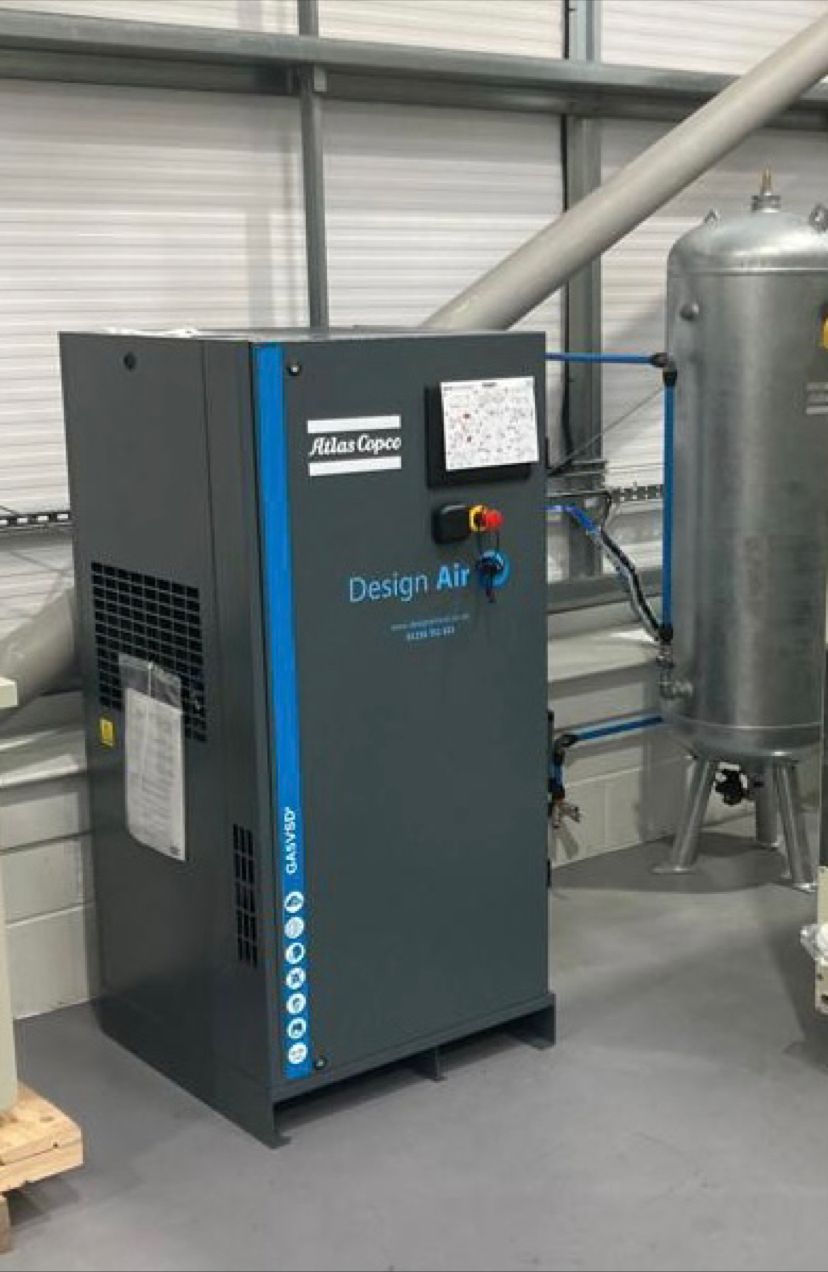
Compliance
Keep the pressure system within safe operating limits
The Pressure Systems Safety Regulations 2000 address the safe design and use of pressure systems because stored pressure can cause serious injury when a system fails. Where PSSR applies, the owner or user needs a Written Scheme of Examination and a route for statutory examination by a competent person. Design Air’s Compliance package includes Written Scheme of Examination consultation and statutory examinations under PSSR 2000.
Energy
Reduce Pressure, Energy Use and Unplanned Load
Compressed-air energy use rises when a system is run at more pressure than the process needs. As a rule of thumb, a 0.5 bar reduction in operating pressure can reduce compressor electrical power by about 3.5%. The practical task is to identify the highest legitimate pressure requirement, then remove artificial demand caused by leaks, poor regulation or an avoidable pressure drop.
Remote monitoring can show an abnormal run profile, pressure drift or rising unloaded running time before it becomes a production fault. Design Air’s Energy package covers measured energy auditing, ultrasonic leak detection and pressure optimisation. The measurement should lead to a specific correction, not a generic efficiency target.
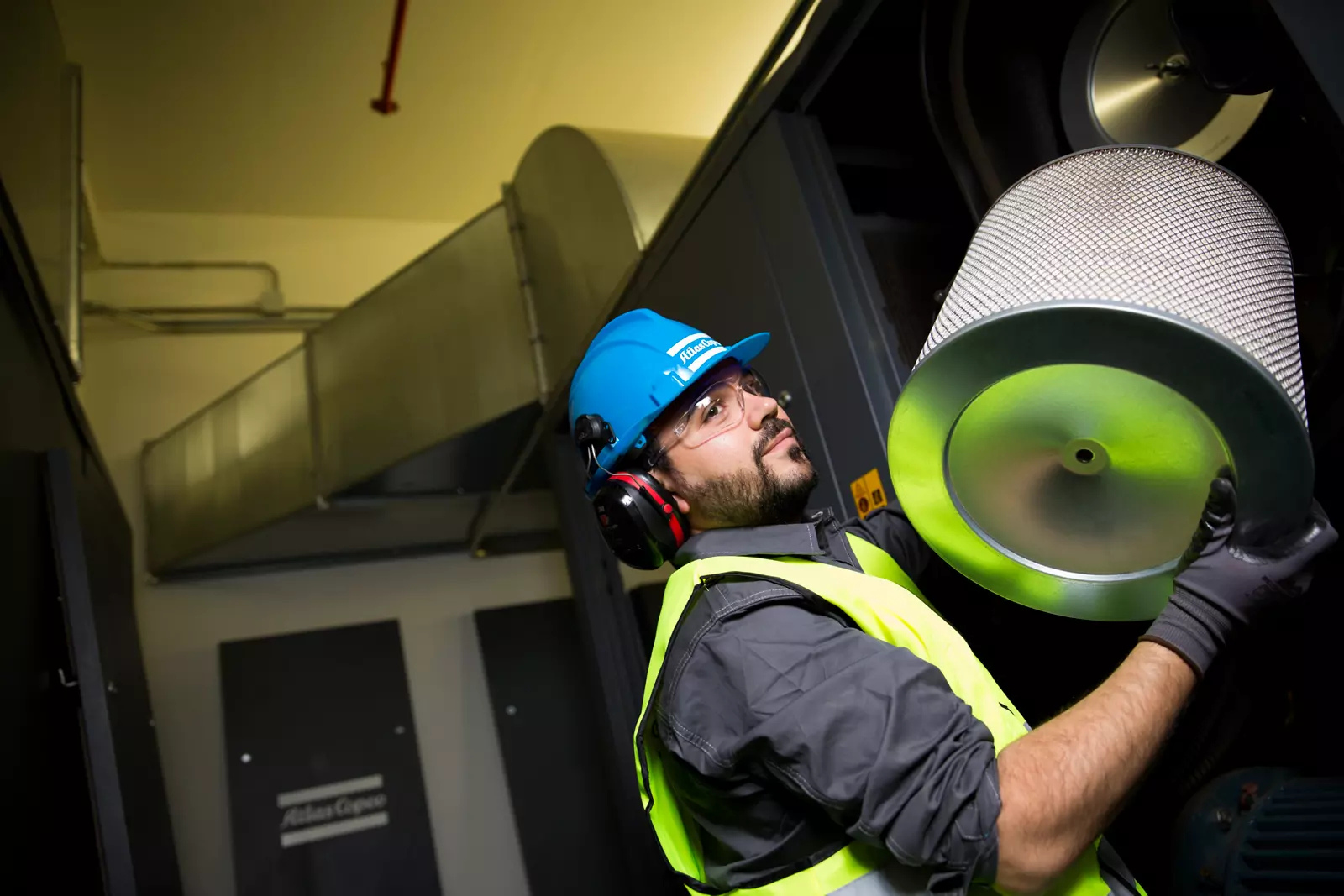
Energy
Find the highest legitimate pressure requirement, then remove the rest
Design Air’s Energy package covers measured energy auditing, ultrasonic leak detection and pressure optimisation, so artificial demand from leaks, poor regulation or an avoidable pressure drop is measured rather than estimated.
Protect the Specification Through the Distribution Network
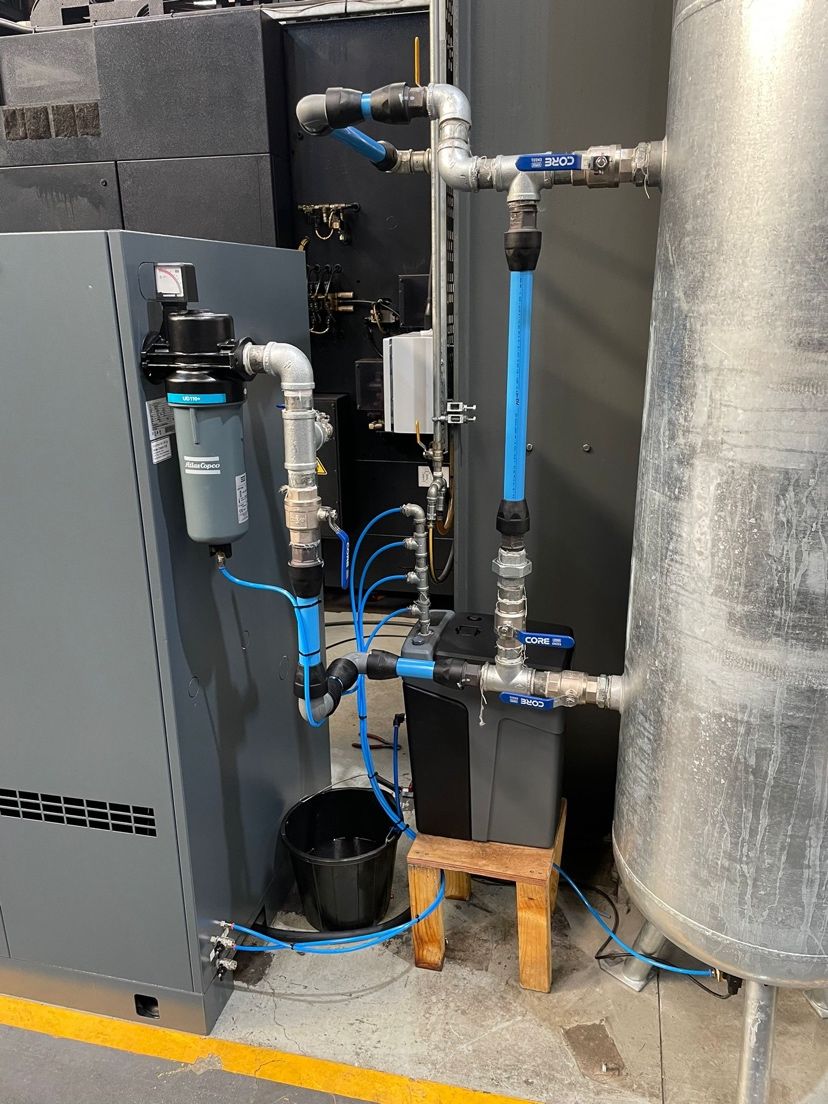
A compressor can deliver suitable air at the outlet while the distribution network degrades it before it reaches production. Receivers, filters, drains, pipework and point-of-use treatment are components of the same quality system. Their arrangement should control pressure drop, remove condensate, prevent contamination and leave access for inspection and maintenance.
Receivers
Provide storage, help manage peak flow and give condensate a place to separate.
Filters
Must be chosen for the contamination risk and maintained before pressure drop or breakthrough becomes a process issue.
Drains
Need to remove condensate reliably without leaving water to enter downstream pipework.
Pipework
Must be sized for flow, pressure drop, corrosion exposure, temperature and the route to each critical point of use.
Plan Maintenance Around the Failure Modes That Matter
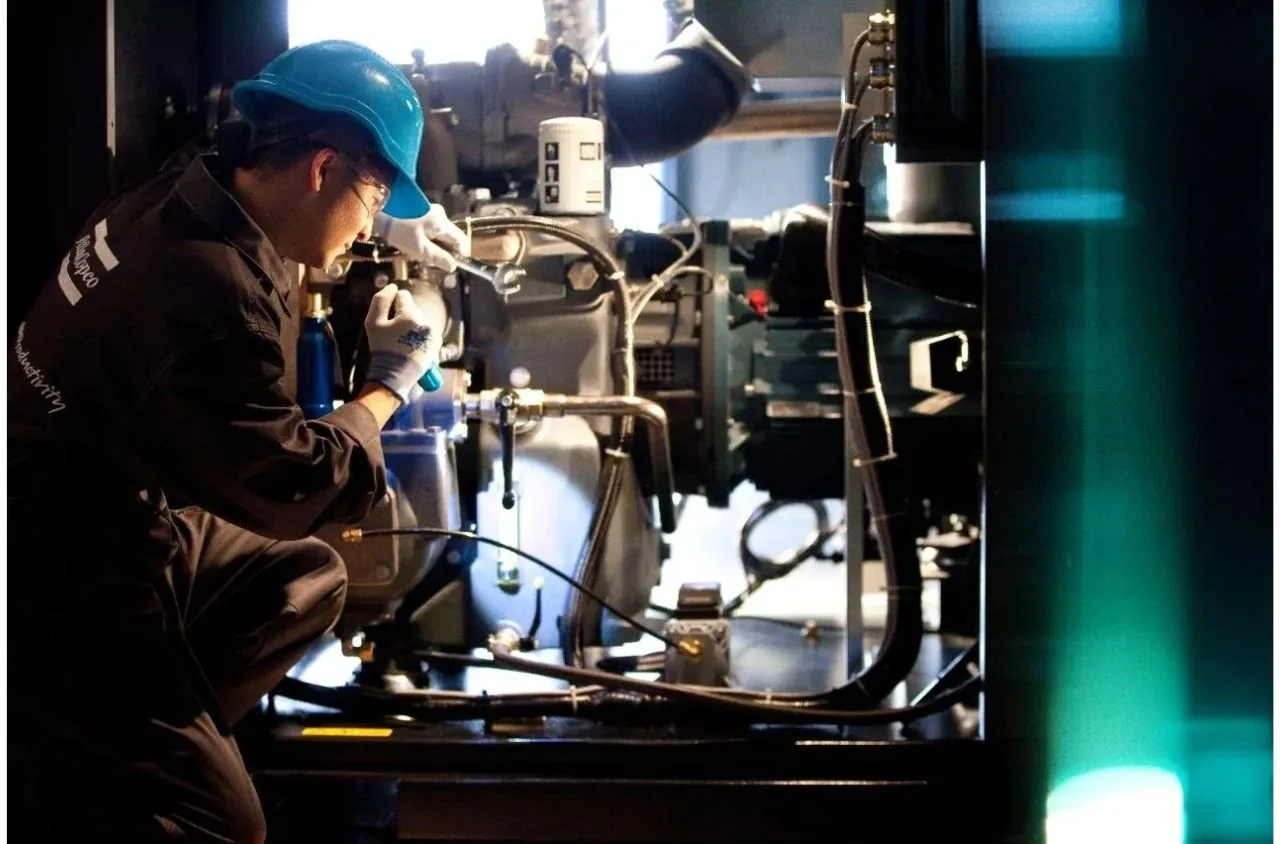
For a chemical air system, maintenance should inspect the conditions that can change the delivered air quality or available pressure. That includes filter condition, dryer performance, drain operation, receiver and pipework condition, compressor run hours and the trend in system pressure. SMARTLINK remote monitoring can support that review by making operating changes visible between site visits.
Design Air offers standalone Service, Energy and Compliance packages that can be combined in a service agreement. Factory-trained service engineers provide planned preventive maintenance and 24/7 breakdown cover. The four-hour response commitment applies within 50 miles of Airdrie.
FAQs
Frequently Asked Questions
What is an air compressor used for in the chemical industry?
Which compressor is suitable for a chemical plant?
How should a plant calculate compressor capacity?
What does PSSR mean for a compressed-air system?
For a chemical facility in the Central Belt, contact Design Air for a site survey, compressed air assessment, energy audit or Written Scheme of Examination consultation. The outcome should be a documented specification that production, maintenance and procurement teams can use.