



Medical Air Compressors in the UK: Meeting HTM 02-01 & ISO 8573-1 Standards
In hospitals and clinics, your compressed air supply is as vital as oxygen.
If it fails, operations stop, and patient safety is at risk.
Design Air (Scotland) Ltd helps healthcare facilities meet HTM 02-01 and ISO 8573-1 Class 0 standards. This means that your medical air is always clean, safe, and reliable.
Why Does Medical Air Require Specialist Systems?
Because the compression process itself is dangerous, healthcare facilities need specialised compressed air solutions.
For instance, when air is compressed eightfold, everything inside it – dust, vapour, oil – becomes eight times more concentrated too.

Patient Safety
If air isn’t clean, it can reach a patient’s lungs through a ventilator – or land on a surgical site where it doesn’t belong.

Compliance & Legal Risk
When an air system fails, it can harm patients, stop procedures, and open the door to legal trouble.

Equipment Integrity
Moisture or dirt in the air slowly wrecks pneumatic tools, ventilators, and dental handpieces – and repairs aren’t cheap.
Pharmaceutical
/Lab Integrity
In a lab or pharmaceutical setting, even trace contamination can cause serious problems – spoiling sterile products, distorting results, or undermining cleanroom safety.
What Are the Core Compliance Standards for Medical Air in the UK?
Medical gas systems in the UK must adhere to a strict framework of interlocking standards. The four primary standards for healthcare facilities are:
| Standard | Scope | Key Requirement | Type |
| HTM 02-01 | UK NHS MGPS (Medical Gas Pipeline Systems) | Governs design, installation, duplex systems, and management by an Authorised Person (MGPS). | UK Guidance |
| ISO 8573-1:2010 | Air Purity Classification | Defines allowable contaminants. Class 0 = zero oil carry-over. | International |
| ISO 7396-1 | International MGPS Design | Ensures pipeline integrity, continuous supply, and non-interchangeable, gas-specific connectors. | International |
| PSSR 2000 | UK Pressure System Safety Law | Mandates a Written Scheme of Examination (WSE) by a ‘Competent Person’. | UK Law |
What is Class 0 Compressed Air?
ISO 8573-1 says that Class 0 compressed air is the best quality air.
It is the only standard that guarantees no oil carry-over (< 0.003 mg/m³), which protects patients and keeps surgical and sterile environments clean. This is why Certified Class 0 oil-free compressors for healthcare are the only acceptable solution.
Where Is Medical Compressed Air Used?
Medical compressed air keeps all kinds of healthcare environments running – even though it’s often overlooked.
- Hospitals and Surgical Units: It powers ventilators and moves anaesthetic gases. It also drives the pneumatic drills and saws used in surgery.
- Dental Practices: It’s what makes high-speed drills spin, air–water syringes spray, and suction systems stay reliable.
- Pharmaceuticals and Labs: It helps coat tablets, move powders through pipes, dry sterile vials, and power delicate testing gear.
- Veterinary Clinics: It supplies clean, steady air for surgical tools and animal respirators – vital for patient safety in every procedure.
- Emergency & Mobile Units: Giving field hospitals or temporary emergency capacity medical-grade air in portable formats, such as AIRCUBE containerised systems.
What Technology is Required for a Compliant Medical Air System?
A compliant system is an integrated solution.
Each stage of treatment forms a “purification chain” – any failure in one component compromises the entire system.
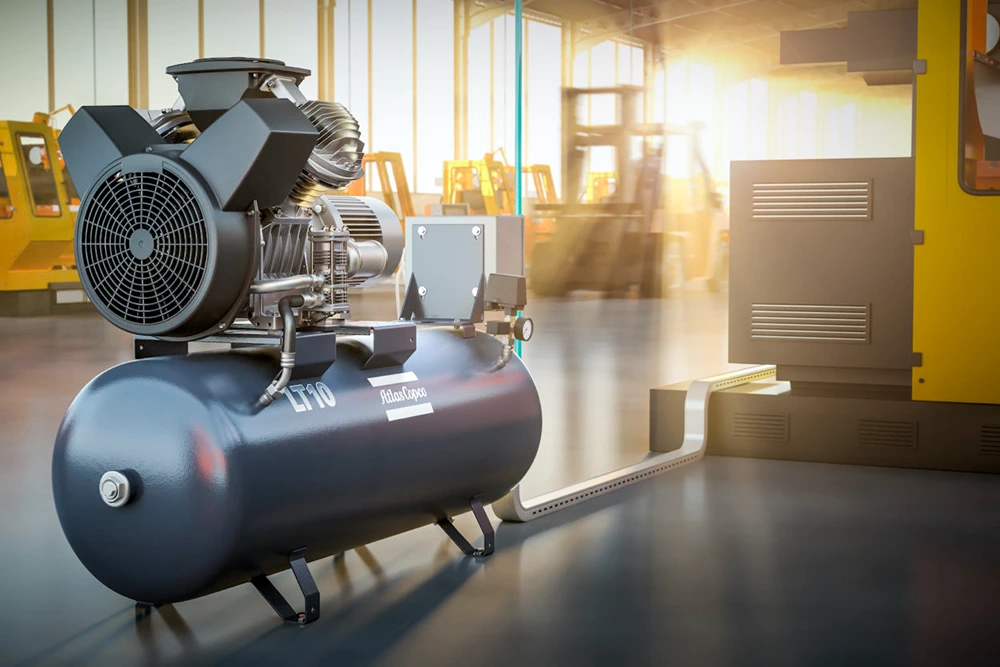
Atlas Copco is a leading manufacturer of this technology.
What Makes an Oil-Free Compressor Essential?
Your system must start with a Class 0 compressor to eliminate the risk of oil contamination at the source.
- ZT/ZR Oil-Free Rotary Screw: These are the standard for hospitals, providing reliable air (4–10 bar) with low noise (from 63 dB(A)).
- SF Scroll Compressors: These compact, ultra-quiet (<60 dB) units are ideal for installation in noise-sensitive areas like dental clinics and laboratories. See Atlas Copco oil-free and scroll compressors.

How Does a Desiccant Dryer Improve Air Quality?
Dry air keeps the system clean and safe. If moisture builds up, it can cause condensation in the pipes – and that’s where bacteria start to grow.
- Desiccant Dryers (FD/BD): These units strip almost all the water vapour from compressed air, reaching dew points as low as –40°C or even –70°C. At that stage, water can’t form and bacteria have nothing to live on, so the air stays pure and reliable. Desiccant dryers for critical applications are central to any system built for medical or laboratory use.
- Filtration: Multi-stage filters, including sterile types, catch the final particles of dust, oil, and microbes – keeping the air clean, dry, and safe to use.
Why Choose Atlas Copco for Medical Air?
- Integrated Air Plants (MED/MED+): These are complete, pre-certified “plug-and-play” systems. They are delivered with all compressors, dryers, and filters in an integrated package built to meet HTM 02-01.
- AIRnet or Stainless Steel Piping: A hygienic, non-corrosive piping system maintains air purity from the plant room to the point of use.
- System Monitoring (SMARTLINK): SMARTLINK keeps watch on the system at all times – collecting live data, flagging unusual patterns, and warning engineers before a fault becomes a failure. SMARTLINK also records performance data automatically, providing traceable logs for compliance audits under HTM 02-01 Part B.

Benefits of a Fully Compliant Medical Air System
- Safety for patients: Contamination isn’t a risk – oil, moisture, and bacteria are completely eliminated.
- Audit Confidence: The setup follows HTM 02-01, ISO 8573-1, and PSSR 2000. Offering peace of mind when inspections come around.
- Operational Uptime: SMARTLINK predictive monitoring keeps everything running steadily – with issues spotted long before they cause downtime.
- Cost Control: Stops equipment damage, downtime, and emergency calls.
Our Compliance Process
- Site Audit & Consultation: We assess existing systems against HTM 02-01 and identify any compliance or efficiency gaps.
- System Design & Installation: Our engineers design and install a complete Class 0 solution, including all pipework, for your facility.
- Validation & Documentation: We provide full ISO 8573 Air Quality Test service and PSSR 2000 paperwork for your audit trail.
- Ongoing Maintenance: We provide proactive compressor service plans and 24/7/365 emergency response to guarantee uptime.
How Does Design Air Manage Medical Air Compliance?
Design Air (Scotland) Ltd manages compliance across design, installation, and long-term maintenance.
As an authorised Atlas Copco distributor based in Airdrie, our engineers support hospitals and laboratories throughout Scotland.
- System Design & Installation: Our engineers design and install custom-designed, compliant medical air systems, including all pipework, sized correctly for your facility’s needs.
- PSSR 2000 Compliance: Our engineers act as the ‘Competent Person’ to create and manage your legally required Written Scheme of Examination (WSE).
- Air Quality Validation: We provide a scheduled ISO 8573 air quality test service to supply the formal, traceable documentation needed for audits and GMP compliance.
- 24/7/365 Emergency Support: We offer proactive compressor service plans and an emergency call-out service to minimise downtime, supported by a hire fleet.
This full-lifecycle approach gives healthcare providers complete assurance of system safety, reliability, and legal compliance.
You stay compliant. Your patients stay safe. Your air supply never stops.
Take Action Today
Don’t risk non-compliance or downtime. Book your Medical Air Compliance Audit with Design Air (Scotland) Ltd. Our engineers will identify any gaps and keep your facility operating safely and legally.