



Air Compressors for the Aerospace Industry
Compressed air is more than a utility in aerospace. It’s a quality assurance tool, a risk reducer, and a regulatory requirement. From spray painting to structural testing, the air itself becomes a process input. If it’s not pure, it’s a liability. Clean compressed air is crucial for aerospace processes, but contamination can lead to certification failures, production downtime, and even compromise flight safety.
We cover the rigorous aerospace requirements, engineered solutions to achieve them, and how to ensure your systems stay compliant, efficient, and reliable.
ISO 8573-1: The Non-Negotiable Standard for Air Purity in Aerospace
The quality of compressed air is defined by the international standard ISO 8573-1:2010. The standard clearly classifies the primary contaminants into three categories, with varying levels of strictness, to provide a consistent baseline for process safety and product quality assurance.
The three primary contaminants are:
- Solid Particulates: Dust, rust, and microparticles cause surface imperfections and block sensitive pneumatic components
- Water: Liquid and vapour cause corrosion, damage tooling, and freeze in critical control lines. Measured in pressure dew point (PDP)
- Total Oil: Liquid oil, aerosols, and vapour. Trace oil contamination is the number one cause of product rejection in painting and composite bonding.
The most rigorous standard for sensitive aerospace applications is the Class 0 purity level. Class 0 is not a specific measurement, but a user-specified classification defined as stricter than Class 1, which demands rigorous manufacturer testing and third-party certification. Meeting the standard for aerospace applications is a critical step in ensuring oil contamination from the compressor is eliminated.
Matching Air Quality to Critical Aerospace Applications
Different applications across aerospace manufacturing and MRO require different levels of compressed air purity. Here’s how air quality varies by process:
- Application: Aircraft Body Spray Painting & Finishing
- Quality of air needed: ISO 8573-1:2010 Class [1:2:1]
- Associated Risk: Oil aerosols cause “fish-eye” defects, particulates create surface imperfections, and moisture leads to blistering in coatings.
- Application: Composite Curing & Autoclaves
- Required Air Quality: ISO 8573-1:2010 Class [1:1:1]
- Associated Risk: Moisture can compromise resin curing, while oil can weaken structural bonds and cause delamination.
- Application: Pneumatic Tool Operation & Assembly Lines
- Required Air Quality: ISO 8573-1:2010 Class [1:4:2]
- Associated Risk: Water causes internal corrosion and accelerated tool wear. Particulates clog the mechanism, leading to premature failure.
- Application: Leak Testing & Air Gauging
- Required Air Quality: ISO 8573-1:2010 Class [1:2:1]
- Associated Risk: Contaminants can block sensitive orifices, affect measurement accuracy, and compromise the integrity of fuel and hydraulic system tests.

Aerospace Ready Compressed Air Systems Built for Reliability
Meeting the unique demands of the aerospace industry requires specialised equipment designed for purity, efficiency, and reliability. As a premier distributor for Atlas Copco, we provide access to world-leading technology.

Certified Oil-Free Compressors
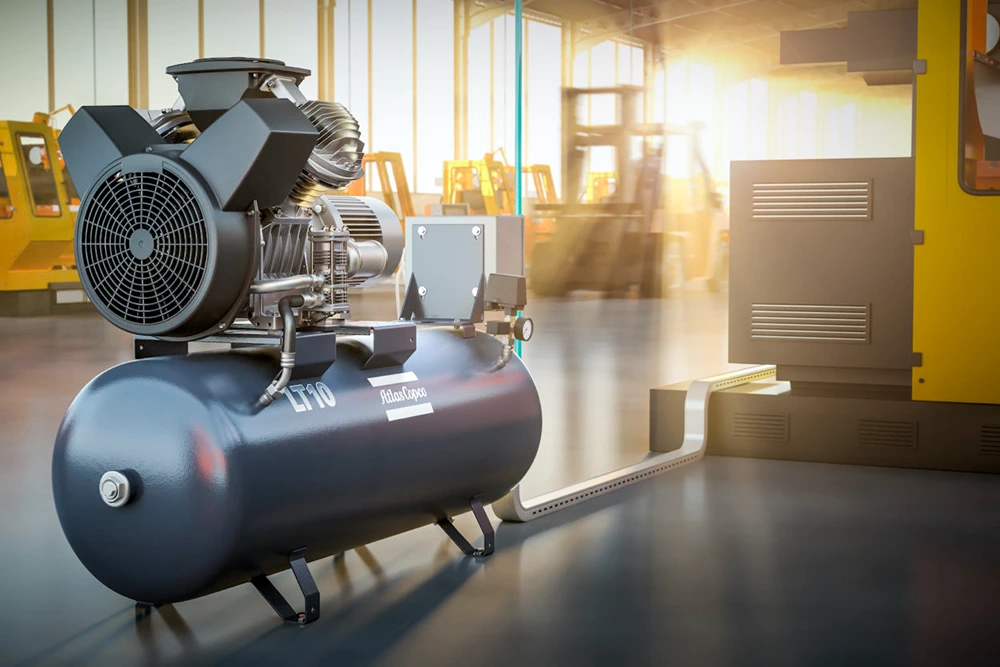
Atlas Copco Z-series (ZR/ZT) rotary screw Atlas Copco Air Compressors are ISO 8573-1 Class 0 certified for 100% oil-free air. Say goodbye to the risk of oil contamination in critical processes and protect high-value components and product quality.
On-Site Nitrogen Generation
Nitrogen Generators (Atlas Copco NGM and NGP+ series) utilise compressed air to produce high-purity nitrogen on-site for purging, inerting, leak testing, and pressure control of critical systems and components.

High-Pressure Boosters and Modular Systems
Air and nitrogen boosters in the ZB series are ideal for high-pressure applications, such as landing gear servicing and component stress testing. AIRCUBE modular systems are plug-and-play, fully containerised compressor stations for facilities with limited space or a need for flexible configurations.
Energy Efficiency with Variable Speed Drive (VSD)
Variable Speed Drive (VSD) technology matches motor speed to the demand for air, minimising energy usage. This can save up to 50% of energy used, reducing your facility’s carbon footprint and enabling OEMs to hit their sustainability targets.
SMARTLink Remote Monitoring & Predictive Maintenance
For additional optimisation, SMARTLink monitoring systems deliver real-time insights into the health of your system, allowing for predictive maintenance to be carried out and preventing unplanned downtime, thereby maximising production availability.
Achieving a Flawless Finish: The Critical Role of Air Quality
Running a compressed air system in the aerospace industry comes with its own set of regulatory responsibilities, and failure to adhere can have significant ramifications.
Key UK Regulations
- BS EN ISO 8573-1:2010. The industry standard for the purity of compressed air.
- Pressure Systems Safety Regulations (PSSR) 2000. The requirements for the periodic inspection and testing of pressurised equipment as part of a Written Scheme of Examination.
- PUWER 1998. Provision and use of work equipment must be safe and maintained in a safe condition for use.
- ATEX. Directive for equipment intended for use in potentially explosive atmospheres, such as aerospace paint booths and fuel system maintenance and repair areas.
The High Cost of Non-Compliance
- Product Rejection: A single contamination incident can lead to the scrapping of an entire wing or fuselage section. The associated cost and production delay are significant.
- Production Downtime: Contaminated air can cause equipment failure, resulting in production halts and unacceptable delays in tight MRO turnaround schedules.
- Reputational Loss: In a safety-critical industry, component failure linked to poor quality control can damage a manufacturer’s reputation and airworthiness certifications.
In many aerospace contracts, air quality failures can jeopardise entire supplier agreements, making compliance a mission-critical investment, not a discretionary cost.
Do you need to verify your system’s air quality?
Book a no-obligation ISO 8573 air quality test to stay compliant and reduce risk.

Why Choose Design Air? Your Local Partner in Central Scotland
For the aerospace industry, technical expertise and rapid response are critical. Design Air (Scotland) Ltd combines world-class technology with dedicated local service.
Strategically located less than an hour from Prestwick’s Aerospace Enterprise Area, our Airdrie depot enables rapid mobilisation and emergency support. We provide a fast response for key OEM suppliers, including Spirit AeroSystems and GE Caledonian.
Our capabilities include:
- Rapid 24/7 breakdown support across Central Scotland
- Complete compressed air System Design & Installation
- ISO8573 Air Quality Testing and PSSR compliance
- Tailored preventative servicing plans to meet your aerospace uptime requirements
- Multi-brand support: Atlas Copco, Kaeser, Ingersoll Rand, and more
Are you ready to improve compliance and reliability?
Get in touch today to book an obligation-free Compressed Air Energy Audit. We will help you evaluate risk, uncover inefficiencies, and optimise your compressed air system for aerospace-grade precision.